 By Claire Whitaker
Updated November 2026
If you are shopping for a wood router black friday weekend, the goal is simple: buy the right router at a sale price you can trust, without paying for features you will never use. This guide walks you through deciding which router type fits your projects, checking whether a deal is real, and setting up your purchase so you can start cutting profiles, dados and mortises as soon as the box arrives. Holiday sales can be useful, but they also make it easy to buy the wrong tool in a hurry.
Decide What Router You Actually Need Before the Sale
Most woodworkers do fine with one of two router types, and knowing which one suits your work keeps you from grabbing whatever is discounted. Shopping with a clear target also makes it easier to spot a true bargain versus a bundle full of accessories you will not use.
Shopping for one? See our guide: Top 7 Wood Router in Tools for Woodworkers Compared.
Fixed-base vs. plunge routers
A fixed-base router has the motor mounted in a base that stays at a set depth. You set the bit height before you start, then slide the router along the work. These are simple, light and well suited to edge profiles, template work and smaller tasks. A plunge router lets you lower the bit into the wood while the machine is running, which makes it the better choice for mortises, stopped grooves, inlays and dados that do not run off the edge. Many shops own both, but if you can only buy one, a plunge router handles a wider range of jobs.
Motor size and collet
Router motors are rated in amps or horsepower, and manufacturers generally specify horsepower ratings for most consumer models. For general woodworking, a motor in the 1.5 to 2.25 horsepower range covers most tasks. Larger motors make sense for big panel-raising bits or hardwood edge profiles, where a small motor will bog down. Check the collet size as well. Most models accept 1/4-inch and 1/2-inch shanks, but some use only one. A 1/2-inch collet is sturdier for large bits, while 1/4-inch shanks are common in smaller, lighter routers.
Trim routers and compact models
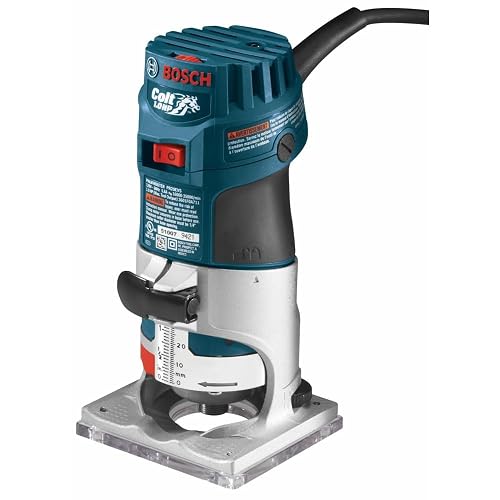
If your work is mostly light edge trimming, laminate and small details, a compact trim router may be all you need. Trim routers are easy to control one-handed, but their smaller motors are not suited to heavy stock or large-diameter bits.
How to Judge a Black Friday Router Deal
A sale only helps if the tool is worth buying at the regular price. Start by checking the model’s typical price history, which many shoppers track with browser tools or price comparison sites. Compare the same model across retailers rather than comparing a “bundle” to a bare tool. Bundles can look attractive, but a set of mediocre bits can be worth less than a single good bit you would have bought separately.
Look at what is included. Some sale listings bundle a fixed base, a plunge base, a dust port and a case. If you already own a fixed base, you may not need the extra parts. Confirm that replacement bases and accessories are sold for the model, since these are the parts you will eventually need.
Checklist before you click buy
- Confirm the router type (fixed, plunge or trim) matches your main projects.
- Check the motor horsepower and collet size, and confirm they suit your bits.
- Compare the same model at two or three retailers, including the return policy.
- Verify the warranty length and whether the manufacturer offers service in your country.
- Read the included accessory list so you know whether you still need bits, a guide bushing or a dust port.
- Check the cord length and whether you need an extension cord or an outlet near your bench.
Plan Your Setup So the Router Works From Day One
A new router is only useful if you can mount it safely and control the cut. Before you unbox it, decide where it will live. A router table is a common next step for many woodworkers, and if you plan to build one, you can review the steps in Wood Router Table DIY: Build Your Own in 7 Steps (2026) later in your project list. For handheld use, clear a stable bench and make sure you have room to move the router along a clamped guide.
Setup steps after delivery
- Unplug the router and read the manual’s safety section.
- Install the collet and tighten it with the correct wrenches, leaving a bit of space behind the shank so it is not bottomed out.
- Insert a bit at least 3/4 of the way into the collet, then tighten firmly.
- Set the depth stop and test-lock it on scrap wood before cutting your project.
- Check the bit rotation direction and the speed setting if your model has a variable speed control.
- Make a test cut on scrap of the same species and thickness as your project.
If you are new to routers, a general walkthrough such as Black and Decker Wood Router: A Step-by-Step Guide for Beginners can help you learn the controls before you make your first project cut. For a more specific setup, a Porter-Cable owner may find Wood Router Porter Cable: Setup, Settings and Safe Use Guide (2026) useful.
Choose the Right Bits and Accessories
The router is only half the system. Bit quality affects cut quality, safety and tool life more than many beginners expect. Look for bits with carbide cutting edges and balanced construction, and avoid no-name bits with uneven tips. If you want to explore specialized bits, guides such as Wood Surfacing Router Bit Review: Is It Worth It? (2026) and Wood Flattening Router Bit: 5 Best Picks for Slabs and Spoilboards (2026) cover uses that go beyond edge profiles.
Starter bit set priorities
- A straight bit for dados, grooves and sled work.
- A round-over bit for softening edges.
- A rabbeting bit with a bearing for joinery and back panels.
- A flush-trim bit with a bearing for template work.
- A chamfer bit for decorative edges and easing sharp corners.
Accessories that save time
A guide bushing set lets you use templates for repeat work. A dust port keeps chips off your work and out of your face. A straight edge guide or circle-cutting jig is useful for handheld cuts. Clamps are essential, since a loose workpiece is one of the most common causes of ruined cuts.
Common Mistakes to Avoid When Buying on Sale
Holiday sales tend to push buyers toward impulse decisions, and a few mistakes show up again and again. Recognizing them ahead of time keeps your purchase useful.
Buying the wrong collet size
Some routers only accept one shank size, and bits in the other size will not fit. Check the collet and bit shank before buying a bit set, or buy the bits separately once you know your machine.
Overvaluing the bundle
A bundle with a large case and many bits looks generous, but low-quality bits can dull fast and chip. A smaller set of well-made bits often gives better results.
Skipping the return policy check
Sale items sometimes have shorter return windows or restocking fees. Read the policy before you buy, and keep the packaging until you have tested the tool.
Ignoring safety basics
Routers spin fast and can kick back if controlled poorly. Wear eye and hearing protection, keep both hands on the router, and always feed against the rotation direction. Routers are powerful tools, and if you are unsure about setup or technique, it is wise to get hands-on instruction from an experienced woodworker or a local woodworking class.
Recommended gear
These items help new owners get more out of a router right away. They are general categories; compare options to match your bit shank and collet size.
- Guide bushing set: Lets you follow templates for repeat parts and inlays, which pays off on production work. View on Amazon
- Router table insert plate: Gives a flat, adjustable surface for shaping edges safely at the table. View on Amazon
- Clamps for router guides: Hold your straight edge or template firmly so the cut stays straight. View on Amazon
- Dust collection hose adapter: Keeps chips from building up around the bit and improves visibility of your cut line. View on Amazon
FAQ
When is the best time to buy a wood router on Black Friday?
Sales often start earlier than the holiday itself and continue into Cyber Monday. Compare the same model’s price history and watch for real markdowns rather than inflated list prices.
Is a plunge router better than a fixed-base router?
For most shops, a plunge router is more versatile because it handles mortises, stopped grooves and inlays. A fixed-base router is simpler and works well for edge profiles and templates.
How much horsepower do I need?
For general woodworking, many hobbyists find that a motor in the 1.5 to 2.25 horsepower range is enough. Heavier work with large bits benefits from more power.
Should I buy a bundle with bits included?
Bundles can be a good value if the included bits are well made and match your collet size. If the bits are low quality, buying a smaller set of better bits is usually the stronger choice.
What is the difference between a router and a trim router?
A trim router is a smaller, lighter tool designed for edge trimming and detail work. A full-size router has a larger motor for heavier cuts and larger bits.
Do I need a router table?
A router table is helpful for shaping small parts, edges and repeated cuts, but it is not required to start. Many woodworkers begin with a handheld router and add a table later.
Can I use a router without experience?
Yes, but start slowly on scrap wood, learn the depth and feed direction, and wear proper protection. If you are unsure, consider taking a class or asking an experienced woodworker to watch your setup.
How do I know if a router deal is genuine?
Check the model’s price history, compare the same configuration across retailers, and confirm the included accessories match what you need. Avoid listings that differ only in packaging from a model you can already find cheaper.
Conclusion
A well-timed purchase can get you a capable router without overspending, but the best deal is the one that fits your projects. Decide between fixed and plunge types, confirm the motor and collet, and check that bits and accessories are included or easy to add. Set up the tool carefully, practice on scrap, and treat safety as part of every cut.
Related reading
- Black Friday Wood Router Deals: How to Find the Best Savings (2026)
- Black and Decker Wood Router: A Step-by-Step Guide for Beginners
- Wood by Wright Router Plane Kit: Setup, Use and Tips for Beginners
Ready to choose one?
About Claire Whitaker
Claire Whitaker is part of our editorial team and reviews and edits our woodworking guides, checking product details against manufacturer specifications and owner feedback.