By Audrey Hayes
Updated November 2026
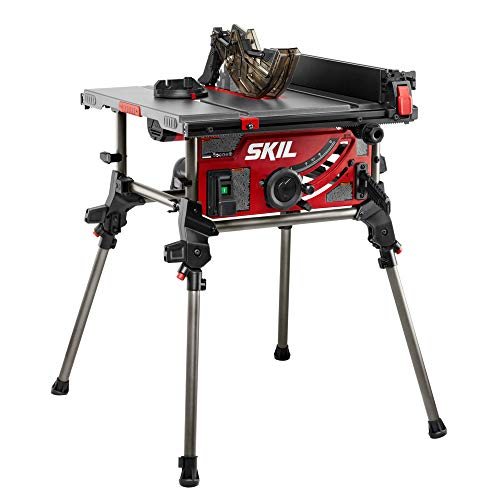
A 15 amp table saw runs on a standard household circuit, which makes it a practical choice for many home shops. This guide explains how to confirm your wiring can support one, how to pick the right blade and fence setup, and how to make your first safe rip cut. You will finish with a saw that is set up correctly and a clear sense of its limits.
Check Your Circuit Before You Plug In
A 15 amp rating tells you the saw is designed to draw up to 15 amps under load. Most US garages and shops use 15 amp or 20 amp circuits, so the saw’s rating and the circuit’s rating need to match or stay compatible. Before you plug anything in, confirm the following:
Shopping for one? See our guide: Harbor Freight Tools Table Saw: 6 Best Picks Compared (2026).
- Look at the breaker in your panel. It should be stamped 15 or 20 amps.
- Use a dedicated circuit if possible. Sharing a line with a dust collector, shop vac or space heater can trip the breaker under load.
- Use a heavy-gauge extension cord only if you must, and keep it as short as you can.
- If the circuit is undersized or unclear, have a licensed electrician check it. Do not guess at wiring.
Set Up the Saw for Accurate, Safe Cuts
Most accuracy problems come from setup, not from the motor. Take the time to tune the saw before your first real cut.
- Level the table. Place a straightedge across the table and check for gaps. Adjust the feet or stand until the surface is flat.
- Square the blade to the table. Set the blade to 90 degrees using a reliable square, then check it at the front and back of the blade.
- Align the rip fence. Lock the fence and measure from the blade to the fence at the front and back. The distances should match within a few thousandths of an inch.
- Set the blade height. For most rip cuts, the blade should rise about 1/4 inch above the top of the workpiece. For dado or thick stock, adjust as the blade manufacturer specifies.
- Install the riving knife and guard. Keep both in place for through cuts. Remove them only for specific operations such as dadoing, and reinstall them afterward.
Make Your First Rip Cut
Ripping, which cuts along the grain, is the most common job on a table saw. Follow this sequence every time:
- Joint one edge of the board so it rides flat against the fence.
- Set the fence to your width, measuring from the blade’s front tooth to the fence.
- Stand to the side of the blade line, not directly behind it, and wear eye and hearing protection.
- Use a push stick when the cut gets narrow, usually under 6 inches from the fence.
- Feed the board steadily without forcing it. If the saw bogs down, stop and check the blade and feed rate.
If you are building a project that needs multiple parts, the Woodworking Plans Side Table: A Step-by-Step Build for Beginners is a good test piece for practicing repeat cuts. For a stand that holds the saw at a comfortable height, see Table for Dewalt Table Saw: A Step-by-Step Guide to Building One (2026).
Recommended Gear
- A quality combination blade handles both rips and crosscuts without changing blades constantly. View on Amazon
- Push sticks keep your hands away from the blade on narrow cuts. View on Amazon
- A digital angle gauge helps you confirm blade tilt when you set bevel cuts. View on Amazon
Common Mistakes to Avoid
- Running the saw on an overloaded circuit, which trips breakers and can damage the motor.
- Skipping the fence alignment check, leading to pinched boards and kickback.
- Using a dull or wrong-type blade, which causes burning and extra strain on the motor.
- Standing directly behind the blade during a cut.
- Removing the riving knife and guard and forgetting to put them back.
FAQ
Can a 15 amp table saw run on a standard household outlet?
Many 15 amp saws can run on a standard 120-volt household circuit, but the circuit should be dedicated and in good condition. Check the saw’s manual for the required voltage and circuit rating.
Is a 15 amp motor enough for hardwood?
A 15 amp motor can handle most hardwood ripping at moderate depths, especially with a sharp blade and steady feed. Thick hardwood at full depth may slow the saw, so reduce the feed rate rather than forcing the cut.
How often should I check the blade alignment?
Check alignment whenever you move the saw, after a hard knock, and at least once a month if you use it often. Quick checks prevent most accuracy problems.
Conclusion
A 15 amp table saw can handle a wide range of home woodworking when the circuit is sound and the saw is set up correctly. Check your wiring, tune the blade and fence, and build good habits with push sticks and steady feeds. If your wiring or setup raises questions, consult a licensed electrician or an experienced woodworker before you proceed.
Related reading
- Miter Saw Table Plans: A Step-by-Step Guide to Building a Stable Stand (2026)
- Miter Saw Table Ideas: 5 Builds for Accurate, Safe Cuts (2026)
- Miter Saw Table DIY: 3 Best Builds and Kits Compared (2026)
- Miter Saw Portable Table: How to Build or Choose One (2026)
Ready to choose one?
About Audrey Hayes
Audrey Hayes is part of our editorial team and reviews and edits our woodworking guides, checking product details against manufacturer specifications and owner feedback.