By Audrey Hayes
Updated November 2026
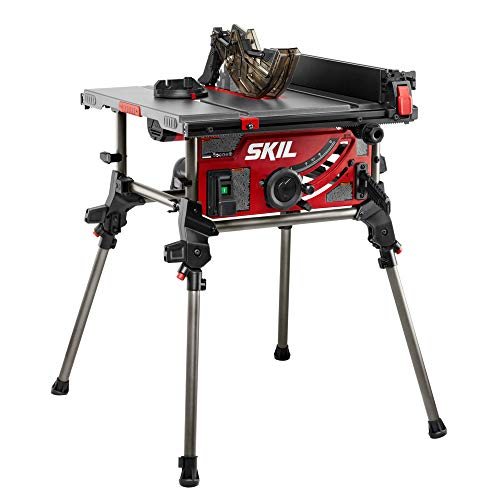
A mitre and table saw combo puts two cutting tools into one footprint, so you can rip boards, crosscut stock and cut precise angles without clearing space between tools. This guide explains how these combos work, what to check before you buy, and how to set one up so your cuts come out square. The steps apply whether you already own a combo or are weighing one against separate machines.
How a Mitre and Table Saw Combo Works
Most combos pair a table saw with a mitre saw in a single cabinet or stand. The mitre saw head usually sits on an arm that pivots left and right for angled crosscuts, while the table saw supplies a flat, adjustable surface for rip cuts and dado work. Some units use a sliding mitre arm, and others use a fixed head that lifts out of the way.
Shopping for one? See our guide: 7 Best Table Saw and Stand Combos for Jobsite and Home Shops (2026).
The main trade-off is convenience against capacity. A combo saves floor space and gives you a single fence and outfeed area, but the cutting capacity is often smaller than full-size standalone tools. Check the maximum board width and depth before you commit, especially if you plan to cut wide panels or thick hardwood.
Choosing the Right Combo for Your Shop
Start by matching the combo to the work you do most. Build the list below before you shop so you can compare models against real requirements instead of marketing claims.
- Maximum rip capacity you need, measured in inches from the blade to the fence.
- Crosscut capacity at 0 degrees and at 45 degrees, since mitre cuts reduce width.
- Blade diameter and whether the saw accepts a blade size you can source locally.
- Fence type: a rigid, accurate fence matters more than extra features.
- Stand or cabinet stability, and whether it folds for storage.
- Dust collection port size and location on both the table and mitre head.
Owners often report that the fence and mitre detents determine how much fine-tuning you will do later. Look for solid locking mechanisms and a fence that stays parallel to the blade through its full travel.
Setting Up Your Combo for Accurate Cuts
Once the combo is assembled, take time to square both tools before making a single project cut. Small errors compound quickly across a cabinet or frame.
Square the Table Saw Blade
Raise the blade to full height and use a reliable square against the miter slot. Adjust the blade until it is parallel to the slot within a few thousandths of an inch, following the manufacturer’s procedure. Then check the blade-to-fence alignment for rip cuts. For another angle, check out Chop Saw Table Saw Combo: How to Choose and Set One Up (2026).
Set the Mitre Saw Zero Points
Make a test crosscut on scrap at 90 degrees and measure the two halves for square. Adjust the stop or detent until the cut is true. Repeat at 45 degrees with a known reference, such as a framing square, and make sure the detent lands at exactly 45.
Check Fence and Table Alignment
Measure the fence to the blade at the front and back of the blade. The readings should match. If the fence drifts, tighten the locking mechanism and re-check. A cabinet that flexes under load will also throw off accuracy, so confirm the stand is locked and level.
Common Mistakes and Tips
- Skipping the initial alignment and trusting factory settings.
- Using a fence that is not square to the table, which causes binding and kickback.
- Forgetting that mitre cuts reduce crosscut capacity, so wide boards may not fit.
- Failing to clear the mitre arm path before switching between tools.
- Ignoring dust collection; connect it to both the table and the mitre head.
Recommended Gear
A precision square helps you verify both the blade and the mitre detents without guessing. View on Amazon
A quality push stick keeps your hands away from the blade during narrow rips on the table side. View on Amazon
A dial indicator lets you measure fence and blade alignment to a fraction of a thousandth. View on Amazon
FAQ
Is a mitre and table saw combo accurate enough for furniture?
Yes, provided you align both tools carefully and keep the fence and mitre detents adjusted. Many furniture builders use combos for everyday work, though they may still rely on separate tools for very large panels.
Can I cut wide boards on a combo?
Check the rip capacity in the specifications before buying. For wide stock, you may need to rip in two passes or use a sled on the mitre side.
How often should I re-check the alignment?
Check it before large projects and any time you move the saw or notice cuts drifting. Regular checks prevent wasted material.
Conclusion
A mitre and table saw combo saves space and gives you two cutting capabilities in one setup, as long as you respect its capacity limits. Choose a model that fits your typical board sizes, then take time to square the blade, zero the mitre detents and check the fence. With those steps done, you can cut confidently on everything from trim to cabinet parts. For more planning help, see Miter and Table Saw Combo: How to Choose One and Set It Up (2026) and Mitre Saw Table DIY: Build a Stable Stand in 6 Steps (2026).
Related reading
- Thin Rip Jig Table Saw: 5 Steps to Safe, Accurate Narrow Rips
- Tenoning Jig for Table Saw: How to Build One and Cut Clean Tenons (2026)
Ready to choose one?
About Audrey Hayes
Audrey Hayes is part of our editorial team and reviews and edits our woodworking guides, checking product details against manufacturer specifications and owner feedback.