 By Colin Foster
Updated November 2026
Rolling woodworking bench plans let you build a workbench that moves when you need it to, which matters in a garage or small shop where floor space is tight. The best plans include a complete cut list, clear dimensions, and build steps you can follow without guessing. Below, we compared five plan options on those criteria: completeness of the cut list, how clearly the instructions explain the casters and bracing, the range of project types, and how well each suits a home shop.
Our top picks at a glance
- 1
 TOP CHOICEBest overallModern Outdoor X-Back Bench: Premium Woodworking Plans with Cut List,View on Amazon
- 2
 TOP CHOICEBest for folding storageBuild a Transforming Workbench: Step-by-Step DIY Plans for a Folding GView on Amazon
- 3
 TOP CHOICEBest for a mobile flip-top cartProject Paper Plan to Build Flip-Top Cart – Material Not IncludedView on Amazon
- 4
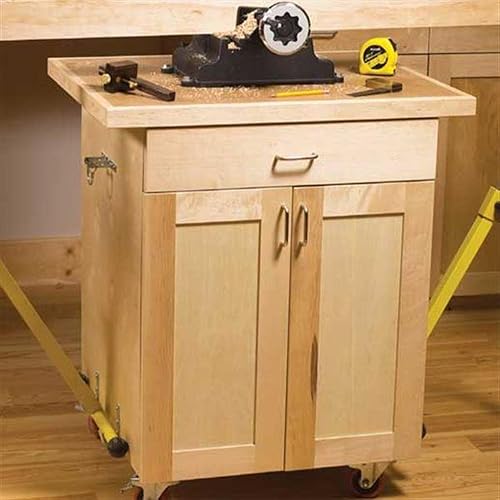 Best for multiple cartsWoodworking Project Paper Plan to Build 3 Mobile Carts – Material Not IncludedView on Amazon
- 5
 Best for a first workbenchMake Your Own Workbench: Instructions & Plans to Build the Most ImportView on Amazon
Our Top Picks
Quick Comparison
| Product | Best for | Key feature |
|---|---|---|
| Modern Outdoor X-Back Bench | Overall build quality | Full cut list and dimensions |
| Build a Transforming Workbench | Folding storage | Shelf-style storage layout |
| Project Paper Plan to Build Flip-Top Cart | Mobile flip-top cart | Compact, rolls easily |
| Woodworking Project Paper Plan to Build 3 Mobile Carts | Multiple carts | Three cart designs in one |
| Make Your Own Workbench | First workbench | Foundational shop project |
Modern Outdoor X-Back Bench: Premium Woodworking Plans with Cut List, Dimensions & Step-by-Step DIY Instructions
Modern Outdoor X-Back Bench: Premium Woodworking Plans with Cut List, Dimensions & Step-by-Step DIY Instructions
Best for: Overall build quality
This set suits builders who want a sturdy, well-documented bench and are comfortable following detailed dimensions. The X-back bracing is a useful reference for anyone who plans to add casters.
Pros
- Full cut list with dimensions
- Clear step-by-step instructions
Cons
- Aimed at outdoor use, so some details may need adjusting for a shop
Build a Transforming Workbench: Step-by-Step DIY Plans for a Folding Garage Workbench with Shelf-Style Storage, Materials List, Cut List, and Illustrated Assembly Guide
Build a Transforming Workbench: Step-by-Step DIY Plans for a Folding Garage Workbench with Shelf-Style Storage, Materials List, Cut List, and Illustrated Assembly Guide (Weekend Projects)
Best for: Folding storage
This plan fits anyone short on garage space who wants a bench that folds away and keeps tools organized on shelves.
Pros
- Includes materials list and illustrated assembly guide
- Shelf-style storage built in
Cons
- Folding hinges add build steps that take patience
Project Paper Plan to Build Flip-Top Cart – Material Not Included
Project Paper Plan to Build Flip-Top Cart – Material Not Included
Best for: Mobile flip-top cart
A good fit for builders who want a small, movable work surface for hand tools and light projects rather than a full-size bench.
Pros
- Compact footprint that moves easily
- Simple construction for a smaller project
Cons
- Limited work surface compared with a full bench
Woodworking Project Paper Plan to Build 3 Mobile Carts – Material Not Included
Woodworking Project Paper Plan to Build 3 Mobile Carts – Material Not Included
Best for: Multiple carts
This plan suits shops that need several rolling units for different tasks, such as power tools, clamps, or finishing supplies.
Pros
- Three cart designs in one plan
- Good practice for casters and bracing
Cons
- Plans are split across three builds, so the bench itself is secondary
Make Your Own Workbench: Instructions & Plans to Build the Most Important Project in Your Shop
Make Your Own Workbench: Instructions & Plans to Build the Most Important Project in Your Shop
Best for: First workbench
Beginners who want a foundational shop project will find this plan a practical starting point, with instructions aimed at building a bench you will use for years.
Pros
- Written for building a workbench from start to finish
- Good introduction to joinery and bench layout
Cons
- Less focused on rolling mechanisms than the other options
Buying Guide
Check the cut list for completeness
A usable plan lists every board, its dimensions, and the quantity needed. Missing or vague cut lists are the most common reason builds stall partway through.
Confirm the caster and bracing details
Rolling benches carry more load than stationary ones, so the plan should show how casters attach and how the frame is braced to resist racking. Look for specific fastener and joinery guidance.
Match the size to your shop
Measure your floor space before choosing a plan. A bench that rolls out of the way is only useful if it fits the doorways and corners you need to move it through.
Consider the wood and hardware list
Plans that specify lumber grades and hardware make shopping simpler. Vague material lists often lead to mid-build trips to the store.
Good picks for this: Modern Outdoor X-Back Bench and Make Your Own Workbench
FAQ
Do rolling workbench plans need special casters?
Most plans call for heavy-duty swivel casters with locking brakes, since a loaded bench needs to stay put when you work on it. Check the rated load per caster against the weight you expect the bench to carry.
Can a beginner build a rolling bench?
Yes, as long as the plan includes clear dimensions and step-by-step instructions. Start with a simpler design and move to folding or multi-cart plans once you are comfortable with basic joinery.
Related reading
- Woodworking Work Table Plans: Build a Sturdy Bench in 6 Steps
- Portable Woodworking Bench Plans: A Step-by-Step Build Guide
- Plans for Woodworking Workbench: A Step-by-Step Guide to Building a Sturdy Bench
- Outdoor Bench Woodworking Plans: A Step-by-Step Build Guide
- Moravian Woodworking Bench Plans: A Step-by-Step Guide for Beginners
About Colin Foster
Colin Foster is part of our editorial team and reviews and edits our woodworking guides, checking product details against manufacturer specifications and owner feedback.