By Claire Whitaker
Updated November 2026
Small woodworking projects like boxes, stools, bird feeders and simple shelves need a focused set of woodworking tools for small projects, not a full shop. The right tools make accurate cuts, clean joints and a finish you can be proud of. This list compares six picks across three things that matter most: how well they suit small-scale builds, how clearly they teach or measure, and how easy they are for a beginner to use safely. Each pick is based on specifications, brand reputation and common owner feedback rather than hands-on testing.
Our top picks at a glance
- 1
 TOP CHOICEBest overallBuilding Small Projects: The New Best of Fine WoodworkingView on Amazon
- 2
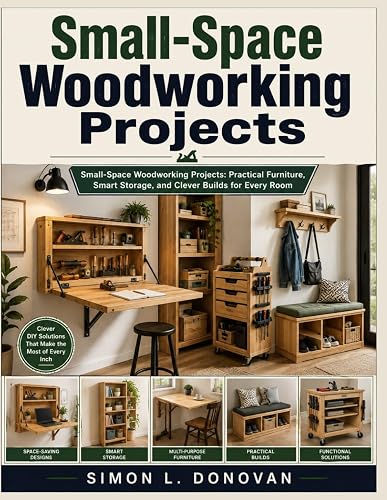
 TOP CHOICEBest for weekend buildersSmall Woodworking ProjectsView on Amazon
- 3
 TOP CHOICEBest for precise layoutAluminium Woodwork Measuring and Scribing Tool Set – 9 Piece PrecisionView on Amazon
- 4
 Best for beginners who want a full guideThe DIY Woodworking Projects BibleView on Amazon
- 5
 Best for kids and familiesComplete Tools and Paint Set, FSC-Certified Sustainable Wood, BackyardView on Amazon
- 6
 Best budget pickBuild Stuff with Wood: Make Awesome Projects with Basic ToolsView on Amazon
Our Top Picks
Quick Comparison
| Product | Best for | Key feature |
|---|---|---|
| Building Small Projects: The New Best of Fine Woodworking | Experienced-minded beginners wanting proven plans | Collected projects from a respected magazine |
| Small Woodworking Projects | Weekend builders | Focus on boxes, stools and small builds |
| Aluminium Woodwork Measuring and Scribing Tool Set | Precise layout and marking | Nine-piece kit with storage box |
| The DIY Woodworking Projects Bible | Complete beginners | 40+ projects plus tool and joint guidance |
| Complete Tools and Paint Set Bird Feeder Kit | Kids and families | FSC-certified wood, ages 6+ |
| Build Stuff with Wood | Learning with basic tools | Projects built with only basic tools |
Building Small Projects: The New Best of Fine Woodworking
Building Small Projects: The New Best of Fine Woodworking
Best for: Best overall for small-project planning
This is a good fit for woodworkers who want well-documented plans for small pieces and who prefer learning from a long-established woodworking publication. It pairs naturally with a basic bench and hand tools. If you are just starting out, it helps to read the guide on Small Fine Woodworking Projects: 6 Steps to Build Your First Piece alongside it.
Key specs
- Format: book, focused on small-scale builds
- Source: compiled from Fine Woodworking magazine content
Pros
- Plans are written for practical, small-shop builds
- Covers a range of joinery approaches
- Useful reference for building a repeatable workflow
Cons
- Assumes some basic familiarity with tools
- Plans may require tools you do not yet own
Bottom line: Choose this if you want proven small-project plans and are ready to put them into practice.
Small Woodworking Projects
Small Woodworking Projects: Weekend woodworking projects for boxes, stools, and other small builds. (Best of Fine Woodworking)
Best for: Best for weekend builders
Designed for people who have a weekend or two and want something finished by Sunday evening. The projects focus on boxes, stools and similar compact builds that do not require a large machine setup.
Key specs
- Focus: weekend-length builds
- Project types: boxes, stools and other small pieces
Pros
- Scope matches small-project goals closely
- Good variety of joinery and assembly methods
- Easy to pick a project based on available time
Cons
- Fewer advanced techniques than a full reference book
- Specific tool lists may not match every shop
Bottom line: A strong pick for builders who want short, satisfying projects with clear steps.
Aluminium Woodwork Measuring and Scribing Tool Set – 9 Piece Precision Kit for Carpentry and DIY Projects with Storage Box
Aluminium Woodwork Measuring and Scribing Tool Set – 9 Piece Precision Kit for Carpentry and DIY Projects with Storage Box(10 Pieces.)
Best for: Best for precise layout
Suited to anyone who struggles with accurate marking, which is the most common cause of gaps in small joinery. A dedicated measuring and scribing set keeps layout consistent from project to project.
Key specs
- Piece count: 9 pieces, as stated in the listing
- Includes a storage box
Pros
- Organized storage keeps layout tools together
- Useful for transferring measurements accurately
- Works for carpentry and general DIY tasks
Cons
- Scribing tools require some practice to use well
- Does not replace a quality combination square
Bottom line: Pick this if accurate marking is your weak spot and you want a complete layout kit in one case.
The DIY Woodworking Projects Bible
The DIY Woodworking Projects Bible: [5 in 1] Learn to Build 40+ Projects You'll Be Proud Of | Everything From Choosing Tools and Wood to Cutting Joints and Applying Finishes, No Experience Needed
Best for: Best for beginners who want a full guide
A broad reference for someone starting from zero. It covers choosing tools and wood, cutting joints and applying finishes, so it works as both a project book and a basic course.
Key specs
- Listing describes 40+ projects in one volume
- Covers tool selection, wood choice, joints and finishing
Pros
- Covers the whole workflow, not just the builds
- Good starting point for people with no experience
- Wide range of project sizes
Cons
- Breadth means less depth on any single technique
- Some projects may be larger than a true small build
Bottom line: Best for absolute beginners who want one book covering tools, wood, joints and finishes.
Complete Tools and Paint Set, FSC-Certified Sustainable Wood, Backyard Nature Activity, Ages 6+ Picnic Table Bird Feeder Kit, DIY Woodworking Project for Kids and Families
Complete Tools and Paint Set, FSC-Certified Sustainable Wood, Backyard Nature Activity, Ages 6+ Picnic Table Bird Feeder Kit, DIY Woodworking Project for Kids and Families
Best for: Best for kids and families
Designed for children and adults building together. The kit uses FSC-certified wood and a simple bird feeder design, which keeps the project safe and manageable for young builders with close supervision.
Key specs
- Recommended age: 6+, as stated in the listing
- Wood: FSC-certified, per the listing
Pros
- Simple, low-risk project for beginners of any age
- Includes paint for a finished look
- Good introduction to measuring and assembly
Cons
- Not a substitute for real hand tools or adult-scale joinery
- Limited to one simple project type
Bottom line: A good pick for families who want a first build together. Adult supervision is recommended for any child using tools.
Build Stuff with Wood: Make Awesome Projects with Basic Tools
Build Stuff with Wood: Make Awesome Projects with Basic Tools
Best for: Best budget pick
Built around the idea that you can make useful projects with a small set of basic tools. A practical choice for hobbyists who do not yet want to buy machines.
Key specs
- Focus: projects made with basic tools
- Format: project-based guide
Pros
- Keeps tool requirements modest
- Projects are approachable for beginners
- Good companion to a simple hand-tool kit
Cons
- Less guidance on advanced joinery
- Projects may outgrow the basic toolset quickly
Bottom line: Choose this if you want to start building with minimal tools and learn as you go.
Buying Guide
Project scale and fit
Match the tool to the size of the piece. Small projects often involve stock under about 1 inch thick, so a compact saw, a sharp block plane and a small clamp set go further than a full-size table saw.
Good picks for this: Small Woodworking Projects, Build Stuff with Wood
Measuring and layout accuracy
Most small-project errors come from marking, not cutting. Look for a square that is machined flat and a marking tool that produces a fine line. Check squareness by flipping the square and comparing the edge against a line.
Good picks for this: Aluminium Woodwork Measuring and Scribing Tool Set
Included instructions and plans
A good plan set saves time. Check whether a book gives cut lists, dimensions and joinery detail, not just photos of finished pieces.
Good picks for this: Building Small Projects: The New Best of Fine Woodworking, The DIY Woodworking Projects Bible
Skill level and learning curve
Beginners benefit from kits and guides with step-by-step text. Experienced builders may want more advanced joinery coverage and fewer basic explanations.
Good picks for this: The DIY Woodworking Projects Bible, Complete Tools and Paint Set Bird Feeder Kit
Safety for younger builders
Choose age-appropriate kits and supervise closely. Look for listings that state an age range and use appropriate materials. Consult the manufacturer’s age guidance and always supervise children around saws and sharp tools.
Good picks for this: Complete Tools and Paint Set Bird Feeder Kit
Wood quality and certification
Look for wood that is well-milled and stated as certified where relevant. Certifications such as FSC indicate responsibly sourced material, which matters for projects you may want to sell or give away.
Good picks for this: Complete Tools and Paint Set Bird Feeder Kit
Storage and organization
Small tools get lost easily. A case or box keeps measuring tools accurate and protected from damage between sessions.
Good picks for this: Aluminium Woodwork Measuring and Scribing Tool Set
FAQ
What woodworking tools do I need for small projects?
A basic set usually includes a combination square, a marking knife or pencil, a handsaw or small backsaw, a block plane, clamps and a sanding block. Power tools such as a random orbit sander or a small drill can speed up the work.
Are small projects good for beginners?
Yes. Small builds like boxes and stools need less material, less space and fewer machines, which makes them a sensible way to learn joinery and finishing.
Do I need a table saw for small woodworking projects?
Not necessarily. Many small projects can be cut accurately with a handsaw and a shooting board. A table saw is useful for repeatable cuts but is not required.
What wood is best for small projects?
Pine and poplar are common for practice because they are affordable and easy to work. Hardwoods such as oak or maple suit finished pieces. See Wood for Woodworking Projects: A Step-by-Step Guide to Choosing the Right Stock for more detail.
Are kids’ woodworking kits safe?
Kits designed for children with a stated age range are generally made with simpler tools and materials. Adult supervision is still essential, and you should follow the manufacturer’s age guidance.
Should I buy used tools for small projects?
Used tools can be a sound choice if they are in good condition. Check for flat surfaces, sharp edges and smooth moving parts. See Used Woodworking Tools for Sale: A Buyer's Guide to Smart Shopping (2026) for a checklist.
Where can I learn safe tool habits?
Read the manufacturer manual for every tool and review general shop safety guidance before you start. Basic habits like keeping fingers clear of blades and wearing eye protection matter most.
Conclusion
For most small-project builders, start with a guide that matches your skill level and a measuring set that keeps layout accurate. The Building Small Projects book suits planners, the Small Woodworking Projects guide suits weekend builders, and the DIY Woodworking Projects Bible suits complete beginners. Families looking for a first build should consider the bird feeder kit, while budget-minded hobbyists can start with Build Stuff with Wood. Pair any of these with a few well-chosen tools from Woodworking Tools for Beginners: What to Buy First and you will have a practical starting point.
Sources
- Workplace and tool safety guidance, including eye protection and machine guarding basics (osha.gov)
- Consumer product safety information, including guidance on children's toys and kits (cpsc.gov)
- How FSC certification identifies responsibly managed forest products
About Claire Whitaker
Claire Whitaker is part of our editorial team and reviews and edits our woodworking guides, checking product details against manufacturer specifications and owner feedback.