By Claire Whitaker
Updated November 2026
Woodworking projects for intermediate builders sit in a useful middle ground. You already know how to cut accurate joints, read a cut list and keep a flat glue-up flat, but you want plans that stretch those skills without asking for a full professional shop. The right book can give you that: dimensioned drawings, realistic cut lists and projects that teach a new technique or two along the way. The six titles below were compared on the basis of published project scope, the skill level the authors state for each build, how complete the plans and instructions appear to be, and the general patterns owners tend to mention in their feedback. None of these picks were tested in a shop by us, so treat the comparison as a research summary rather than hands-on experience.
Our top picks at a glance
- 1
 TOP CHOICEBest overallThe Complete Book of WoodworkingView on Amazon
- 2
 TOP CHOICEBest for home improvement buildsGreat Book of Woodworking ProjectsView on Amazon
- 3
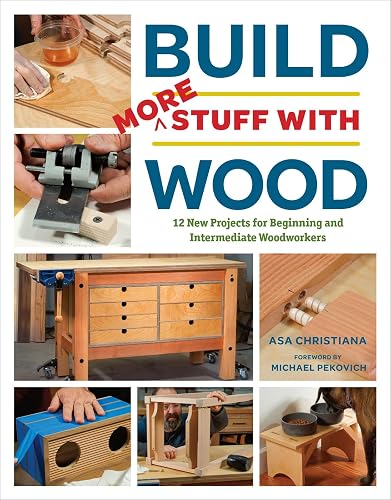 TOP CHOICEBest for stepping up skillsBuild More Stuff With WoodView on Amazon
- 4
 Best for shop upgradesHow to Make Workbenches & Shop Storage SolutionsView on Amazon
- 5
 Best for quick weekend buildsThe Big Book of Weekend WoodworkingView on Amazon
- 6
 Best for small spacesNo Table Saw Woodworking Projects for BeginnersView on Amazon
Our Top Picks
Quick Comparison
| Product | Best for | Key feature |
|---|---|---|
| The Complete Book of Woodworking | Broad skill building | 40+ projects with 1,200+ photos |
| Great Book of Woodworking Projects | Home improvement builds | 50 projects for indoor and outdoor use |
| Build More Stuff With Wood | Stepping up from beginner work | 12 projects for beginning and intermediate makers |
| How to Make Workbenches & Shop Storage Solutions | Shop upgrades | 28 shop projects including torsion boxes and outfeed tables |
| The Big Book of Weekend Woodworking | Quick builds | 150 easy projects |
| No Table Saw Woodworking Projects for Beginners | Small spaces and limited tools | Projects built without a table saw, with cut lists |
The Complete Book of Woodworking
The Complete Book of Woodworking: Step-by-Step Guide to Essential Woodworking Skills, Techniques, Tools and Tips (Landauer) 40+ Easy-to-Follow Projects and Plans, 1,200+ Photos, and Carpentry Basics
Best for: Broad skill building across many techniques
This is a good fit for intermediate builders who want one reference that covers both techniques and finished projects. It suits someone who has built a few pieces and wants to fill gaps in joinery, finishing and shop practice.
Key specs:
- 40+ step-by-step projects and plans
- 1,200+ photographs
- Includes carpentry basics alongside project work
Pros:
- Strong visual instruction for technique steps
- Covers a wide range of project types
- Useful as a long-term reference on the shelf
Cons:
- Some builds may feel basic if you already have solid joinery skills
- Broad coverage means fewer deep dives into any single project
Bottom line: Pick this if you want one book that teaches techniques and projects together, especially if you are still filling in gaps.
Great Book of Woodworking Projects
Great Book of Woodworking Projects: 50 Projects for Indoor Improvements and Outdoor Living from the Experts at American Woodworker (Fox Chapel Publishing) Plans & Instructions to Improve Every Room
Best for: Home improvement builds for indoor and outdoor spaces
This book suits intermediate makers who want practical pieces for the house and yard, such as storage, shelving and outdoor furniture. It is aimed at builders who want projects that improve daily living.
Key specs:
- 50 projects from the American Woodworker editorial team
- Covers indoor improvements and outdoor living
- Includes plans and instructions for each room
Pros:
- Projects are practical and useful in everyday settings
- Good range across rooms and outdoor areas
- Plans are written with working builders in mind
Cons:
- Some home projects need more material than a small shop may handle
- Less focus on fine furniture joinery
Bottom line: A strong choice if your goal is useful, room-by-room projects rather than decorative pieces.
Build More Stuff With Wood
Build More Stuff With Wood: 12 New Projects for Beginning and Intermediate Woodworkers
Best for: Stepping up from beginner work to more involved builds
This title is aimed directly at beginning and intermediate woodworkers. It fits someone who has finished a few starter projects and wants new challenges with a clear step up in complexity.
Key specs:
- 12 new projects
- Written for beginning and intermediate woodworkers
Pros:
- Clearly targeted at the intermediate level
- Smaller project count means each build can get more attention
- Good bridge between simple builds and advanced furniture
Cons:
- Only 12 projects, so the selection is narrower
- Less material for readers who want a large project library
Bottom line: Choose this if you want a focused set of projects that matches your current skill level closely.
How to Make Workbenches & Shop Storage Solutions
How to Make Workbenches & Shop Storage Solutions: 28 Projects to Make Your Workshop More Efficient from the Experts at American Woodworker (Fox Chapel Publishing) Torsion Boxes, Outfeed Tables, & More
Best for: Shop upgrades and workflow improvements
This book is for intermediate builders who want to improve their own workspace. It suits anyone whose shop has become cluttered or whose bench needs more capacity and flatness.
Key specs:
- 28 shop projects
- Includes torsion boxes and outfeed tables
- From the American Woodworker editorial team
Pros:
- Shop projects are useful for nearly any workshop
- Torsion box and outfeed table plans address common shop needs
- Focused subject keeps the book on-topic
Cons:
- Not a book of furniture projects for the home
- Some shop builds require significant lumber
Bottom line: Ideal if your next project is improving your shop rather than building for the house.
The Big Book of Weekend Woodworking
The Big Book of Weekend Woodworking: 150 Easy Projects
Best for: Quick builds that finish in a weekend
This book suits intermediate makers who want a large pool of smaller projects to choose from. It works well for someone who likes finishing things quickly and trying a variety of designs.
Key specs:
- 150 projects
- Designed around weekend-sized builds
Pros:
- Very large number of project options
- Good for trying new designs without a long commitment
- Useful for practicing specific techniques quickly
Cons:
- Many projects are on the simpler side for experienced intermediate builders
- Less depth per project than a dedicated furniture title
Bottom line: A good pick if you want variety and fast results more than complex furniture.
No Table Saw Woodworking Projects for Beginners
No Table Saw Woodworking Projects for Beginners: The Easy, Stress-Free Way to Build Useful Things Even in Small Spaces – Exact Shopping & Cut Lists, No Wasted Wood, and the Pride of "I Built That"
Best for: Small spaces and builders without a table saw
This book is for builders working in limited space or with hand tools and portable equipment. It suits intermediate makers who want to keep building without investing in a large stationary machine.
Key specs:
- Projects built without a table saw
- Includes shopping and cut lists
- Designed for small spaces
Pros:
- Cut lists make planning straightforward
- Useful for builders with limited tools or space
- Focus on reducing wasted wood
Cons:
- Labeled for beginners, so some builds may feel light for intermediate skill
- Methods without a table saw can take longer than machine-based approaches
Bottom line: Pick this if your shop is small or you rely mostly on hand tools and portable saws.
Buying Guide
Skill level and technique coverage
Check whether a book’s projects introduce new techniques or repeat ones you already know. A good intermediate title will ask for joinery such as mortise and tenon, dovetails or panel construction, and will explain the setup for each. Books that cover only basic butt joints will feel too easy after a few builds.
Good picks for this: The Complete Book of Woodworking, Build More Stuff With Wood
Project scope and variety
Look at the number of projects and the range of types. A wide mix of furniture, storage and shop builds gives you more options. A narrow title can be excellent if it matches your exact goal, but a large library gives you more to choose from over time.
Good picks for this: The Big Book of Weekend Woodworking, Great Book of Woodworking Projects
Quality of plans and cut lists
Plans should include dimensioned drawings and cut lists that account for stock thickness and waste. Owners often report that books with clear cut lists save time at the planning stage. Check whether the book uses imperial or metric measurements and whether that matches your tools.
Good picks for this: No Table Saw Woodworking Projects for Beginners, How to Make Workbenches & Shop Storage Solutions
Use case and project purpose
Decide whether you want furniture for the house, shop improvements or quick gifts. A home improvement title serves different needs than a workbench-focused book. Matching the book to your main use case keeps your reading time productive.
Good picks for this: Great Book of Woodworking Projects, How to Make Workbenches & Shop Storage Solutions
Tool requirements
Review the tools each project assumes you have. Some titles rely on a table saw, router and jointer, while others are written for hand tools and portable equipment. Mismatched tool expectations are one of the most common frustrations for intermediate builders, so check the methods before you buy.
Good picks for this: No Table Saw Woodworking Projects for Beginners, The Complete Book of Woodworking
Shop space and material needs
Large builds such as workbenches and outfeed tables need floor space and significant stock. If your shop is small, favor titles with compact projects or methods that work with limited room. Plan your lumber purchases from the cut list before you start cutting.
Good picks for this: No Table Saw Woodworking Projects for Beginners, Build More Stuff With Wood
Durability and finishing guidance
Projects are only as good as their finish and joinery. Look for titles that cover finishing schedules, glue selection and how to make joints that handle seasonal wood movement. Good guidance here helps your pieces last for years.
Good picks for this: The Complete Book of Woodworking, Great Book of Woodworking Projects
FAQ
Are these books suitable if I already know basic joinery?
Yes. Several titles, especially Build More Stuff With Wood and The Complete Book of Woodworking, are written with intermediate builders in mind. Check the project list against the techniques you already know before buying.
Do I need a table saw to use these plans?
Not always. No Table Saw Woodworking Projects for Beginners is built around methods that avoid a table saw. Most other titles assume standard shop tools, so check the materials list before you commit.
Which book is best for building things for the house?
Great Book of Woodworking Projects covers indoor and outdoor projects, which suits home improvement goals. It is a practical choice for storage, shelving and outdoor pieces.
Is a workbench book worth it if I am not building furniture yet?
It can be. How to Make Workbenches & Shop Storage Solutions focuses on improving your shop, which makes later projects easier. A flat, stable bench and good storage support every other build.
Are cut lists included in these books?
Most titles provide cut lists with their plans, and No Table Saw Woodworking Projects for Beginners specifically highlights cut lists. Still, confirm the layout for each project, since presentation varies by publisher.
Should I buy a single book or several?
A single broad book, such as The Complete Book of Woodworking, is a good starting reference. Adding a specialized title for your current goal, such as shop builds or home projects, fills the gaps more efficiently.
Conclusion
For most intermediate builders, The Complete Book of Woodworking offers the broadest mix of technique and projects. If your goal is useful pieces for the house, Great Book of Woodworking Projects is a practical pick. Build More Stuff With Wood suits builders stepping up from beginner work, while How to Make Workbenches & Shop Storage Solutions is the right choice if your shop needs attention first. The Big Book of Weekend Woodworking gives you variety for quick builds, and No Table Saw Woodworking Projects for Beginners is the best fit for small spaces or limited tools. Match the book to your main need, check the tool and space requirements, and start with a project that teaches one new skill.
For background on building plans you can start with Choosing a First Woodworking Project: What to Consider and Good First Woodworking Projects: 5 Easy Builds for Beginners. If you want to see what sells, Woodworking Projects That Sell: 7 Builds With Strong Demand (2026) is a useful companion, and Wood for Woodworking Projects: A Step-by-Step Guide to Choosing the Right Stock covers the lumber side of planning.
Sources
- Workplace power tool and woodworking machinery safety guidance for shop practice (osha.gov)
- Consumer safety information on power tools and shop equipment (cpsc.gov)
- Wood properties, moisture movement and lumber selection references from the Forest Products Laboratory (fpl.fs.usda.gov)
About Claire Whitaker
Claire Whitaker is part of our editorial team and reviews and edits our woodworking guides, checking product details against manufacturer specifications and owner feedback.