 By Colin Foster
Updated November 2026
Choosing the right writing desk plans woodworking resource can save you a lot of wasted lumber and frustration. A good set of plans gives you accurate dimensions, a complete cut list, joinery guidance and a sequence of steps you can follow without guessing. Many woodworkers, though, buy a book that is either too advanced for their current skills or too thin to answer the questions that come up mid-build. This list is built around a few criteria: how clearly the plans are laid out, whether the cut lists and measurements are complete, how well the book suits beginners versus experienced builders, how many desk or writing-surface projects it covers, and the general reputation of the publisher and authors.
Our top picks at a glance
- 1
 TOP CHOICEBest overallPopular Woodworking's Shaker Furniture ProjectsView on Amazon
- 2
 TOP CHOICEBest for complete beginnersDIY Woodworking Projects for BeginnersView on Amazon
- 3
 TOP CHOICEBest reference for fundamentalsThe Complete Book of Woodworking (Landauer)View on Amazon
- 4
 Best for modern home furnitureWoodworking for Beginners: Easy Step-by-Step Furniture ProjectsView on Amazon
- 5
 Best for furniture design studyFine Woodworking Tables and ChairsView on Amazon
- 6
 Best for home improvement projectsGreat Book of Woodworking Projects (Fox Chapel)View on Amazon
- 7
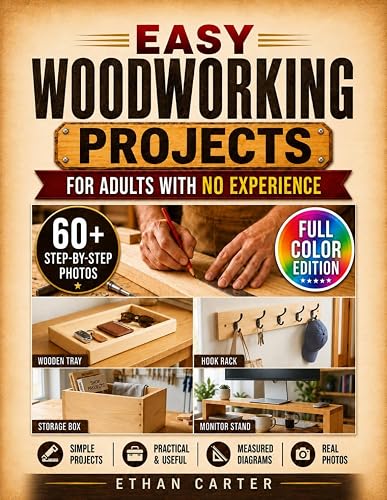 Best for first-time builders with no experienceEasy Woodworking Projects for Adults with No ExperienceView on Amazon
Our Top Picks
| Product | Best for | Key feature |
|---|---|---|
| Popular Woodworking’s Shaker Furniture Projects | Traditional, well-proportioned builds | Step-by-step plans for 31 Shaker-style projects |
| DIY Woodworking Projects for Beginners | Complete beginners | 127 build-ready plans with cut lists and visual steps |
| The Complete Book of Woodworking (Landauer) | Learning core skills before building | Skills, techniques and 40+ projects with plans |
| Woodworking for Beginners: Easy Step-by-Step Furniture Projects | Modern home furniture | Coffee tables, nightstands and desks with plans and pro tips |
| Fine Woodworking Tables and Chairs | Furniture design study | Detailed table and chair construction |
| Great Book of Woodworking Projects (Fox Chapel) | Indoor and outdoor improvements | 50 projects with plans and instructions |
| Easy Woodworking Projects for Adults with No Experience | First-time builders | Real photos and measured diagrams for every build |
Popular Woodworking’s Shaker Furniture Projects
Popular Woodworking's Shaker Furniture Projects: Step-by-Step Plans for 31 Traditional Projects A related read: Woodworking Miter Saw Table Plans: A Step-by-Step Build Guide.
Best for: Traditional, well-proportioned builds
This book suits woodworkers who want clean, timeless furniture and are comfortable reading full plans. Shaker design is known for simple lines and careful joinery, which makes it a strong foundation for a writing desk with a tapered leg or a drawer-equipped case.
Key specs:
- Step-by-step plans for 31 traditional projects
- Focus on Shaker-style furniture
Pros:
- Consistent, well-organized plan format
- Strong emphasis on proportion and joinery
- Good variety of case pieces and tables
Cons:
- Style is specific and may not suit contemporary tastes
- Assumes some comfort with hand and power tools
Bottom line: A strong pick for anyone who wants a classic writing desk and has some woodworking experience.
DIY Woodworking Projects for Beginners
DIY Woodworking Projects for Beginners: 127 Build-Ready Plans, Exact Measurements, Cut Lists & Visual Steps to Turn Raw Boards into Furniture & Decor That Looks Store-Bought | No Big Workshop
Best for: Complete beginners
This resource is aimed at people who have never built furniture. It includes exact measurements, cut lists and visual steps, which helps when you are still learning how to read a plan and set up stock. The sheer number of plans gives you options for small desks and shelving units alike.
Key specs:
- 127 build-ready plans
- Exact measurements and cut lists included
- Visual step guidance
Pros:
- Beginner-friendly layout
- Cut lists reduce planning time
- Wide range of project sizes
Cons:
- Less depth on advanced joinery theory
- Some builds may need minor adjustments to your lumber sizes
Bottom line: Best for someone building their first desk and wanting clear, measured steps from the start.
The Complete Book of Woodworking (Landauer)
The Complete Book of Woodworking: Step-by-Step Guide to Essential Woodworking Skills, Techniques, Tools and Tips (Landauer) 40+ Easy-to-Follow Projects and Plans, 1,200+ Photos, and Carpentry Basics
Best for: Learning core skills before building
This is a reference-style book covering essential skills, techniques, tools and carpentry basics, with more than 40 projects. It works well if you want to understand why a desk is built a certain way before cutting into your boards.
Key specs:
- Covers essential skills, techniques and tools
- 40+ projects and plans
- Photo-heavy layout
Pros:
- Strong foundation in fundamentals
- Useful as an ongoing reference
- Many illustrations for technique
Cons:
- Individual project plans may be less detailed than dedicated plan books
- Broad scope means not every project is a desk
Bottom line: Pick this if you want to learn the craft alongside your first writing desk build.
Woodworking for Beginners: Easy Step-by-Step Furniture Projects
Woodworking for Beginners: Easy Step-by-Step Furniture Projects with Tools, Plans, and Pro Tips to Build Coffee Tables, Nightstands, Desks, and More with Confidence
Best for: Modern home furniture
This title covers coffee tables, nightstands and desks with step-by-step instructions, tools guidance and practical tips. It suits builders who want functional, contemporary pieces for everyday use in a home office or bedroom.
Key specs:
- Covers coffee tables, nightstands and desks
- Includes tools and plan guidance
Pros:
- Practical, modern furniture focus
- Good balance of plans and technique tips
- Approachable for beginners
Cons:
- Desk coverage is one part of a broader furniture focus
- Details vary by project, so check measurements before cutting
Bottom line: A good match for a modern writing desk in a small home office.
Fine Woodworking Tables and Chairs
Fine Woodworking Tables and Chairs
Best for: Furniture design study
This title draws on the Fine Woodworking magazine tradition and focuses on tables and chairs. It is most useful for builders who want to understand how a writing table is proportioned and constructed, then adapt those principles to their own design.
Key specs:
- Focus on table and chair construction
- Design and technique emphasis
Pros:
- Strong design and proportion guidance
- Useful for adapting plans to custom sizes
- Well-regarded publisher tradition
Cons:
- Not a dedicated writing desk plan book
- Less suited to total beginners
Bottom line: Choose this if you want to design your own desk rather than follow a fixed plan.
Great Book of Woodworking Projects (Fox Chapel)
Great Book of Woodworking Projects: 50 Projects for Indoor Improvements and Outdoor Living from the Experts at American Woodworker (Fox Chapel Publishing) Plans & Instructions to Improve Every Room
Best for: Home improvement projects
This collection covers 50 projects for indoor improvements and outdoor living, with plans and instructions from the American Woodworker editorial team. It suits builders who want a mix of furniture and household projects, including a desk or workstation.
Key specs:
- 50 projects
- Indoor and outdoor focus
Pros:
- Wide variety of project types
- Plans and instructions in one volume
- Good for home improvement goals
Cons:
- Fewer desk-specific pages than a dedicated plan book
- Project depth varies
Bottom line: A useful all-round book for a builder who wants a desk alongside other household projects.
Easy Woodworking Projects for Adults with No Experience
Easy Woodworking Projects for Adults with No Experience: From First Cut to Projects You'll Be Proud to Share | Step-by-Step Plans with Real Photos and Measured Diagrams for Every Build
Best for: First-time builders with no experience
This book is written for adults starting from zero, with real photos and measured diagrams for every build. If you are unsure how to hold a chisel or set up a table saw, this layout gives you a gentle entry point before you tackle a full writing desk.
Key specs:
- Real photos for each build
- Measured diagrams
Pros:
- Very approachable for true beginners
- Visual guidance supports learning
- Projects are scaled for first builds
Cons:
- Projects may be simpler than a full desk with drawers
- Less depth on advanced joinery
Bottom line: Start here if your first writing desk is also your first real project.
Buying Guide
Check that the plans include a full cut list
A cut list tells you every part, its dimensions and how many you need. Without one, you will spend time measuring from drawings and risk cutting short pieces. Look for a list that includes thickness, width and length for each part, plus notes on which parts are face frame, drawer or panel material.
Good picks for this: DIY Woodworking Projects for Beginners, Easy Woodworking Projects for Adults with No Experience
Match the plan to your skill level
Some plan books assume you already know how to cut dados, rabbets and mortise-and-tenon joints. Others walk you through every step. Be honest about your current skills. A plan that is slightly above your level is fine if it includes clear joinery instructions, but a plan that skips key steps will cost you time and material.
Good picks for this: The Complete Book of Woodworking (Landauer), Easy Woodworking Projects for Adults with No Experience
Check the desk size and proportions
Writing desks vary widely. A typical standard height is around 29 to 30 inches, with a work surface depth of 20 to 24 inches for a comfortable writing area. Before you buy, confirm the plan fits the space you have and the chair you use. Shaker-style plans tend to be proportioned for classic use, while modern plans may offer compact or wall-mounted options.
Good picks for this: Popular Woodworking’s Shaker Furniture Projects, Woodworking for Beginners: Easy Step-by-Step Furniture Projects
Look at the joinery covered
A writing desk is under constant use, so the joinery matters. Mortise and tenon, dovetails and drawer joinery are common in durable desks. Check whether the book explains how to cut these joints, or whether it simply lists them as part of the design.
Good picks for this: Fine Woodworking Tables and Chairs, The Complete Book of Woodworking (Landauer)
Consider your use case
A desk for a laptop and occasional writing needs less structure than a drafting or hobby desk with heavy drawers. Think about how you will use the surface, whether you need cable management and how much storage you want. A plan book that includes drawer or shelf options gives you more flexibility.
Good picks for this: Great Book of Woodworking Projects (Fox Chapel), Woodworking for Beginners: Easy Step-by-Step Furniture Projects
Think about durability and materials
Plans that call for hardwoods such as oak, maple or cherry will give you a sturdier desk than softwood versions, though they cost more to build. Check whether the plan specifies material thicknesses that can support a desktop without sagging, typically at least three-quarters of an inch for solid stock. Plans that mention finishing steps and wood movement are a good sign.
Good picks for this: Popular Woodworking’s Shaker Furniture Projects, Fine Woodworking Tables and Chairs
Plan for finishing and care
A finished desk lasts longer and looks better. Look for plans or books that cover sanding sequences, stain or oil finishes and clear topcoats. Care matters too: a desk surface may need periodic re-oiling, and drawer slides need occasional cleaning. Books that include finishing notes make it easier to get a smooth, durable result.
Good picks for this: The Complete Book of Woodworking (Landauer), DIY Woodworking Projects for Beginners
FAQ
Do I need a lot of tools to build a writing desk?
Not necessarily. A basic writing desk can be built with a circular saw or hand saw, a drill, a square, clamps and sandpaper. A table saw and router make cutting and joinery faster and more accurate, but many plans can be adapted for hand tools. Check the tool list in your plan before you start.
What wood should I use for a writing desk?
Common choices include pine for budget builds, poplar for paint-grade desks, and oak, maple or cherry for stained or clear-finished pieces. Plywood is a stable option for desktops. Choose material based on the look you want and the load the desk will carry.
How long does a writing desk build usually take?
Build time depends on your experience, tools and finish. A simple desk with a plywood top and basic joinery can often be completed over a few weekends. Desks with drawers, dovetails or hand-cut joinery take longer, especially if you include finishing time and drying between coats.
Are beginner plans good enough for a desk I will use every day?
Yes, if the plan gives accurate dimensions, sound joinery and a complete cut list. Daily use puts stress on the top and leg connections, so choose a design with solid joinery or a reinforced apron. Practice joints on scrap wood before cutting your final parts.
Should I buy a book or a downloadable PDF of plans?
Books tend to offer more context, technique explanations and multiple projects in one place. PDF plans are often more focused on a single build and may include printable cut lists. Consider how you learn best and whether you want reference material or a single project plan.
How do I adapt a plan to a different desk size?
Start by recalculating the cut list for your new dimensions. Keep the leg height and apron depth comfortable for your chair, and check that drawer openings still clear the leg joinery. Make a full-scale drawing before you cut, since small changes can affect the whole structure.
Conclusion
For most readers, the best starting point is a book with clear, measured plans that matches their experience. If you are a complete beginner, DIY Woodworking Projects for Beginners and Easy Woodworking Projects for Adults with No Experience give you the most guidance. If you want to learn fundamentals first, The Complete Book of Woodworking (Landauer) is a strong reference. For a classic look, Popular Woodworking’s Shaker Furniture Projects suits experienced builders, while Woodworking for Beginners: Easy Step-by-Step Furniture Projects fits modern home offices. Fine Woodworking Tables and Chairs is best for those who want to design their own desk, and Great Book of Woodworking Projects (Fox Chapel) is useful for builders who want a desk alongside other household projects.
If you want to start with free resources first, you can also read Woodworking Plans for Desk: A Step-by-Step Build Guide for Beginners and Free Desk Plans Woodworking: A Step-by-Step Guide for Beginners before buying a book. For a corner layout, see L Shaped Desk Plans Woodworking: A Step-by-Step Build With Cut List. Builders planning a bigger workspace may also find Woodworking Work Table Plans: Build a Sturdy Bench in 6 Steps useful for a companion piece.
Sources
- Workshop safety guidance, including tool operation, dust control and personal protective equipment for woodworking (osha.gov)
- Consumer product safety information relevant to furniture stability and tip-over hazards (cpsc.gov)
- Technical information on wood properties, moisture movement and species characteristics (fpl.fs.usda.gov)
About Colin Foster
Colin Foster is part of our editorial team and reviews and edits our woodworking guides, checking product details against manufacturer specifications and owner feedback.