By Claire Whitaker
Updated November 2026
Choosing the best heavy-duty wood router comes down to motor power, base design, speed control and how well the tool holds up under long hours of cutting. This guide compares six routers that woodworkers commonly recommend for shop work, from cordless models to plunge bases built for deep, repeated passes. Every pick here was judged on published specifications, brand reputation and the patterns owners tend to report, so you can match the tool to the work you actually do.
Our top picks at a glance
- 1
 TOP CHOICEBest overallBosch 1617EVSPK 2.25 HP Combination Plunge- and Fixed-Base RouterView on Amazon
- 2
 TOP CHOICEBest for cordless shop workDEWALT 20V Max XR Cordless Router, Brushless, Tool Only (DCW600B)View on Amazon
- 3
 TOP CHOICEBest for fixed-base edge workDEWALT Router, Fixed Base, 1-3/4-HP, 11.0 Amp Motor (DW616)View on Amazon
- 4
 Best for repeatable fixed-base cutsBosch 1617EVS 2.25 HP Electronic Fixed-Base RouterView on Amazon
- 5
 Best for plunge cuts in production workMakita RP2301FC 3-1/4 HP Plunge Router, with Variable SpeedView on Amazon
- 6
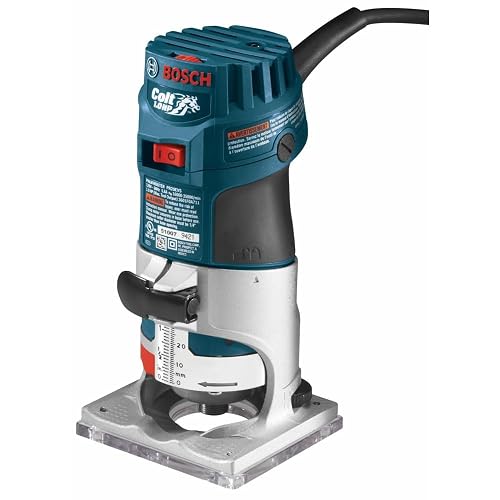 Best budget pickBOSCH PR20EVS Colt 1.0 HP Variable-Speed Palm Router, Quick-Clamp SystemView on Amazon
Our Top Picks
Quick Comparison
| Product | Best for | Key feature |
|---|---|---|
| Bosch 1617EVSPK Combination Plunge and Fixed-Base Router | Overall use with both base styles | Interchangeable plunge and fixed bases |
| DEWALT 20V Max XR Cordless Router | Cordless shop and site work | Brushless cordless motor |
| DEWALT DW616 Fixed Base Router | Edge profiling and trim routing | 11.0 amp motor in a fixed base |
| Bosch 1617EVS Electronic Fixed-Base Router | Repeatable fixed-base cuts | Electronic speed control |
| Makita RP2301FC Plunge Router | Plunge cuts and dadoes | Variable speed plunge base |
| Bosch PR20EVS Colt Palm Router | Light trim and detail work | Compact palm design |
Bosch 1617EVSPK 2.25 HP Combination Plunge- and Fixed-Base Router
Wood router for woodworking with exclusive quick-clamp system, variable speed, microfine depth & Constant Response Circuitry Bosch 1617EVSPK 2.25 HP Combination Plunge- and Fixed-Base Router
Best for: Woodworkers who want one router that handles both plunge and fixed-base work.
This kit suits furniture makers and cabinetmakers who switch between mortising, dadoes and edge profiling and want to avoid buying two separate machines.
Key specs
- 2.25 HP motor
- Variable speed control
- Plunge and fixed bases included
- Quick-clamp base system
Pros
- Two bases in one kit cover most shop routing tasks.
- Variable speed lets you match speed to bit diameter and wood species.
- Quick-clamp system makes base swaps faster than standard thumbscrews.
Cons
- Heavier than palm routers, which can tire your hands on overhead work.
- The kit costs more up front than a single fixed-base model.
Bottom line: The safest all-around pick for a shop that needs both plunge and fixed-base capability in one tool.
DEWALT 20V Max XR Cordless Router, Brushless, Tool Only (DCW600B)
DEWALT 20V Max XR Cordless Router, Brushless, Tool Only (DCW600B)
Best for: Cordless shop and site work where power cords are a hassle.
This suits cabinet installers and hobbyists who rout on job sites or in spaces without convenient outlets. The brushless motor is designed for longer runtime per battery charge.
Key specs
- 20V Max XR battery platform
- Brushless motor
- Tool only (battery and charger sold separately)
Pros
- No cord frees up placement on large panels and site work.
- Brushless design is generally associated with longer tool life and steadier output.
- Works with an existing DEWALT 20V battery family.
Cons
- Battery runtime limits continuous heavy cuts compared with corded routers.
- Requires a separate battery and charger if you do not already own them.
Bottom line: Best for mobile work and anyone already invested in the DEWALT 20V system.
DEWALT Router, Fixed Base, 1-3/4-HP, 11.0 Amp Motor (DW616)
DEWALT Router, Fixed Base, 1-3/4-HP, 11.0 Amp Motor (DW616)
Best for: Edge profiling and trim routing in a fixed-base setup.
This is a common choice for woodworkers who mount routers under tables and need a reliable workhorse for profiles and rabbets.
Key specs
- 1-3/4 HP motor
- 11.0 amp motor
- Fixed base
Pros
- Fixed base is stable for table mounting and repeated edge work.
- The amperage rating suggests solid torque for mid-size bits.
- Simple controls reduce the number of things that can go wrong.
Cons
- No plunge capability, so mortising requires a separate tool.
- Less speed-control flexibility than electronic variable-speed models.
Bottom line: A sensible choice for table-mounted edge work and profile routing in a shop that does not need plunge cuts.
Bosch 1617EVS 2.25 HP Electronic Fixed-Base Router
Router woodworking with variable speed dial, microfine depth adjust, constant response, clean router wood cuts Bosch 1617EVS 2.25 HP Electronic Fixed-Base Router
Best for: Repeatable fixed-base cuts where consistent speed matters.
This suits woodworkers who run production runs of moldings or repeated joinery and want stable speed under load.
Key specs
- 2.25 HP motor
- Electronic variable speed
- Fixed base
Pros
- Electronic speed control helps maintain RPM when cutting dense hardwood.
- Fine depth adjustment supports precise repeat setups.
- Fixed base works well with router tables and guided cuts.
Cons
- Fixed base only, so plunge work needs a different router.
- Heavier than palm designs, which limits one-handed control.
Bottom line: A strong pick for shops that prioritize repeatable fixed-base cuts and steady speed control.
Makita RP2301FC 3-1/4 HP Plunge Router, with Variable Speed
Makita RP2301FC 3-1/4 HP* Plunge Router, with Variable Speed
Best for: Plunge cuts such as dadoes, mortises and sign lettering.
This suits furniture builders and sign makers who make many plunge cuts and want a higher horsepower rating for deeper passes.
Key specs
- 3-1/4 HP motor
- Variable speed
- Plunge base
Pros
- Plunge base makes dadoes and mortises faster than hand-plunging a fixed router.
- Higher horsepower suits deeper cuts in hardwood.
- Variable speed supports a range of bit sizes.
Cons
- Larger and heavier, which can be tiring during long sessions.
- No fixed-base option included, so table work requires an extra base.
Bottom line: The right choice for plunge-heavy shop work where horsepower and depth control matter most.
BOSCH PR20EVS Colt 1.0 HP Variable-Speed Palm Router, Quick-Clamp System
Small router with 5.6 amp motor, soft start, constant response circuitry, ergonomic grip, rugged aluminum base, 1/4" collet BOSCH PR20EVS Colt 1.0 HP Variable-Speed Palm Router, Quick-Clamp System
Best for: Light trim, detail work and small-shop routing on a budget.
This suits hobbyists and beginners who want a compact router for edge trimming, inlay work and small projects, not heavy stock removal.
Key specs
- 5.6 amp motor
- 1.0 HP
- Variable-speed control
- Soft start
- 1/4″ collet
Pros
- Palm design is light and easy to control one-handed.
- Soft start and constant response circuitry help keep cuts smooth.
- Works well for trimming laminate edges and small inlay jobs.
Cons
- Limited power for large bits or deep passes in hardwood.
- Not suited to heavy-duty production work.
Bottom line: A budget-friendly companion for light work, not a primary heavy-duty machine.
Buying Guide
Motor power and horsepower
Heavy-duty work usually starts around 2 HP. Larger bits, deep dadoes and hardwood stock all put more load on the motor. Check whether the rating is peak or continuous, since manufacturers do not always state it the same way.
Good picks for this: Makita RP2301FC, Bosch 1617EVS
Plunge versus fixed base
A plunge base lets you start a cut in the middle of a workpiece, which is essential for mortises and stopped dadoes. A fixed base is steadier for edge work and table mounting. If you need both, look for a combination kit.
Good picks for this: Bosch 1617EVSPK, DEWALT DW616
Speed control
Variable speed matters because large bits need slower RPM to avoid burning and chatter. Electronic speed control tends to hold speed better under load than basic mechanical dials.
Good picks for this: Bosch 1617EVS, Bosch PR20EVS
Cordless versus corded
Corded routers deliver steady power for long sessions. Cordless models give freedom on job sites but are limited by battery runtime, especially on dense hardwood.
Good picks for this: DEWALT 20V Max XR, DEWALT DW616
Collet size and bit compatibility
Most full-size routers use 1/2″ collets, while palm routers often use 1/4″. Confirm your bit shank size before buying, and check whether the collet system accepts reducer sleeves.
Good picks for this: Bosch 1617EVSPK, Makita RP2301FC
Weight and handling
Heavier routers are more stable on a table but harder to control freehand. Balance matters too. If you do mostly freehand edge work, a mid-weight fixed-base router is often easier to manage than the heaviest plunge model.
Good picks for this: Bosch PR20EVS, DEWALT 20V Max XR
Care and durability
Keep the collet clean, check carbon brushes on corded motors, and tighten base clamps before each session. Brushless designs are generally associated with lower maintenance, but all routers benefit from regular dust removal.
Good picks for this: DEWALT 20V Max XR, Bosch 1617EVS
FAQ
What counts as a heavy-duty wood router?
Most woodworkers treat routers rated around 2 HP and above, with a stable base and variable speed, as heavy-duty. Smaller palm routers are better for light trimming.
Is a plunge router necessary for furniture making?
Not always, but it is very useful for mortises, stopped dadoes and sign lettering. Fixed-base routers can do edge work and profiles without one.
Should I buy a cordless router for shop use?
Cordless models are convenient, but corded routers usually offer steadier power for long sessions in dense hardwood. Consider how and where you work.
What speed should I run a large router bit at?
Larger diameter bits generally need slower speeds. Check the bit manufacturer’s recommended RPM range and use variable speed to match it.
Do I need a router table?
A router table is helpful for small pieces and repeated edge work, and a fixed-base router is the usual choice for mounting. It is not required for every project.
What safety gear should I use with a router?
Wear eye and hearing protection, use a dust collection setup, and keep hands clear of the bit path. If you are unsure about safe setup or technique, consult an experienced woodworker or a qualified instructor.
Conclusion
For most serious woodworkers, the best heavy-duty wood router is the one that matches your main task. The Bosch 1617EVSPK suits shops that want both plunge and fixed-base options in one kit. Makita RP2301FC fits plunge-heavy work, while the Bosch 1617EVS and DEWALT DW616 are strong fixed-base choices. The DEWALT 20V Max XR serves mobile work, and the Bosch PR20EVS is a light companion rather than a primary machine.
Sources
- Workplace power tool and machine guarding requirements, including safe operation practices (osha.gov)
- Consumer safety guidance for power tools and hand-held electrical equipment (cpsc.gov)
- Measurement standards and general reference for precision tool specifications (nist.gov)
Related reading
- 5 Best Heavy Duty Wood Routers for Serious Woodworkers (2026)
- Wood by Wright Router Plane Compared: 7 Best Picks for 2026
- Wood Router for Lettering: 7 Best Picks for Sign Making in 2026
- Wood Router Letter Stencils: 4 Best for Sign Making and Crafts (2026)
- Wood Router Bit for Drill: 3 Best Picks Compared (2026)
About Claire Whitaker
Claire Whitaker is part of our editorial team and reviews and edits our woodworking guides, checking product details against manufacturer specifications and owner feedback.