By Claire Whitaker
Updated November 2026
Choosing cnc router wood joints bits is less about finding the single best cutter and more about matching the profile, shank size and joint type to the work in front of you. This list covers seven router bits built for finger joints, glue joints and tongue-and-groove work. Selection criteria were based on manufacturer specifications, brand reputation in the woodworking community, and the patterns owners tend to report about fit, runout and resharpening. We did not test these bits ourselves; the comparisons below rely on published specs and documented owner feedback.
Our top picks at a glance
- 1
 TOP CHOICEBest overallFreud 99-037: 1-3/8" (Dia.) Finger Joint Bit with 1/2" ShankView on Amazon
- 2
 TOP CHOICEBest for budget projectsFivePears Finger Joint Router Bit with 1/2" Shank,Reversible Finger JoView on Amazon
- 3
 TOP CHOICEBest for DIY furniture buildsReversible Finger Glue Joint Router Bit 1/2 Inch Shank, Newdeli BearinView on Amazon
- 4
 Best for wide stockFreud 99-039: 2" (dia.) Variable Height Finger Joint Bit with 1/2" shankView on Amazon
- 5
 Best for cabinet doors and framesMEANLIN 3PCS Reversible Finger Joint Router Bit & Tongue and Groove RoView on Amazon
- 6
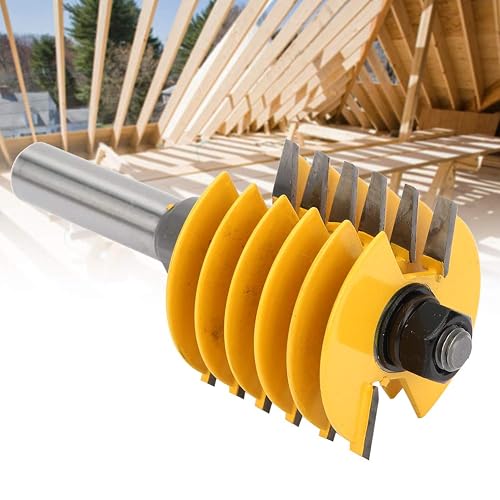 Best for bearing-guided workFinger Joint Router Bit Finger Joint Router Bits 1 2 Inch Shank FingerView on Amazon
- 7
 Best for solid wood panelsFreud 99-031 Reversible Glue Joint Bit for Solid Wood PanelsView on Amazon
Our Top Picks
Quick Comparison
| Product | Best for | Key feature |
|---|---|---|
| Freud 99-037 1-3/8″ Finger Joint Bit | General finger joints in medium stock | 1-3/8″ diameter, 1/2″ shank |
| FivePears Finger Joint Router Bit | Budget projects | Reversible profile |
| Newdeli Reversible Finger Glue Joint Router Bit | DIY furniture builds | Bearing-guided reversible design |
| Freud 99-039 2″ Variable Height Finger Joint Bit | Wide stock and thick panels | Adjustable cutting height |
| MEANLIN 3PCS Reversible Finger Joint Router Bit Set | Cabinet doors and frames | Set of three bits |
| Finger Joint Router Bit with Bearing | Bearing-guided joinery | Integrated bearing |
| Freud 99-031 Reversible Glue Joint Bit | Solid wood panels | 1-1/2″ diameter, reversible |
Freud 99-037: 1-3/8″ (Dia.) Finger Joint Bit with 1/2″ Shank
Freud 99-037: 1-3/8" (Dia.) Finger Joint Bit with 1/2" Shank
Best for: General-purpose finger joints in medium-thickness stock.
This is a dependable choice for woodworkers who want a well-known brand and a standard finger joint profile. It suits furniture carcases, boxes and drawer construction where a clean, repeatable interlock matters.
Key specs:
- Diameter: 1-3/8″
- Shank: 1/2″
- Joint type: finger joint
Pros:
- Well-established brand with broad owner familiarity
- Standard profile that is easy to match with mating pieces
- 1/2″ shank suits most mid-size routers and CNC spindles
Cons:
- Fixed profile limits flexibility compared with reversible designs
- Requires careful depth setting to avoid tight or loose fits
Bottom line: A solid first pick for anyone who wants a reliable, brand-name finger joint bit for everyday furniture work.
FivePears Finger Joint Router Bit with 1/2″ Shank, Reversible Finger Joint Glue Joint Router Bit for Woodworking
FivePears Finger Joint Router Bit with 1/2" Shank,Reversible Finger Joint Glue Joint Router Bit for Woodworking
Best for: Budget projects that still need reversible finger joints.
Hobbyists building small boxes, shelves or practice pieces can get a reversible profile without a premium price point. It is a practical way to learn finger joinery on a CNC or handheld setup.
Key specs:
- Shank: 1/2″
- Profile: reversible finger and glue joint
- Application: woodworking joinery
Pros:
- Reversible design doubles the usable joint options
- Budget-friendly entry point for finger joinery
- 1/2″ shank fits common router collets
Cons:
- Owners often mention that carbide quality is less refined than premium brands
- May require more test cuts to dial in a snug fit
Bottom line: Good for beginners and occasional users who want to try finger joints without committing to a higher-end bit.
Reversible Finger Glue Joint Router Bit 1/2 Inch Shank, Newdeli Bearing Finger Joint Router Bits Carbide Joinery Wood Milling Cutter for DIY Door Table Cabinet Shelve Furniture
Reversible Finger Glue Joint Router Bit 1/2 Inch Shank, Newdeli Bearing Finger Joint Router Bits Carbide Joinery Wood Milling Cutter for DIY Door Table Cabinet Shelve Furniture
Best for: DIY furniture builds, including tables, cabinets and shelving.
The bearing-guided design makes this bit easier to control when running edges and mating joints by hand or on a simple guided setup. It fits home shops building furniture pieces where repeatability matters.
Key specs:
- Shank: 1/2″
- Design: reversible, bearing-guided
- Material: carbide-tipped
Pros:
- Bearing guide helps keep the cut consistent
- Reversible profile covers both sides of a joint
- Suited to a wide range of furniture applications
Cons:
- Bearing wear can affect joint tightness over time
- Owners often recommend checking bearing alignment before each session
Bottom line: A practical choice for home woodworkers who build furniture and want a bearing-guided reversible bit.
Freud 99-039: 2″ (dia.) Variable Height Finger Joint Bit with 1/2″ shank
Freud 99-039: 2" (dia.) Variable Height Finger Joint Bit with 1/2" shank
Best for: Wide stock and thick panels that need a larger finger joint.
A 2″ diameter bit makes sense for thicker boards and wider joints. The variable height feature lets you adjust the cutting profile, which helps when matching different stock thicknesses.
Key specs:
- Diameter: 2″
- Shank: 1/2″
- Feature: variable height adjustment
Pros:
- Variable height adds flexibility for different stock thicknesses
- Larger diameter handles wide boards well
- Recognized brand with consistent manufacturing standards
Cons:
- Large diameter requires a router with enough power and speed control
- Setup takes longer than fixed-profile bits
Bottom line: Best for woodworkers joining wide or thick stock who have a capable machine and want adjustability.
MEANLIN 3PCS Reversible Finger Joint Router Bit & Tongue and Groove Router Bit 1/4 Inch Shank Woodworking Carbide Joinery Wood Milling Cutter for Cabinet Door, Frames and More
MEANLIN 3PCS Reversible Finger Joint Router Bit & Tongue and Groove Router Bit 1/4 Inch Shank Woodworking Carbide Joinery Wood Milling Cutter for Cabinet Door, Frames and More
Best for: Cabinet doors, frames and tongue-and-groove work.
A three-piece set covers both finger joint and tongue-and-groove profiles in one purchase. It suits cabinetmakers and frame builders who switch between joint types regularly.
Key specs:
- Set: 3 pieces
- Shank: 1/4″
- Profiles: reversible finger joint and tongue-and-groove
Pros:
- Multiple joint profiles in a single set
- Useful for cabinet doors, frames and drawer work
- 1/4″ shank suits smaller collets and compact routers
Cons:
- 1/4″ shank is less rigid than 1/2″ for heavy cuts
- Smaller shank may limit use on larger industrial spindles
Bottom line: A versatile set for frame and cabinet builders who want several joint profiles without buying separate bits.
Finger Joint Router Bit Finger Joint Router Bits 1 2 Inch Shank Finger Joint Router Bit Woodworking Milling Cutter with Bearing
Finger Joint Router Bit Finger Joint Router Bits 1 2 Inch Shank Finger Joint Router Bit Woodworking Milling Cutter with Bearing
Best for: Bearing-guided joinery on handheld or simple guided routers.
The integrated bearing keeps the cutter following the template or workpiece edge, which helps with consistent finger spacing. It is a reasonable option for woodworkers working through guided setups.
Key specs:
- Shank: 1/2″
- Feature: integrated bearing
- Application: finger joint milling
Pros:
- Bearing guidance supports repeatable cuts
- 1/2″ shank matches common router setups
- Straightforward finger joint profile
Cons:
- Listing details are limited, so verify dimensions before buying
- Bearing requires periodic cleaning and inspection
Bottom line: Suitable for those who prefer bearing-guided finger joints and are comfortable verifying specs on the listing.
Freud 99-031 Reversible Glue Joint Bit for Solid Wood Panels
Freud Reversible Glue Joint Bit for Solid Wood Panels – Ideal for Joints in Raised Panels, Drawer Fronts & Tabletops – 1-1/2" Diameter, 1/2" Shank – 99-031
Best for: Glue joints in solid wood panels, tabletops and drawer fronts.
Edge-gluing panels is one of the most common tasks in furniture making, and a dedicated glue joint bit helps produce tight, flat mating edges. This Freud model is designed for that purpose.
Key specs:
- Diameter: 1-1/2″
- Shank: 1/2″
- Profile: reversible glue joint
Pros:
- Purpose-built for panel glue joints
- Reversible profile gives two usable edges
- Well-known brand with broad availability of replacement parts
Cons:
- Glue joint profile does not cover finger or tongue-and-groove work
- Requires a router table or guided setup for safe, accurate panel edges
Bottom line: The right pick for anyone who builds tabletops and panels and needs a dependable glue joint profile.
Buying Guide
Joint Type
Start by deciding which joint you need. Finger joints (box joints) are strong for case construction, glue joints create flat panel edges for glue-ups, and tongue-and-groove joints suit frames and paneling. A bit designed for one joint type rarely performs well in another. Read the profile description before you buy.
Good picks for this: Freud 99-037 and Freud 99-031
Shank Size
Most bits in this category use a 1/2″ shank, which offers more rigidity and less vibration than 1/4″. Check that your router collet or CNC spindle accepts the shank diameter before ordering. Smaller shanks can work for light passes but are less forgiving on heavy cuts.
Good picks for this: FivePears and Newdeli
Diameter and Stock Thickness
Larger diameters cut wider joints and handle thicker stock but demand more power and slower feed rates. A 1-3/8″ or 2″ bit suits thick boards, while smaller diameters work well for thin drawer sides. Match the bit diameter to your stock and your machine’s capacity.
Good picks for this: Freud 99-039 and Freud 99-037
Reversibility and Versatility
Reversible profiles let you cut both halves of a joint with one bit by flipping it. This saves money on additional bits but requires careful setup so the two halves fit precisely. If you cut many joints of the same size, a reversible bit can be a practical investment.
Good picks for this: MEANLIN 3PCS set and FivePears
Bearing Guidance
Bearing-guided bits follow an edge or template, which helps with repeatable cuts in handheld and simple guided setups. Inspect the bearing before each use, since wear or debris can change the cut depth and joint fit.
Good picks for this: Newdeli and the bearing-equipped finger joint bit
Carbide Quality and Durability
Carbide-tipped bits hold an edge far longer than high-speed steel when cutting hardwoods. Look for even brazing on the carbide tips and balanced construction. Owners commonly report that resharpening extends bit life, so consider whether the manufacturer offers a sharpening service.
Good picks for this: Freud 99-039 and Freud 99-031
Care and Maintenance
Clean resin buildup from the cutting edges after each session, and store bits in a case to protect the carbide from impact. Check that set screws or collet nuts are tight before every cut. Always wear eye and hearing protection, and keep hands clear of the cutting path. For guidance on router safety, consult the manufacturer’s manual or a qualified woodworking instructor.
Good picks for this: Freud 99-037 and MEANLIN 3PCS set
FAQ
What is the difference between a finger joint bit and a glue joint bit?
A finger joint bit cuts interlocking fingers that mesh together, creating a mechanical joint with a lot of end-grain glue surface. A glue joint bit cuts a flat or slightly profiled edge meant to be glued edge-to-edge to make a wider panel. The two serve different structural purposes.
Can I use these bits in a CNC router?
Yes, as long as the shank size matches your spindle or collet and the cutting depth and feed rate are within the bit’s and machine’s limits. Verify the diameter and shank against your machine specifications, and start with conservative passes when testing a new profile.
Do I need a router table for these bits?
Glue joint and panel-edge bits are safer and more accurate on a router table, where the workpiece is fed against a fence. Finger joints are often cut with a jig or a guided setup. Handheld use is possible for experienced users, but a table or jig reduces risk.
What wood species work best with finger joint bits?
Hardwoods such as maple, oak and walnut produce crisp, durable finger joints. Softwoods like pine can be cut too but may tear more easily. Always make test cuts on scrap of the same species and thickness before cutting your final pieces.
How do I know if a joint is fitting correctly?
A properly fitted finger joint should slide together with light hand pressure and close without gaps. Adjust depth or fence position in small increments, and keep a log of settings for repeatable results. Dry-fit before applying glue.
How often should I sharpen a carbide router bit?
Sharpening frequency depends on the wood, feed rate and how often you run the bit. Signs of dulling include burn marks, rougher cuts and increased force needed to feed the stock. Professional resharpening services are available for carbide tooling.
Conclusion
For most woodworkers looking at cnc router wood joints, the Freud 99-037 is a sensible starting point because of its standard finger joint profile and brand familiarity. Hobbyists on a tighter budget may prefer the FivePears reversible bit, while furniture builders might look at the Newdeli bearing-guided design. For wide stock, the Freud 99-039 offers adjustability, and for cabinet and frame work, the MEANLIN set covers several profiles. Anyone building solid panels should consider the Freud 99-031 glue joint bit. Match the profile to your joint, confirm your shank size, and make test cuts before committing to a final piece.
Sources
- Workplace and power tool safety guidance, including machine guarding and personal protective equipment (osha.gov)
- Consumer product safety information on power tools and shop equipment (cpsc.gov)
- Forest Products Laboratory research on wood properties and joinery performance (fpl.fs.usda.gov)
Related reading
- Wood Router Computer Controlled: How to Set Up and Run a CNC Router (2026)
- Wood Cnc Router Designs: A Step-by-Step Guide for Beginners
- Wood Carving with Router: 5 Best CNC Machines and Bits Compared
- Wood Carving with CNC Router: 5 Best Machines for Hobbyists in 2026
- Vertical CNC Wood Router Picks: 6 Best Desktop Machines Compared (2026)
About Claire Whitaker
Claire Whitaker is part of our editorial team and reviews and edits our woodworking guides, checking product details against manufacturer specifications and owner feedback.