 By Claire Whitaker
Updated November 2026
Choosing among 4 h beginner woodworking projects can be hard when every cover promises easy builds and beautiful results. This list is built for readers who want a practical starting point: clear step-by-step plans, realistic skill levels, and enough detail to finish a piece without guessing. The selection criteria were clarity of instructions, quality of cut lists and diagrams, range of project types, beginner-friendly tool requirements, and general reader feedback patterns. This review is research-based. It draws on listing details, publisher descriptions and common owner feedback themes. None of these books were tested by the author.
Our top picks at a glance
- 1
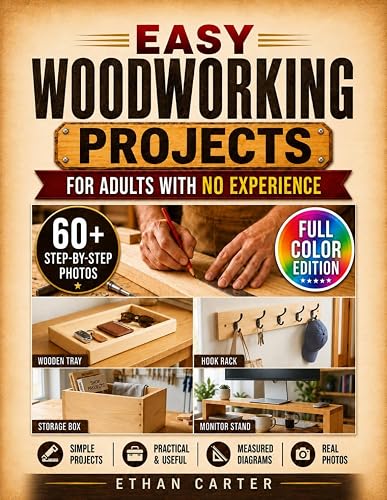 TOP CHOICEBest overallEasy Woodworking Projects for Adults with No ExperienceView on Amazon
- 2
 TOP CHOICEBest for complete referenceThe DIY Woodworking Projects BibleView on Amazon
- 3
 TOP CHOICEBest for first-time buildersWoodworking Projects for BeginnersView on Amazon
- 4
 Best for learning core skillsThe Complete Book of WoodworkingView on Amazon
- 5
 Best for small spacesNo Table Saw Woodworking Projects for BeginnersView on Amazon
Our Top Picks
| Product | Best for | Key feature |
|---|---|---|
| Easy Woodworking Projects for Adults with No Experience | Adults starting from zero | Step-by-step plans with real photos and measured diagrams |
| The DIY Woodworking Projects Bible | Readers who want one large reference | 40+ projects plus guidance on tools, wood and finishes |
| Woodworking Projects for Beginners | First-time builders with basic tools | Lots of step-by-step creations needing minimal equipment |
| The Complete Book of Woodworking | Learners who want technique depth | 40+ projects with 1,200+ photos and carpentry basics |
| No Table Saw Woodworking Projects for Beginners | Makers with limited space or no table saw | Projects built without a table saw, with cut lists |
Easy Woodworking Projects for Adults with No Experience
Easy Woodworking Projects for Adults with No Experience: From First Cut to Projects You'll Be Proud to Share | Step-by-Step Plans with Real Photos and Measured Diagrams for Every Build
Best for: Adults starting from zero who want a clear, forgiving path
This book suits adult beginners who have never cut a board to length and want guidance that starts at the very first cut. The title emphasizes projects you will be proud to share, which points toward finished, usable pieces rather than abstract exercises.
Key specs
- Format: step-by-step woodworking plans
- Includes real photos and measured diagrams for each build
Pros
- Starts from the first cut, with no assumed experience
- Diagrams with measurements reduce guesswork
- Projects are framed around pieces you can actually use
Cons
- Less depth on advanced joinery than dedicated technique manuals
- Readers who already own shop tools may want more project variety
Bottom line: A strong first purchase for an adult with no experience who wants to start building right away.
The DIY Woodworking Projects Bible
The DIY Woodworking Projects Bible: [5 in 1] Learn to Build 40+ Projects You'll Be Proud Of | Everything From Choosing Tools and Wood to Cutting Joints and Applying Finishes, No Experience Needed
Best for: Readers who want one large reference covering many projects
This title is aimed at beginners who want a single book to grow with them. Its listing promises coverage from choosing tools and wood to cutting joints and applying finishes, so it works well as a foundation for a home workshop library.
Key specs
- Listed as covering 40+ projects
- Covers tools, wood selection, joinery and finishing
Pros
- Broad coverage from materials to finishing
- Many projects in one volume
- Useful reference for later builds
Cons
- Broad scope can mean less detail on each individual project
- Larger volume may feel overwhelming for a first week of practice
Bottom line: Best for readers who want a single comprehensive reference that covers the whole craft.
Woodworking Projects for Beginners
Woodworking Projects for Beginners: Lots of Step-by-Step DIY Creations for First-Time Builders. No Experience Needed, Just Basic Tools and a Bit of Space to Make Beautiful, Useful Pieces from Wood
Best for: First-time builders who have only basic tools
This book is written for people who want to build something useful without buying a large tool collection. It emphasizes just basic tools and a bit of space, making it a practical match for apartment dwellers and hobbyists with a small corner of a garage.
Key specs
- Step-by-step DIY creations for first-time builders
- Designed around basic tools and limited space
Pros
- Requires only basic tools to begin
- Many step-by-step builds for variety
- Focused on beautiful, useful results
Cons
- Limited detail on advanced machine setups
- Readers wanting in-depth technique explanations may need a second book
Bottom line: A good pick for a beginner who wants to start with hand tools and a modest workspace.
The Complete Book of Woodworking
The Complete Book of Woodworking: Step-by-Step Guide to Essential Woodworking Skills, Techniques, Tools and Tips (Landauer) 40+ Easy-to-Follow Projects and Plans, 1,200+ Photos, and Carpentry Basics
Best for: Learners who want technique depth alongside projects
This is a larger reference for readers who want to understand the why behind each step. Its listing combines essential skills, techniques, tools and tips with a broad set of projects and plans, which suits a learner who wants to build a solid skill base.
Key specs
- 40+ easy-to-follow projects and plans
- 1,200+ photos
- Covers carpentry basics and essential techniques
Pros
- Heavy use of photos supports visual learners
- Technique focus builds transferable skills
- Covers carpentry basics alongside projects
Cons
- Size and breadth can feel dense for a quick weekend build
- Some readers may prefer a project-first layout
Bottom line: Best for a beginner who wants to learn the craft thoroughly rather than only follow plans.
No Table Saw Woodworking Projects for Beginners
No Table Saw Woodworking Projects for Beginners: The Easy, Stress-Free Way to Build Useful Things Even in Small Spaces – Exact Shopping & Cut Lists, No Wasted Wood, and the Pride of "I Built That"
Best for: Makers with limited space or no table saw
This book is for beginners who cannot or do not want to buy a table saw. Its focus on small spaces and no wasted wood makes it useful for renters and anyone working with a modest tool set.
Key specs
- Projects designed to be built without a table saw
- Includes shopping lists and cut lists
Pros
- Practical for small workshops and apartments
- Cut lists and shopping lists help plan material use
- Emphasis on minimizing wasted wood
Cons
- Some projects may still rely on tools beyond a table saw
- Limited coverage of table saw technique, by design
Bottom line: The right choice for a beginner building in a small space without a table saw.
Buying Guide
Skill level and starting point
Check whether the book assumes any prior experience. Adult beginners with no tools should look for titles that start with the first cut and explain basic measuring, marking and safety. Readers with some experience can move faster to joinery and finishing sections.
Good picks for this: Easy Woodworking Projects for Adults with No Experience, Woodworking Projects for Beginners
Quality of plans, diagrams and cut lists
Look for measured diagrams and clear cut lists. Plans that give dimensions for every part reduce mistakes and wasted material. Photos help confirm what a finished piece should look like at each stage.
Good picks for this: Easy Woodworking Projects for Adults with No Experience, The Complete Book of Woodworking
Range of projects
A book with many projects gives you variety and practice across different joints and sizes. A narrower book can be useful if you want to focus on one type of build, such as small boxes or furniture.
Good picks for this: The DIY Woodworking Projects Bible, The Complete Book of Woodworking
Tool requirements
Check which tools the projects assume. If you have only a drill, a handsaw and a square, choose a book that works with basic equipment. If you plan to buy a table saw later, a title with table saw sections will serve you longer.
Good picks for this: Woodworking Projects for Beginners, No Table Saw Woodworking Projects for Beginners
Use case and workspace
Consider where you will build. Apartment and small-garage makers benefit from projects with compact footprints and minimal dust. Those with a full shop can use larger furniture plans.
Good picks for this: No Table Saw Woodworking Projects for Beginners, Woodworking Projects for Beginners
Depth of technique coverage
If you want to understand joinery, wood movement and finishing, look for a book with a technique section. Books focused mainly on plans will get you building faster but may leave you dependent on instructions.
Good picks for this: The Complete Book of Woodworking, The DIY Woodworking Projects Bible
Safety and shop habits
Good beginner books explain safe tool use, dust control and eye and hearing protection. Always review manufacturer manuals for any power tool before use, and consult a qualified instructor for tasks you are unsure about.
Good picks for this: The Complete Book of Woodworking, Easy Woodworking Projects for Adults with No Experience
FAQ
What is the best first project for a complete beginner?
Many beginners start with a simple box, a small shelf or a basic stool. These builds use straight cuts, basic joinery and a few fasteners, which lets you practice measuring and assembly without advanced tools.
Do I need a table saw to start woodworking?
No. Many beginner projects can be built with a handsaw, a drill, clamps and a square. Books like No Table Saw Woodworking Projects for Beginners are written around this approach.
How long does a beginner woodworking project usually take?
Small projects often take one to three weekends, including finishing time. Finishes such as oil or stain need drying time between coats, so plan extra days for that stage.
What wood should beginners use?
Pine and poplar are common choices because they are affordable, easy to cut and forgiving. Check the plan for the recommended species and grade before buying.
Are beginner woodworking books still useful with online videos available?
Yes. Books offer measured diagrams, cut lists and structured sequences that are easy to follow at the bench. Videos can complement them by showing motion and technique.
How do I keep my first projects safe?
Wear eye and hearing protection, keep hands clear of blades and bits, and work with clamps rather than hands. Read tool manuals carefully, and consult a qualified professional for any task that feels beyond your skill level.
Conclusion
For most adult beginners, Easy Woodworking Projects for Adults with No Experience is a strong starting point because it begins at the first cut and uses measured diagrams. Readers who want one large reference should consider The DIY Woodworking Projects Bible, while first-time builders with basic tools will find Woodworking Projects for Beginners approachable. The Complete Book of Woodworking suits learners who want technique depth, and No Table Saw Woodworking Projects for Beginners fits small workspaces. Match the book to your starting skill, your tools and your space.
Sources
- Consumer safety guidance on power tools and workshop hazards (cpsc.gov)
- Workplace safety standards for woodworking tools and dust exposure (osha.gov)
- Historic woodworking and joinery techniques explained in public heritage resources (nps.gov)
Related reading
- Top 3 CNC Router Woodworking Projects Books for Beginners (2026)
- Good First Woodworking Projects: 5 Easy Builds for Beginners
- Easy Woodworking Wood Projects That Sell: 7 Builds for Beginners
- Easy Woodworking Projects for Beginners That Sell: 7 Picks (2026)
- Beginner Woodworking Projects: A Skill-by-Skill Path
- Beginner Woodworking Projects That Sell: 6 Builds for New Makers
- Bearded Viking Woodworking Projects: A Step-by-Step Guide for Beginners
About Claire Whitaker
Claire Whitaker is part of our editorial team and reviews and edits our woodworking guides, checking product details against manufacturer specifications and owner feedback.