By Audrey Hayes
Updated November 2026
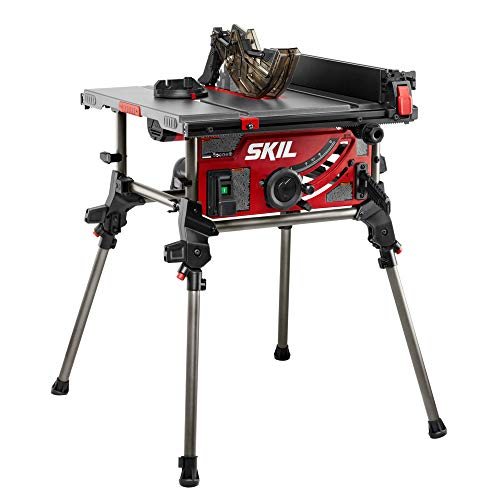
The best worksite table saw is the one that makes accurate rip and crosscuts, moves easily between jobs, and stays safe when the shop is a driveway or a truck bed. This guide walks through the factors that separate a good jobsite saw from a frustrating one, so you can narrow your choices before you shop.
Start with Your Typical Cuts
Before comparing models, write down the materials and cuts you make most. A contractor cutting dimensional lumber, sheet goods and trim needs different capacity than someone building cabinets from plywood at a fixed stand. Pay attention to these numbers:
Shopping for one? See our guide: Harbor Freight Tools Table Saw: 6 Best Picks Compared (2026).
- Rip capacity: Most 10-inch jobsite saws rip about 24 to 30 inches to the right of the blade. Measure your largest sheet dimension and confirm the fence can handle it.
- Depth of cut: A 90-degree cut through 2x material needs roughly 3 inches of depth. Check that the blade height reaches it with room to spare.
- Bevel range: Many saws tilt to 45 degrees. Confirm that the bevel scale is easy to read if you cut compound angles.
If you already own a stand or plan to build one, read Table for Dewalt Table Saw: A Step-by-Step Guide to Building One (2026) to see how table dimensions affect support for long stock.
Evaluate Portability and Stand Design
A worksite saw spends more time in the back of a vehicle than on a bench, so weight and folding design matter as much as blade quality. Look for these features:
- A stand with folding legs and locking wheels that you can manage alone.
- Extension wings that fold flat and lock securely when you move the saw.
- A total weight you can lift into a truck without a second person.
Owners often report that a sturdy stand matters more than extra horsepower, because a wobbling table ruins accuracy on every cut. For combination options, see 7 Best Table Saw and Stand Combos for Jobsite and Home Shops (2026).
Check Fence, Blade and Dust Features
Accuracy depends on the fence and the blade. A fence that locks parallel to the blade and returns to the same setting each time saves more time than any motor upgrade. Also look at:
- Fence type: A rack-and-pinion fence with a positive lock is easier to set precisely than a basic clamp fence.
- Blade changes: Tool-free or single-wrench blade changes make swapping for dado work quicker. See 7 Best Dado Blades for Table Saw of 2026: Our Picks Compared if you cut grooves and rabbets.
- Dust port: A port that accepts a standard shop vacuum hose keeps job site dust down and improves visibility.
Plan for Power and Safety Systems
Most jobsite saws run on 120-volt household power. Check the amperage rating and use a dedicated circuit when possible, since running a saw on a crowded extension cord can cause tripping and motor strain. Also confirm the presence of a blade guard, riving knife and anti-kickback pawls. Blade guard systems are a basic safety requirement, not an optional extra.
If you are unsure about wiring or power needs at a job site, consult a licensed electrician.
Setup Checklist Before First Use
- Level the saw on firm ground and lock the wheels or legs.
- Check that the blade is parallel to the miter slot and the fence is square.
- Confirm the riving knife and guard are installed and move freely.
- Connect the dust port and verify suction before cutting.
- Wear eye and hearing protection and keep hands clear of the blade path.
Recommended gear
- Riving knife and blade set: A quality blade with a thin kerf reduces motor load and cleaner cuts on plywood. View on Amazon
- Push sticks and push blocks: These keep hands away from the blade on narrow rips. View on Amazon
- Outfeed support rollers: Stable support for long boards keeps cuts square when working alone. View on Amazon
Common Mistakes
- Choosing by motor amps alone and ignoring fence accuracy.
- Skipping the blade parallel check after moving the saw.
- Using a thin extension cord that causes voltage drop.
- Forgetting to remove the blade guard only when absolutely necessary and re-installing it immediately.
- Buying a stand that is too short for your longest boards.
FAQ
What size blade is standard for a worksite table saw?
Most jobsite saws use a 10-inch blade, which balances depth of cut with portability. Larger 12-inch saws are less common on job sites because of their weight.
Do I need a stand for a jobsite table saw?
A stand improves stability and support for long stock, and most jobsite saws are sold with or designed for one. Running a saw on a folding table is possible but makes accurate cuts harder.
How often should I check saw alignment?
Check blade parallel and fence square whenever you move the saw or change blades, and periodically during heavy use. Frequent checks prevent binding and inaccurate cuts.
Conclusion
The best worksite table saw matches your typical cuts, moves easily between sites, and offers a fence and safety system you can trust. Start with your material sizes, then compare stands, fence accuracy and dust control. Once you narrow your options, read the buying guides linked above to compare specific models.
Ready to choose one?
About Audrey Hayes
Audrey Hayes is part of our editorial team and reviews and edits our woodworking guides, checking product details against manufacturer specifications and owner feedback.