 By Claire Whitaker
Updated November 2026
Once you have a few beginner builds under your belt, the next step is picking DIY intermediate woodworking projects that stretch your joinery, layout and finishing skills without overwhelming your shop time. The books in this roundup were chosen for clear plans, accurate measurements, usable cut lists and a range of project types, from workbenches and storage to outdoor and furniture builds. We looked at published specifications, brand reputation with woodworking publishers, and the patterns owners tend to describe in reviews, including whether instructions are easy to follow and whether the plans hold up when you build them. None of these picks is a substitute for hands-on training, and you should always confirm dimensions against your own material before cutting.
Our top picks at a glance
- 1
 TOP CHOICEBest overallThe Complete Book of WoodworkingView on Amazon
- 2
 TOP CHOICEBest for building furnitureThe DIY Woodworking Projects BibleView on Amazon
- 3
 TOP CHOICEBest for quick weekend builds100 Weekend Projects Anyone Can DoView on Amazon
- 4
 Best for home improvementGreat Book of Woodworking ProjectsView on Amazon
- 5
 Best budget pickWoodworking Projects for BeginnersView on Amazon
- 6
 Best for shop upgradesHow to Make Workbenches and Shop Storage SolutionsView on Amazon
- 7
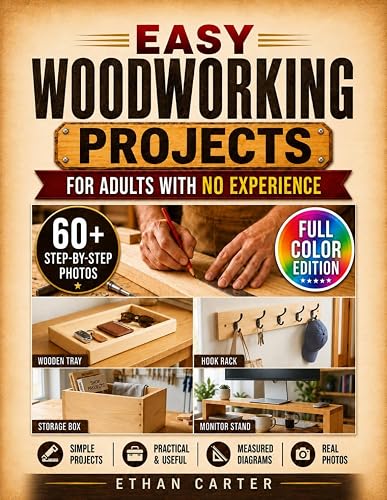 Best for adult learnersEasy Woodworking Projects for Adults with No ExperienceView on Amazon
Our Top Picks
Quick Comparison
| Product | Best for | Key feature |
|---|---|---|
| The Complete Book of Woodworking | Building core skills across many projects | 40+ projects with 1,200+ photos |
| The DIY Woodworking Projects Bible | Furniture and joinery practice | 40+ projects covering tools, wood and finishing |
| 100 Weekend Projects Anyone Can Do | Short builds you can finish in a weekend | 100 projects across furniture, storage and outdoor spaces |
| Great Book of Woodworking Projects | Improving the home indoors and outdoors | 50 projects from American Woodworker |
| Woodworking Projects for Beginners | Budget-minded builders with basic tools | Step-by-step creations needing a modest shop |
| How to Make Workbenches and Shop Storage Solutions | Upgrading your workshop | 28 shop projects including torsion boxes and outfeed tables |
| Easy Woodworking Projects for Adults with No Experience | Adults starting a second-stage build list | Measured diagrams and real photos for each build |
The Complete Book of Woodworking
The Complete Book of Woodworking: Step-by-Step Guide to Essential Woodworking Skills, Techniques, Tools and Tips (Landauer) 40+ Easy-to-Follow Projects and Plans, 1,200+ Photos, and Carpentry Basics
Best for: Building a broad skill set across many project types
This is a strong fit for intermediate builders who want one reference that covers techniques as well as finished projects. It pairs step-by-step instruction with a large number of photographs, which makes it easier to follow joinery steps. We also found How to Choose Safety Glasses for DIY Projects useful on this point.
Key specs:
- 40+ step-by-step projects and plans
- 1,200+ photos
- Covers essential skills, tools and carpentry basics
Pros:
- Strong balance of techniques and complete projects
- Photo-heavy layout helps with unfamiliar steps
- Useful as a long-term shop reference
Cons:
- Some builders find the project range skews toward basic pieces
- Large format can be awkward to keep open in a crowded shop
Bottom line: A good first purchase for an intermediate builder who wants to strengthen fundamentals while completing real projects.
The DIY Woodworking Projects Bible
The DIY Woodworking Projects Bible: [5 in 1] Learn to Build 40+ Projects You'll Be Proud Of | Everything From Choosing Tools and Wood to Cutting Joints and Applying Finishes, No Experience Needed
Best for: Furniture builds and cutting joints
Builders ready to move past simple boxes will get the most from this book, which emphasizes cutting joints and applying finishes. It is aimed at people who want to build pieces they can use every day.
Key specs:
- 40+ projects
- Covers choosing tools and wood, cutting joints and applying finishes
Pros:
- Good coverage of joinery and finishing
- Furniture-focused project selection
- Clear sequence from material selection to final coat
Cons:
- Listing claims “no experience needed,” so some projects may feel light for advanced intermediate builders
- Specific dimensions should be checked against your lumber
Bottom line: The right pick for intermediate builders who want to practice joinery through furniture-scale projects.
100 Weekend Projects Anyone Can Do
100 Weekend Projects Anyone Can Do: 100 Easy DIY Projects for Furniture, Storage, Outdoor Spaces, and More (Family Handyman 100)
Best for: Quick builds you can finish in a weekend
This book suits builders who want a steady stream of finished pieces. Projects are short enough to complete in a weekend, which helps you practice repeatable cuts and assembly without a long commitment.
Key specs:
- 100 projects
- Covers furniture, storage and outdoor spaces
Pros:
- Large variety of project types
- Builds are short enough to finish quickly
- Good for filling a project queue
Cons:
- Shorter builds may not challenge advanced joinery
- Some plans are simpler than the title might suggest
Bottom line: Ideal for intermediate builders who want variety and frequent finished results.
Great Book of Woodworking Projects
Great Book of Woodworking Projects: 50 Projects for Indoor Improvements and Outdoor Living from the Experts at American Woodworker (Fox Chapel Publishing) Plans & Instructions to Improve Every Room
Best for: Home improvement builds indoors and outdoors
Homeowners who want practical pieces for the house will find this useful. The projects come from American Woodworker, a long-running woodworking title, and cover both interior and exterior spaces.
Key specs:
- 50 projects
- Covers indoor improvements and outdoor living
Pros:
- Practical, house-focused project list
- Plans and instructions from an established woodworking publication
- Good range of room-by-room ideas
Cons:
- Outdoor projects will need weather-appropriate lumber and finishes
- Not every build will suit a small shop
Bottom line: Best for intermediate builders focused on improving their home with functional woodwork.
Woodworking Projects for Beginners
Woodworking Projects for Beginners: Lots of Step-by-Step DIY Creations for First-Time Builders. No Experience Needed, Just Basic Tools and a Bit of Space to Make Beautiful, Useful Pieces from Wood
Best for: Budget-minded builders with basic tools
This title is a practical choice if you want to keep your tool list short. It is written with first-time builders in mind, so intermediate readers should expect a gentler step-up but a solid refresher on basic technique.
Key specs:
- Step-by-step creations
- Designed for basic tools and limited shop space
Pros:
- Works with a modest tool kit
- Clear step-by-step format
- Good confidence builder before harder joinery
Cons:
- Projects may be too simple for experienced intermediate builders
- Less depth on advanced joinery than dedicated furniture books
Bottom line: A sensible pick for intermediate builders who are still building confidence or working with a limited shop.
How to Make Workbenches and Shop Storage Solutions
How to Make Workbenches & Shop Storage Solutions: 28 Projects to Make Your Workshop More Efficient from the Experts at American Woodworker (Fox Chapel Publishing) Torsion Boxes, Outfeed Tables, & More
Best for: Upgrading your workshop
Shop builders who want better workholding and storage will benefit most. Projects include torsion boxes and outfeed tables, which are useful for improving accuracy on larger builds.
Key specs:
- 28 projects
- Includes workbenches, torsion boxes and outfeed tables
Pros:
- Focused on shop efficiency
- Torsion box and outfeed table plans are useful for flat, stable surfaces
- Helps you build tools that improve every later project
Cons:
- Narrower focus than general project books
- Shop projects can use significant lumber and floor space
Bottom line: The right choice for intermediate builders whose next priority is a better shop setup.
Easy Woodworking Projects for Adults with No Experience
Easy Woodworking Projects for Adults with No Experience: From First Cut to Projects You'll Be Proud to Share | Step-by-Step Plans with Real Photos and Measured Diagrams for Every Build
Best for: Adults starting a second-stage build list
Adult builders who want clear visuals will appreciate the real photos and measured diagrams. The title targets people with no prior experience, so intermediate builders should use it as a structured refresher.
Key specs:
- Step-by-step plans with real photos
- Measured diagrams for every build
Pros:
- Diagrams make cut lists easy to check
- Real photos show finished details
- Approachable structure for adult learners
Cons:
- Projects lean simple for experienced intermediate builders
- Less focus on advanced joinery
Bottom line: A good match for intermediate builders who want clear diagrams for straightforward, giftable pieces.
Buying Guide
Skill level and joinery difficulty
Check whether a book’s projects use dado, rabbet, mortise-and-tenon or dovetail joints, since those define the intermediate step. Books that rely only on butt joints and screws will teach less about accuracy.
Good picks for this: The DIY Woodworking Projects Bible, The Complete Book of Woodworking
Cut lists and dimensional accuracy
A reliable cut list with overall dimensions, part counts and material notes saves planning time. Look for diagrams that label each part and show joinery details, not just a finished photo.
Good picks for this: Easy Woodworking Projects for Adults with No Experience, 100 Weekend Projects Anyone Can Do
Project variety
Choose a book that matches what you want to build. Furniture, storage, outdoor and shop projects each demand different skills and materials.
Good picks for this: Great Book of Woodworking Projects, 100 Weekend Projects Anyone Can Do
Shop size and tool requirements
Some books assume a full stationary tool setup, while others work with hand tools and a portable saw. Match the book to your shop before you buy.
Good picks for this: Woodworking Projects for Beginners, How to Make Workbenches and Shop Storage Solutions
Durability of the finished piece
Intermediate projects often involve outdoor use, load-bearing shelves or pieces that see daily wear. Look for guidance on wood selection, moisture, glue and finishing schedules.
Good picks for this: The DIY Woodworking Projects Bible, Great Book of Woodworking Projects
Photos and diagrams
Visual support helps when a step is unfamiliar. Photo-heavy books are useful for learning technique, while detailed drawings are better for checking dimensions before a cut.
Good picks for this: The Complete Book of Woodworking, Easy Woodworking Projects for Adults with No Experience
Care and maintenance of your tools and projects
Finishing, sharpening and periodic checks keep both tools and furniture in good shape. Books that include finishing and maintenance sections add lasting value beyond a single build.
Good picks for this: The DIY Woodworking Projects Bible, How to Make Workbenches and Shop Storage Solutions
FAQ
What makes a woodworking project intermediate rather than beginner?
Intermediate projects usually introduce stronger joinery such as mortise-and-tenon, rabbets and dados, tighter tolerances, and more involved finishing. They also tend to involve more parts and a longer build sequence.
Do I need a table saw for intermediate projects?
Not always. Many intermediate builds can be made with a circular saw, a track guide and a router, though a table saw makes repeatable rip cuts faster and more accurate.
Should I buy a book or follow free online plans?
Books generally provide tested-looking layouts, consistent diagrams and a single voice from start to finish. Free plans can be useful too, but check dimensions carefully because quality varies.
How long does an intermediate project usually take?
Time depends on the build, wood and your shop setup. Many intermediate furniture projects take several weekends once you include milling, glue-up and finishing.
What wood is best for practicing joinery?
Common, affordable hardwoods such as poplar or red oak are popular for practice because they machine predictably and hold joints well. Softer woods are easier to cut but can dent more easily.
How do I avoid mistakes when following a plan?
Read the entire plan before cutting, make a full cut list, check dimensions against your actual lumber, and do test joints on scrap first.
Is woodworking safe for beginners and intermediate builders?
Woodworking involves real hazards, including kickback, dust and sharp tools. Wear eye and hearing protection, use push sticks, and consult a qualified instructor if you are unsure about a machine or technique.
Conclusion
For most intermediate builders, The Complete Book of Woodworking is a strong starting point because it balances technique with finished projects. If you want furniture-focused joinery practice, The DIY Woodworking Projects Bible fits better. Quick, varied weekend builds suit 100 Weekend Projects Anyone Can Do, while Great Book of Woodworking Projects is the better choice for home improvement. If your shop needs upgrading first, How to Make Workbenches and Shop Storage Solutions will pay off on every later build. Pick the book whose project type matches the piece you actually want to make.
For more ideas, see 6 Best Woodworking Projects for Intermediate Builders (2026), DIY Woodworking Projects That Sell: 7 Builds With Plans and Cut Lists, Choosing a First Woodworking Project: What to Consider, 6 Best DIY Woodworking Projects for Home Builders (2026), Woodworking Projects That Sell Well: 6 Builds With Plans and Tips, and Wood for Woodworking Projects: A Step-by-Step Guide to Choosing the Right Stock.
Sources
- Workplace safety guidance for power tools, guards and dust exposure (osha.gov)
- Consumer product safety information for power tools and shop equipment (cpsc.gov)
- USDA Forest Products Laboratory research on wood properties, moisture and finishing (fpl.fs.usda.gov)
Before you buy: helpful guides
About Claire Whitaker
Claire Whitaker is part of our editorial team and reviews and edits our woodworking guides, checking product details against manufacturer specifications and owner feedback.