By Claire Whitaker
Updated November 2026
Readers searching for diy kitchen woodworking projects usually want one of two things: a set of plans they can follow from start to finish, or a clear idea of which book or guide will get them building something useful in the kitchen. This list focuses on the second need, with an eye on the first. Every pick below was chosen on the strength of its published specifications, the reputation of its author or publisher, and the kinds of feedback owners commonly report. Each entry was judged on whether it includes measured drawings or cut lists, whether its projects suit a home kitchen, whether the skill level matches a typical beginner, and whether the layout makes plans easy to follow in a shop. None of these books were built or tested in a workshop for this article; the assessments rely on listing details and reader patterns.
Our top picks at a glance
- 1
 TOP CHOICEBest overallDIY Woodworking Projects for Beginners: 127 Build-Ready Plans, Exact MView on Amazon
- 2
 TOP CHOICEBest for kitchen-specific buildsWoodworking Projects for the Kitchen: 50 Useful, Easy-To-Make ItemsView on Amazon
- 3
 TOP CHOICEBest for learning fundamentals firstThe Complete Book of Woodworking (Landauer)View on Amazon
- 4
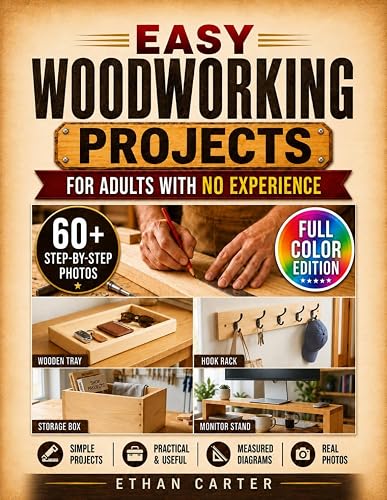 Best for adults with no experienceEasy Woodworking Projects for Adults with No ExperienceView on Amazon
- 5
 Best for step-by-step guidanceWoodworking: Step by Step Guide, DIY Plans & Projects BookView on Amazon
- 6
 Best for functional kitchen piecesHandmade Woodworking Projects for the Kitchen (Fox Chapel Publishing)View on Amazon
- 7
 Best budget pickWoodworking Projects for Beginners: From Cutting Board to Coffee TableView on Amazon
Our Top Picks
The table below gives a quick view of how the seven books compare. Read the individual reviews afterward for the details that matter when you are choosing between two strong options.
| Product | Best for | Key feature |
|---|---|---|
| DIY Woodworking Projects for Beginners: 127 Build-Ready Plans | Beginners who want the most plans | Exact measurements and cut lists |
| Woodworking Projects for the Kitchen: 50 Useful, Easy-To-Make Items | Kitchen-focused builders | Projects built around kitchen use |
| The Complete Book of Woodworking (Landauer) | Learning skills before projects | Broad technique coverage with photos |
| Easy Woodworking Projects for Adults with No Experience | Adults starting from zero | Step-by-step plans with measured diagrams |
| Woodworking: Step by Step Guide, DIY Plans and Projects Book | Readers who want guided instruction | Tips, techniques and tool guidance |
| Handmade Woodworking Projects for the Kitchen (Fox Chapel) | Functional kitchen pieces | 17 designs including a cutting board, pizza peel and knife block |
| Woodworking Projects for Beginners: From Cutting Board to Coffee Table | Budget-minded first builds | 12 builds with a clear progression |
DIY Woodworking Projects for Beginners: 127 Build-Ready Plans, Exact Measurements, Cut Lists & Visual Steps
DIY Woodworking Projects for Beginners: 127 Build-Ready Plans, Exact Measurements, Cut Lists & Visual Steps to Turn Raw Boards into Furniture & Decor That Looks Store-Bought | No Big Workshop
Best for: Beginners who want the largest number of plans to choose from
This book suits someone who has a basic set of hand tools or a few power tools and wants a long list of projects to work through. Its emphasis on exact measurements and cut lists makes it practical for building kitchen items such as shelves, utensil holders and small storage pieces.
Key specs:
- 127 projects, as stated in the title
- Exact measurements and cut lists for each build
- Visual step-by-step instructions
Pros:
- Large selection of plans in one volume
- Cut lists reduce planning time
- Visual steps help with layout and sequence
Cons:
- Many projects are generic rather than kitchen-specific
- Assumes a basic familiarity with tools
Bottom line: A strong pick for a beginner who wants volume and clear measurements before moving on to more specialized kitchen builds.
Woodworking Projects for the Kitchen: 50 Useful, Easy-To-Make Items
Woodworking Projects for the Kitchen: 50 Useful, Easy-To-Make Items
Best for: Kitchen-focused builders who want projects they will use every day
This title is organized around items that belong in a kitchen, which makes it a natural starting point for someone who wants the finished piece to earn its place on the counter. The projects are described as easy to make, which suits a builder working with limited space or time.
Key specs:
- 50 projects, as stated in the title
- Focus on useful kitchen items
- Described as easy-to-make builds
Pros:
- Projects are directly relevant to kitchen use
- Good range of small, quick builds
- Clear focus keeps the reading on topic
Cons:
- Edition details and photo quality should be checked before buying
- Less coverage of general woodworking theory
Bottom line: The most directly relevant option for anyone whose main goal is building items for the kitchen.
The Complete Book of Woodworking (Landauer)
The Complete Book of Woodworking: Step-by-Step Guide to Essential Woodworking Skills, Techniques, Tools and Tips (Landauer) 40+ Easy-to-Follow Projects and Plans, 1,200+ Photos, and Carpentry Basics
Best for: Learning essential skills before tackling larger kitchen projects
This is a reference-style book that covers techniques, tools and carpentry basics alongside its project plans. It suits a reader who wants to understand joinery and tool use well enough to adapt plans to their own kitchen needs.
Key specs:
- 40+ projects and plans, as listed
- 1,200+ photos, as listed
- Covers carpentry basics and essential skills
Pros:
- Strong foundation in technique and tool use
- Large number of photos supports visual learners
- Useful reference after the first few builds
Cons:
- Not focused specifically on kitchen projects
- Can feel broad for someone who only wants one or two builds
Bottom line: Best for a reader who wants a long-term reference and is willing to read before building.
Easy Woodworking Projects for Adults with No Experience
Easy Woodworking Projects for Adults with No Experience: From First Cut to Projects You'll Be Proud to Share | Step-by-Step Plans with Real Photos and Measured Diagrams for Every Build
Best for: Adults starting from zero who want clear, guided steps
The title signals a book aimed squarely at complete beginners. Its promise of step-by-step plans with real photos and measured diagrams fits a reader who wants to see each stage before cutting wood.
Key specs:
- Step-by-step plans, as stated in the listing
- Real photos and measured diagrams for each build
Pros:
- Written with a no-experience reader in mind
- Measured diagrams support accurate cutting
- Progression from first cut to finished piece
Cons:
- Fewer kitchen-specific projects than some alternatives
- Less depth for readers who already own some tools
Bottom line: A good first book for an adult who wants reassurance and visual guidance from the start.
Woodworking: Step by Step Guide, DIY Plans & Projects Book
Woodworking: Step by Step Guide, DIY Plans & Projects Book (Woodworking Tips, Techniques, Tools and their Creators)
Best for: Readers who want guided instruction with tips and technique notes
This guide pairs project plans with tips, techniques and tool information. It suits a builder who wants a mix of instruction and projects, especially for practical kitchen items where small details such as grain direction and finish affect the result.
Key specs:
- Step-by-step guide format
- DIY plans and projects included
- Covers tips, techniques and tools
Pros:
- Good balance of instruction and projects
- Tool and technique notes useful for beginners
- Easy to follow in sequence
Cons:
- Specific project count and kitchen focus should be checked in the listing
- Less depth than a dedicated reference book
Bottom line: A practical middle ground for someone who wants both guidance and plans.
Handmade Woodworking Projects for the Kitchen (Fox Chapel Publishing)
Handmade Woodworking Projects for the Kitchen (Fox Chapel Publishing) 17 Functional Designs including a Cutting Board, Pizza Peel, Knife Block, Lazy Susan, Bread Box, Wine Rack, Serving Tray, and More
Best for: Functional kitchen pieces with a range of designs
This book is built around kitchen tools and accessories, including a cutting board, pizza peel, knife block, lazy Susan, bread box and wine rack. It fits a builder who wants a set of practical items that can be made in a home workshop and used daily.
Key specs:
- 17 functional designs, as stated in the listing
- Includes cutting board, pizza peel, knife block, lazy Susan, bread box, wine rack and serving tray
- Published by Fox Chapel Publishing
Pros:
- Projects are specifically designed for kitchen use
- Good variety in size and difficulty
- Publisher has a long track record in woodworking titles
Cons:
- Some builds, such as the bread box, may need more advanced joinery
- Limited general woodworking instruction
Bottom line: The best match for a builder whose goal is a set of finished, useful kitchen pieces. If you want more background, see 7 Best Easy Woodworking Projects Toys for Beginners (2026).
Woodworking Projects for Beginners: From Cutting Board to Coffee Table
Woodworking Projects for Beginners: From Cutting Board to Coffee Table in 12 Builds
Best for: A budget-minded first build with a clear progression
The title suggests a progression from a small starter item to a larger piece. A cutting board is a classic first kitchen build, which makes this book a sensible choice for someone who wants to start small and grow.
Key specs:
- 12 builds, as stated in the title
- Progression from cutting board to coffee table
Pros:
- Clear beginner progression
- Cutting board is a practical first kitchen project
- Compact selection that is easy to work through
Cons:
- Fewer builds than the larger compilations
- Kitchen content is limited to a few items
Bottom line: A good value pick for a beginner who wants a short, structured path from a first board to a finished piece of furniture.
Buying Guide
Choosing among these books comes down to a few practical factors. Work through the points below before you decide, because a book that suits one builder may frustrate another.
Skill Level and Prior Experience
Be honest about what you already know. A reader who has never used a table saw or a router will benefit from books that explain setup and safety before the first project. Look for titles that describe the skills each build requires, and avoid a book that assumes joinery knowledge you do not yet have.
Good picks for this: Easy Woodworking Projects for Adults with No Experience; Woodworking Projects for Beginners: From Cutting Board to Coffee Table
Measurements and Cut Lists
Plans that include exact dimensions and cut lists save time and reduce mistakes. Check whether each project lists the number of pieces, their lengths and widths, and the material thickness. Good diagrams should show how parts fit together, not just the finished shape.
Good picks for this: DIY Woodworking Projects for Beginners: 127 Build-Ready Plans; Easy Woodworking Projects for Adults with No Experience
Kitchen-Specific Projects
If your goal is kitchen items, look at the table of contents before buying. Some books cover general furniture and only include a few kitchen pieces. Others are organized entirely around kitchen use. Projects such as cutting boards, knife blocks and wine racks each present different challenges, including end-grain construction, slot spacing and food-safe finishing.
Good picks for this: Woodworking Projects for the Kitchen: 50 Useful, Easy-To-Make Items; Handmade Woodworking Projects for the Kitchen
Reference Depth and Technique Coverage
Some readers want a single volume they can return to for years. Others prefer a project-only book. Look for a table of contents that covers joinery, sharpening, wood selection and finishing if you want a reference. Photo count can help you judge how visually guided the book is.
Good picks for this: The Complete Book of Woodworking (Landauer); Woodworking: Step by Step Guide, DIY Plans and Projects Book
Project Size and Shop Space
A book full of large furniture plans can be overwhelming in a small garage. Kitchen items such as bread boxes, pizza peels and serving trays need less space and fewer machines, which makes them a good fit for a limited shop. Check the dimensions of the projects you are most interested in against the room you have available.
Good picks for this: Handmade Woodworking Projects for the Kitchen; Woodworking Projects for the Kitchen: 50 Useful, Easy-To-Make Items
Material Choice and Durability
Kitchen projects see moisture, heat and frequent handling. Hardwoods such as maple, walnut and cherry are common recommendations for cutting boards and utensils, while softer woods may suit decorative items. Look for books that discuss wood selection and food-safe finishes. Mineral oil and beeswax are often recommended for cutting surfaces, but confirm finish guidance with a current, authoritative source before use on food contact surfaces.
Good picks for this: Handmade Woodworking Projects for the Kitchen; The Complete Book of Woodworking (Landauer)
Care, Finish and Maintenance
Finishing is where many kitchen projects succeed or fail. Look for books that explain how to sand progressively, apply finish evenly and maintain the piece over time. Good instructions will mention drying times and how often a surface should be reoiled. For finishes that will contact food, follow the manufacturer’s labeling and consult a food safety professional when in doubt.
Good picks for this: Woodworking: Step by Step Guide, DIY Plans and Projects Book; The Complete Book of Woodworking (Landauer)
FAQ
What is the best first project for a diy kitchen woodworking projects beginner?
A cutting board or a simple utensil holder is a common first build. Both use a small amount of wood, require basic cutting and sanding, and teach glue-up and finishing. Many beginner books start with one of these before moving to shelves or boxes.
Do I need a table saw to build kitchen woodworking projects?
Not always. Many kitchen items, including cutting boards and serving trays, can be made with a hand saw, a miter saw or a jigsaw, plus clamps and a sander. A table saw makes straight, repeatable cuts easier, but it is not required for every build. If you use power tools, follow the manufacturer’s safety guidance and wear eye and hearing protection.
What wood is best for kitchen projects?
Hard maple, walnut, cherry and oak are frequently recommended for kitchen items because they are dense and hold up to use. Avoid woods known to cause allergic reactions or irritation, and check species information before making items that will contact food. Woods with strong oils or resins can affect finishes.
Are cutting boards safe to make at home?
Homemade cutting boards can be safe when made from suitable hardwoods, glued with a food-safe adhesive, and finished with a food-safe oil or wax. Use a board for food only if the glue and finish are labeled for food contact. Consult the glue and finish manufacturers’ documentation, and treat boards with care to avoid cracks where bacteria can collect.
How long does a typical kitchen woodworking project take?
Small items such as a spoon rest or a simple cutting board may take a few hours of work spread over a day or two, including glue drying time. Larger items such as a bread box or wine rack can take a weekend or longer. Drying times for glue and finish usually add time between stages.
Can I use these books if I have no shop?
Yes, though some projects will be harder. Many kitchen items can be made with hand tools and a small workbench. Look for plans that list tool requirements and choose builds that match the equipment you have.
Should I buy a book or follow free online plans?
A book gives you a coherent progression, consistent measurements and a single source to refer back to. Free online plans can be useful for specific projects but vary in accuracy and detail. Compare the plans you find with the cut lists and diagrams in a book before you start cutting.
Conclusion
For most readers searching diy kitchen woodworking projects, the right book depends on skill level and what they plan to build. Beginners who want the most plans and exact cut lists will find the first pick a strong starting point. Builders focused specifically on kitchen items should look at the two kitchen-titled books, which concentrate on pieces that belong on the counter. Readers who want to learn techniques before building can start with the Landauer reference, while adults with no experience may prefer the book written for complete beginners. The step-by-step guide suits readers who want instruction and projects in one place, and the cutting-board-to-coffee-table title offers a short, structured path for a budget-minded start. Whichever you choose, read the project list and check the skill and tool requirements before buying.
Sources
- Consumer product safety information, including guidance on power tool and workshop safety (cpsc.gov)
- Food contact materials and guidance on food-safe surfaces and finishes (fda.gov)
- Information on wood species, hardwood properties and forest product uses (usda.gov)
Before you buy: helpful guides
Related reading
- Woodworking Projects for the Kitchen: 7 Best Books to Build From (2026)
- 7 Best DIY Beginner Woodworking Projects Books for First-Time Builders (2026)
About Claire Whitaker
Claire Whitaker is part of our editorial team and reviews and edits our woodworking guides, checking product details against manufacturer specifications and owner feedback.