By Claire Whitaker
Updated November 2026
Finger joints are one of the strongest and most attractive ways to join two boards at a corner, and a finger joints wood router bit is the tool that makes them repeatable. If you build drawer boxes, cabinet carcasses, boxes or shelving, a well-chosen bit saves hours of hand cutting and gives you tight, even fingers that glue up well. This list focuses on router bits sold on Amazon US that suit common home-shop routers and table setups. We weighed each bit against four criteria: shank size compatibility with typical collets, reversibility (so one bit can cut both mating halves), cutting-edge design and carbide quality, and the range of material thickness and project types the bit is commonly recommended for. Specifications below come from listing names and manufacturer descriptions, and owner feedback patterns are summarized where they are consistent. Nothing here is based on our own testing.
Our top picks at a glance
- 1
 TOP CHOICEBest overallFivePears Finger Joint Router Bit with 1/4" Shank,Reversible Finger JoView on Amazon
- 2
 TOP CHOICEBest for small router colletsPrecision Wood Joinery; Clean Cutting Performance; Reversible ProfileView on Amazon
- 3
 TOP CHOICEBest for heavy-duty 1/2" routersReversible Finger Glue Joint Router Bit 1/2 Inch Shank, Newdeli BearinView on Amazon
- 4
 Best for cabinet workProfessional Finger Joint Router Bit 1/2" Shank, Reversible Finger GluView on Amazon
- 5
 Best budget pickFinger Joint Router Bit, 1/2 Inch Shank Glue Joint Router Bit Woodworking Milling CutterView on Amazon
- 6
 Best for 1/4" trim routersProfessional Reversible Finger Joint Router Bit 1/4 Inch Shank – CarbiView on Amazon
- 7
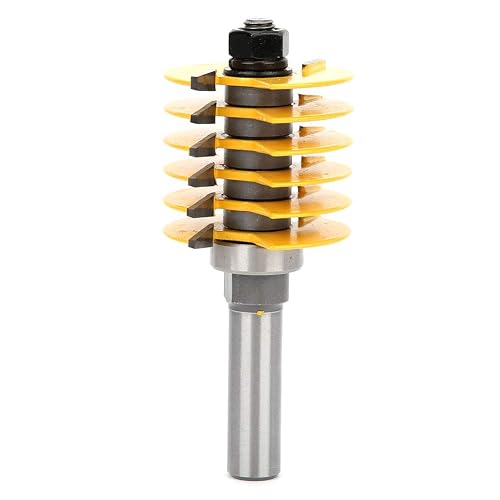 Best for large-diameter profilesFinger Pull Router Bit 16000RPM, Jointer Router Bit with 1-13/16 InchView on Amazon
Our Top Picks
Quick Comparison
| Product | Best for | Key feature |
|---|---|---|
| FivePears Finger Joint Router Bit with 1/4″ Shank | Overall use in 1/4″ routers | Reversible design, 1/4″ shank |
| Precision Wood Joinery Finger Joint Router Bits Set, 3 Pack | Trying finger joints and tongue-and-groove together | Three-bit set with a reversible profile |
| Newdeli Reversible Finger Glue Joint Router Bit 1/2 Inch Shank | Heavier 1/2″ router work | Bearing-guided, 1/2″ shank |
| Professional Finger Joint Router Bit 1/2″ Shank, Reversible | Cabinet and furniture joinery | Reversible carbide cutting |
| Finger Joint Router Bit, 1/2 Inch Shank Glue Joint Router Bit | Budget-conscious shops | Simple single-bit 1/2″ setup |
| Professional Reversible Finger Joint Router Bit 1/4 Inch Shank | Compact trim routers | Anti-kickback design |
| Finger Pull Router Bit 16000RPM, 1-13/16 Inch Diameter | Wide-stock and door-style profiles | Large diameter, high-speed rating |
FivePears Finger Joint Router Bit with 1/4″ Shank, Reversible Finger Joint Glue Joint Router Bit for Woodworking
FivePears Finger Joint Router Bit with 1/4" Shank,Reversible Finger Joint Glue Joint Router Bit for Woodworking
Best for: Overall use in 1/4″ router setups
This is a good starting point for hobbyists who want one reversible bit that handles common stock thicknesses for boxes and small drawers. The 1/4″ shank fits many compact and trim routers.
Key specs
- Shank: 1/4″
- Reversible glue-joint profile
- Designed for woodworking finger joints
Pros
- Reversible design lets one bit cut both mating pieces
- 1/4″ shank suits compact routers
- Straightforward setup for box joints and drawer boxes
Cons
- Smaller shank can flex more in heavy passes
- Best suited to lighter stock rather than thick timbers
Bottom line: A strong choice if you have a 1/4″ router and want a versatile, reversible finger joint bit for drawers and small boxes.
Precision Wood Joinery Finger Joint & Tongue and Groove Router Bits Set, 1/4 Inch Shank, 3 Pack
Precision Wood Joinery; Clean Cutting Performance; Reversible Profile Design; Multi-Material Compatibility Finger Joint & Tongue and Groove Router Bits Set, 1/4 Inch Shank, 3 Pack
Best for: Trying finger joints and tongue-and-groove together
Woodworkers who want to cover several joinery tasks without buying single bits will find a three-piece set useful. It fits 1/4″ shank routers.
Key specs
- Shank: 1/4″
- Three-bit set
- Finger joint and tongue-and-groove profiles
Pros
- Covers more than one joint type
- Reversible profile design
- Good value for beginners building a joinery kit
Cons
- Not every bit in the set will be used on every project
- Smaller shank limits use in heavy routers
Bottom line: Best for builders who want a small joinery kit in a 1/4″ router rather than a single specialized bit.
Newdeli Reversible Finger Glue Joint Router Bit 1/2 Inch Shank, Bearing Finger Joint Router Bits Carbide
Reversible Finger Glue Joint Router Bit 1/2 Inch Shank, Newdeli Bearing Finger Joint Router Bits Carbide Joinery Wood Milling Cutter for DIY Door Table Cabinet Shelve Furniture
Best for: Heavier 1/2″ router work
A bearing-guided, reversible bit with a 1/2″ shank suits furniture and door-building projects where stability matters more than compact size.
Key specs
- Shank: 1/2″
- Reversible carbide finger joint profile
- Bearing-guided design
Pros
- 1/2″ shank is more stable under load
- Reversible for matched pairs
- Suits DIY doors, tables and cabinets
Cons
- Requires a 1/2″ router or collet
- Bearing must be kept clean for consistent fit
Bottom line: A solid pick for furniture builders with a 1/2″ router who want reliable, bearing-guided finger joints.
Professional Finger Joint Router Bit 1/2″ Shank, Reversible Finger Glue Joint Router Bit for Woodworking
Professional Finger Joint Router Bit 1/2" Shank, Reversible Finger Glue Joint Router Bit for Woodworking, Finger Joint Bit, Joinery Router Bit for DIY Door Table Cabinet Shelve Furniture
Best for: Cabinet and furniture joinery
Cabinetmakers and furniture builders who cut many matching corners will appreciate the reversible 1/2″ shank design for consistent fit across a run of parts.
Key specs
- Shank: 1/2″
- Reversible finger glue joint profile
- Aimed at cabinet and table work
Pros
- Reversible for mating pairs
- 1/2″ shank for stable cutting
- Listing targets cabinets, doors and shelving
Cons
- Needs a 1/2″ collet, so not compatible with trim routers
- Setup depth must be dialed in carefully for tight fit
Bottom line: Well suited to cabinet builders with a 1/2″ router who need repeatable, reversible finger joints.
Finger Joint Router Bit, 1/2 Inch Shank Glue Joint Router Bit Woodworking Milling Cutter
Finger Joint Router Bit, 1/2 Inch Shank Glue Joint Router Bit Woodworking Milling Cutter for DIY Door Table Cabinet Shelves Furniture
Best for: Budget-conscious shops
If you want a single finger joint bit for a 1/2″ router without extras, this is a simple option for occasional drawer and box projects.
Key specs
- Shank: 1/2″
- Glue joint finger profile
- Single-bit setup
Pros
- Simple, no-frills single bit
- 1/2″ shank for stability
- Useful for occasional joinery projects
Cons
- Not described as reversible, so mating pieces may need separate passes
- Fewer design details listed than premium options
Bottom line: A sensible choice for hobbyists who need one finger joint bit for a 1/2″ router on a modest budget.
Professional Reversible Finger Joint Router Bit 1/4 Inch Shank, Carbide Tipped Woodworking Cutter
Professional Reversible Finger Joint Router Bit 1/4 Inch Shank – Carbide Tipped Woodworking Cutter for DIY Furniture, Cabinets, Doors, Cabinet, and Tables, Anti-Kickback Design
Best for: Compact trim routers
Builders working with a trim router or smaller 1/4″ setup will find this reversible carbide bit a practical fit for drawers, boxes and small cabinets.
Key specs
- Shank: 1/4″
- Reversible carbide-tipped profile
- Anti-kickback design noted in listing
Pros
- Fits compact 1/4″ routers
- Reversible for matched cuts
- Anti-kickback design is a safety plus
Cons
- Lighter-duty shank for thick stock
- Best for smaller projects
Bottom line: A good match for trim-router users who need reversible carbide finger joints for smaller work.
Finger Pull Router Bit 16000RPM, Jointer Router Bit with 1-13/16 Inch Diameter Cabinet Door Router Bits
Finger Pull Router Bit 16000RPM, Jointer Router Bit with 1-13/16 Inch Diameter Cabinet Door Router Bits Finger Joint Router Bits 1/2 Shank
Best for: Wide-stock and door-style profiles
This large-diameter bit is aimed at door and cabinet work where the cutter needs a wider sweep. It takes a 1/2″ shank, so it suits heavier routers.
Key specs
- Shank: 1/2″
- Diameter: 1-13/16 inch
- Rated speed: 16000 RPM per listing
Pros
- Large diameter suits wider profiles
- 1/2″ shank for stability
- Listed for door and cabinet applications
Cons
- Large cutter needs a powerful router and slow, controlled passes
- Less suited to standard small box joints
Bottom line: Best for experienced builders making door frames or wide-stock profiles with a heavier 1/2″ router.
Buying Guide
Shank size and router compatibility
Check your router’s collet before buying. A 1/4″ shank fits trim and compact routers and suits light work. A 1/2″ shank is more rigid and recommended for larger bits and heavier stock. Many routers accept both with the right collet insert, but confirm this in your router’s manual.
Good picks for this: FivePears Finger Joint Router Bit with 1/4″ Shank; Newdeli Reversible Finger Glue Joint Router Bit 1/2 Inch Shank
Reversible versus single-direction profiles
A reversible bit lets you cut both mating pieces with the same setup by flipping the stock or the bit, which keeps the fingers aligned. Single-direction bits may require separate setups for each half, adding time and room for error.
Good picks for this: Professional Finger Joint Router Bit 1/2″ Shank, Reversible; Professional Reversible Finger Joint Router Bit 1/4 Inch Shank
Cutter quality and carbide tips
Look for carbide-tipped cutting edges in the listing. Carbide holds an edge longer than high-speed steel, which matters when cutting hardwoods like oak or maple. Check whether the bit is described as carbide-tipped and whether the body is solid or brazed.
Good picks for this: Professional Reversible Finger Joint Router Bit 1/4 Inch Shank; Professional Finger Joint Router Bit 1/2″ Shank
Bearing guide and setup accuracy
Bearing-guided bits follow a template or the edge of the workpiece, which helps keep finger depth consistent. Keep the bearing clean and check for play before each project. Set depth so the fingers match the board thickness and mesh with minimal gap.
Good picks for this: Newdeli Reversible Finger Glue Joint Router Bit 1/2 Inch Shank; Precision Wood Joinery Finger Joint Router Bits Set
Project size and stock thickness
Match the bit’s cutting length and profile to your stock. Drawer sides and small boxes usually call for narrower fingers, while cabinet carcasses and door stiles may need a larger cut. Test on scrap of the same thickness before cutting your final pieces.
Good picks for this: Finger Joint Router Bit, 1/2 Inch Shank Glue Joint Router Bit; Finger Pull Router Bit 16000RPM, 1-13/16 Inch Diameter
Safety and cutter care
Always unplug the router before changing bits, use eye and hearing protection, and feed stock against the rotation direction. Anti-kickback designs can add margin on stock that tends to grab. Clean resin from the cutter with a suitable solvent and store bits separately to protect the edges. For power tool safety guidance, consult your router manufacturer’s manual or a qualified woodworking instructor.
Good picks for this: Professional Reversible Finger Joint Router Bit 1/4 Inch Shank; FivePears Finger Joint Router Bit with 1/4″ Shank
FAQ
What is a finger joint router bit used for?
A finger joint router bit cuts interlocking rectangular fingers into the ends of two boards so they fit together at a right-angle corner. The glued joint has a large gluing surface and resists pulling apart, which is why it is common in drawer boxes and carcasses.
Do I need a router table to cut finger joints?
Many builders use a router table with a fence and a sled or jig for accuracy, but you can also use a handheld router with a guide or template. A router table generally makes cuts more consistent when you are cutting many pieces.
What is the difference between a 1/4″ and a 1/2″ shank?
The shank is the part of the bit that sits in the router collet. A 1/2″ shank is more rigid and generally recommended for larger diameter bits and heavier passes. A 1/4″ shank fits compact routers and suits lighter work.
Are reversible finger joint bits worth it?
Reversible bits can save setup time because one bit cuts both mating halves. They are helpful for matched pairs, though you should still test-fit scrap before cutting final parts.
Can I use a finger joint bit on hardwood?
Yes, many finger joint bits are used on hardwoods such as oak and maple. Carbide-tipped cutters handle these species better than steel bits. Take shallower passes in dense wood to reduce strain on the router and bit.
How do I make sure my finger joints fit tightly?
Set the bit height so the fingers equal the board thickness, make test cuts on scrap, and check that the two halves mesh with slight resistance. Keep the bearing and fence clean and check for play before each project.
Should I consult a professional before using a large router bit?
Yes, if you are new to routers or working with large-diameter bits, consider consulting an experienced woodworker or your router manufacturer’s safety guidance before running the tool at high speed.
Conclusion
For most home woodworkers, a reversible finger joint bit is the most useful place to start. The FivePears 1/4″ bit suits compact routers and general box and drawer work. Builders with a 1/2″ router will find the Newdeli and Professional 1/2″ bits better suited to furniture and cabinet joinery. The Precision Wood Joinery set adds versatility for those who want more than one joint type, while the Finger Pull 1-13/16″ bit serves wider door-style profiles. Choose based on your router’s shank size and the stock you cut most often, then test on scrap before committing to finished parts.
Sources
- Workplace power tool and router safety guidance, including guarding and eye and hearing protection (osha.gov)
- Consumer product safety information on power tool use and injury prevention (cpsc.gov)
- Forest Products Laboratory wood technology resources on hardwood properties relevant to cutting and joinery (fpl.fs.usda.gov)
Related reading
- Wood by Wright Router Plane Compared: 7 Best Picks for 2026
- Wood Router Table Combo: How to Choose and Build One Step by Step (2026)
- Top 7 Wood Router in Tools for Woodworkers Compared
About Claire Whitaker
Claire Whitaker is part of our editorial team and reviews and edits our woodworking guides, checking product details against manufacturer specifications and owner feedback.