 By Colin Foster
Updated November 2026
Choosing the necessary woodworking power tools can feel overwhelming when every catalog promises the same thing. This list narrows the field to six tools that cover the cuts, shaping, planing and edge work most hobbyists and home builders run into. Each pick was chosen on specifications, brand reputation and the patterns owners commonly report, with an eye toward how often a tool is used, how forgiving it is for newcomers and how well it fits a small shop.
Our top picks at a glance
- 1
 TOP CHOICEBest overallPower Tool Woodworking for EveryoneView on Amazon
- 2
 TOP CHOICEBest for starter kits10 In 1 Woodworking Power Tool Combo KitView on Amazon
- 3
 TOP CHOICEBest for project ideas40 Power Tools You Can MakeView on Amazon
- 4
 Best for edge profilesAVID POWER Compact Wood RouterView on Amazon
- 5
 Best for flattening stockVEVOR Electric Hand PlanerView on Amazon
- 6
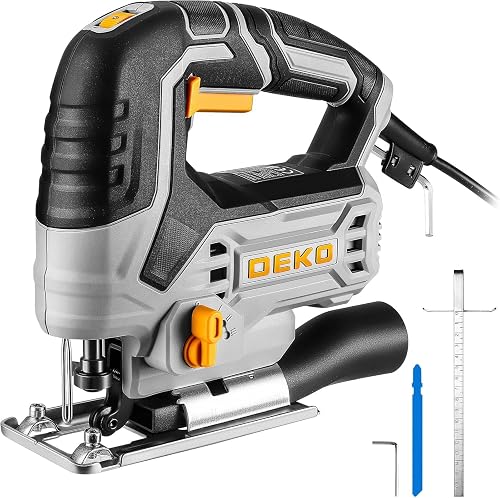 Best for curves and shapesDEKOPRO Electric JigsawView on Amazon
Our Top Picks
Quick Comparison
| Product | Best for | Key feature |
|---|---|---|
| Power Tool Woodworking for Everyone | Learning core machine techniques | Beginner-oriented instruction on common power tools |
| 10 In 1 Woodworking Power Tool Combo Kit | Buyers wanting multiple tools at once | Ten tools with a shared 4.0 Ah battery and toolbox |
| 40 Power Tools You Can Make | Builders who want shop-made tools | Plans for jigs and fixtures built from scratch |
| AVID POWER Compact Wood Router | Edge profiles and joinery cuts | 630W motor with 1/4″ collet and guide options |
| VEVOR Electric Hand Planer | Flattening and chamfering stock | 3-1/4″ cut width with adjustable depth |
| DEKOPRO Electric Jigsaw | Curves, scrollwork and bevel cuts | Six variable speeds and ±45° bevel range |
Power Tool Woodworking for Everyone
Power Tool Woodworking for Everyone
We also found A Guide to Hearing Protection for Power Tools useful on this point.
Best for: Learning core machine techniques
This book suits readers who want to understand how power tools behave before buying a full shop. It works well alongside a first purchase, helping you connect setup, safety and cut quality to the machines you own.
Key specs
- Format: printed book on woodworking power tool technique
- Focus: operation and safe use of common shop machines
Pros
- Clear coverage of fundamentals for newcomers
- Useful for planning which tool to buy next
- Reinforces safe habits from the start
Cons
- Information does not replace hands-on practice
- Machine models change, so some specifics may be dated
Bottom line: A strong first read for anyone who wants a reliable foundation before spending on machines.
10 In 1 Woodworking Power Tool Combo Kit
Woodworking Tool Kit, 10 In 1 Woodworking Power Tool Combo Kit, With 4.0 Ah Battery And Toolbox, DIY Woodworking Kits, For Project Engineering, Home Decoration
Best for: Buyers wanting multiple tools at once
This kit is aimed at hobbyists who want a broad set of cordless tools sharing one battery platform. It fits people starting from an empty shop who prefer to outfit everything in one purchase.
Key specs
- Ten tools in one kit
- Battery: 4.0 Ah
- Includes a toolbox for storage
Pros
- Shared battery reduces charging clutter
- Covers many common tasks in a single purchase
- Toolbox keeps accessories organized
Cons
- Combo tools are often lighter-duty than standalone machines
- Battery runtime limits long continuous cutting sessions
Bottom line: Good for beginners who value breadth and convenience over heavy production capacity.
40 Power Tools You Can Make
40 Power Tools You Can Make (Woodworking Classics Revisited)
Best for: Builders who want shop-made tools
This book suits woodworkers who want to build their own jigs, fixtures and accessories. It is a good companion for those who prefer making shop helpers to buying them.
Key specs
- Format: printed book of tool and jig projects
- Focus: shop-built power tool accessories
Pros
- Practical projects that improve shop accuracy
- Encourages understanding of how tools are set up
- Useful for budget-conscious shop building
Cons
- Projects assume some existing machines and skills
- Plans may need adjustment for modern tool sizes
Bottom line: A worthwhile pick once you have basic machines and want to expand your shop’s capability.
AVID POWER Compact Wood Router
Palm Router with Fixed Base for Trimming, 35,000 RPM, 1/4" Collet, Straight & Roller Guide, 2 Wrenches, Carbon Brushes – Red AVID POWER Compact Wood Router Tool for Woodworking 630W 5.3 Amp, Trim Bits
Best for: Edge profiles and joinery cuts
A palm-style router suits edge rounding, grooving and template work in smaller shops. It is well suited to people who need a router but have limited bench space.
Key specs
- Motor: 630W, 5.3 Amp
- Collet: 1/4″
- Includes straight and roller guide options
Pros
- Compact size for one-handed control
- Roller guide helps with edge profiling
- Accepts common 1/4″ router bits
Cons
- Lower power than full-size fixed-base routers
- Small base can reduce stability on large panels
Bottom line: A compact router for edge work and light joinery, not heavy stock removal.
VEVOR Electric Hand Planer
VEVOR Electric Hand Planer, 3-1/4-Inch Cut Width, 7-Amp 14500 RPM Corded Power Handheld Planer for Wood, with Adjustable Cut Depth, 2 Blades, for Woodworking Wood Chamfer DIY Smooth Finish Carpentry
Best for: Flattening and chamfering stock
This handheld planer suits anyone trimming doors, flattening rough boards or breaking edges. Owners often use it for quick dimensioning jobs where a jointer is not available.
Key specs
- Cut width: 3-1/4″
- Motor: 7-Amp corded
- Adjustable cut depth, two blades included
Pros
- Adjustable depth gives control on rough stock
- Two blades included for maintenance
- Useful for chamfers and smoothing edges
Cons
- Hand planing skill is needed for flat, consistent results
- Corded operation limits reach in large spaces
Bottom line: Best for rough dimensioning and edge work in a home shop.
DEKOPRO Electric Jigsaw
Jig Saw Corded: DEKOPRO Electric Jigsaw Tool Power Jig Saws for Woodworking, Wood Cutter Hand Tool with 6 Variable Speed, 4 Orbital Settings, ±45° Bevel Cutting, Tool-less Blade Quick Release
Best for: Curves, scrollwork and bevel cuts
A jigsaw is the go-to tool for curves and irregular shapes. This model suits builders cutting shelf brackets, decorative panels or angled joints.
Key specs
- Six variable speeds
- Four orbital settings
- ±45° bevel cutting, tool-less blade release
Pros
- Bevel range covers common angled cuts
- Tool-less blade change saves time
- Variable speed helps match cut to material
Cons
- Jigsaw cuts are less straight than a table saw
- Blade drift needs practice to control
Bottom line: A practical choice for curves and bevels for anyone who does not yet own a bandsaw.
Buying Guide
Match the tool to your most common cut
Start with the work you do most. Edge work points to a router, flattening points to a planer and curves point to a jigsaw. Buying for the cuts you actually make keeps the shop from filling with tools you rarely use.
Good picks for this: AVID POWER Compact Wood Router, DEKOPRO Electric Jigsaw
Check motor power and amperage
Amperage gives a rough sense of motor strength. Compact tools in the 5 to 7 amp range handle light to medium work, while heavier stock usually calls for larger machines. Match the rating to the thickness and hardness of your wood.
Good picks for this: VEVOR Electric Hand Planer, AVID POWER Compact Wood Router
Consider cordless versus corded
Cordless tools offer freedom of movement and fit well in small shops, but battery capacity limits runtime. Corded tools provide steady power for long sessions. Think about where you will work and how long each session runs.
Good picks for this: 10 In 1 Woodworking Power Tool Combo Kit, VEVOR Electric Hand Planer
Look at blade and bit compatibility
Check which blades, bits and guides a tool accepts. Standard 1/4″ router bits and common jigsaw blades are easy to find, while proprietary accessories can be costly to replace. Tool-less blade changes save time during repeated cuts.
Good picks for this: DEKOPRO Electric Jigsaw, AVID POWER Compact Wood Router
Assess size and shop fit
Measure your bench and storage before buying. Compact routers and handheld planers suit small spaces, while larger machines need dedicated room and stable mounting. Weight also matters if you carry tools between job sites.
Good picks for this: AVID POWER Compact Wood Router, 40 Power Tools You Can Make
Think about durability and build
Look for solid bases, sturdy housings and replaceable parts such as carbon brushes or blades. Owners frequently note that how easily a tool can be serviced affects its long-term value more than its initial feature list.
Good picks for this: VEVOR Electric Hand Planer, DEKOPRO Electric Jigsaw
Plan for care and safety
Keep blades sharp, clean dust from motors and check cords before each use. Always wear eye and hearing protection, and use push sticks or guards where the tool allows. For guidance on safe shop practice, consult the manufacturer’s manual or a qualified instructor.
Good picks for this: Power Tool Woodworking for Everyone, 40 Power Tools You Can Make
FAQ
What are the most necessary woodworking power tools for beginners?
Most beginners start with a drill, a jigsaw, a random orbit sander and a router. These cover drilling, curved cuts, surface prep and edge profiling. A table saw or planer usually comes later as projects grow.
Do I need a table saw before buying other tools?
Not necessarily. Many builders make accurate straight cuts with a circular saw and a guide. A table saw adds repeatability and capacity, so it is worth adding when your projects demand it.
Is a router worth buying early on?
For many hobbyists, yes. Routers handle edge profiles, grooves and template work that are difficult to do otherwise. A compact model is a sensible first router for smaller projects.
Can a handheld planer replace a jointer?
A handheld planer can flatten and dimension stock, but results depend on technique and a stable workpiece. A jointer generally produces flatter reference faces. Many shops use both.
Are cordless or corded tools better for a home shop?
Each has strengths. Cordless tools offer mobility, while corded tools deliver steady power for long jobs. Choose based on your workspace and how often you run tools for extended periods.
How do I stay safe with woodworking power tools?
Wear eye and hearing protection, keep guards in place, unplug tools before changing blades and never work while tired or distracted. The Occupational Safety and Health Administration and manufacturer manuals offer helpful safety guidance. For specific injury concerns, consult a qualified professional.
Conclusion
The necessary woodworking power tools depend on the work you plan to do. A reference book like Power Tool Woodworking for Everyone supports learning, while a combo kit suits buyers who want breadth. For shaping, a compact router fits edge work, a handheld planer handles stock prep and a jigsaw covers curves. Start with the cuts you make most often, then expand your shop as your projects grow.
Sources
- Workplace safety standards and guidance for power tool use (osha.gov)
- Consumer product safety information on power tools and recalls (cpsc.gov)
- Measurement and standards resources relevant to precision woodworking (nist.gov)
Related reading
- Woodworking Power Tools: What Each Does and Safety Basics
- Woodworking Hand Tools Only: A Step-by-Step Guide to Building Without Power
- Woodworking Essential Power Tools: 7 Machines to Build Your Shop (2026)
- Necessary Tools for Woodworking: A Beginner's Checklist (2026)
About Colin Foster
Colin Foster is part of our editorial team and reviews and edits our woodworking guides, checking product details against manufacturer specifications and owner feedback.