By Sienna Ashford
Updated November 2026
Leveling wood with a router bit is one of the most practical ways to flatten a warped board, true up a glued-up panel, or surface a rough slab before finishing. The right router bit to level wood removes material evenly, leaves a clean floor, and does not chatter or burn the grain. The wrong one leaves ridges, tears out figure, or overheats on a long pass. This guide compares seven bits on the criteria that matter most for leveling work: cutting diameter, insert or flute design, shank size compatibility, cutting depth, and how well each bit suits a router sled, a router table, or a CNC spoilboard.
Our top picks at a glance
- 1
 TOP CHOICEBest overallPOWERTEC CNC Spoilboard Surfacing Router BitView on Amazon
- 2
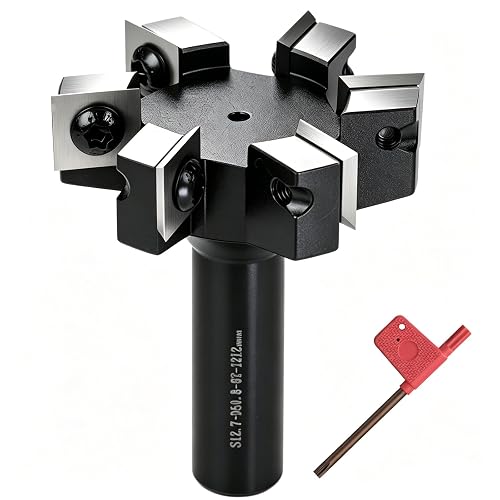 TOP CHOICEBest for large slabsKorlitho 2" Slab Flattening Router BitView on Amazon
- 3
 TOP CHOICEBest for template trimmingSpiral Up-Down Template Pattern Flush Cut Router BitView on Amazon
- 4
 Best for replaceable insertsSlab Flattening Router Bit with 4 Carbide InsertsView on Amazon
- 5
 Best budget pickCNC Spoilboard Surfacing Router Bit 1/4" ShankView on Amazon
- 6
 Best for precision edge trimmingUltra-Performance Compression Carbide Tipped Router BitView on Amazon
- 7
 Best for heavy-duty trimmingProfessional 3-Blade Carbide Tipped Pattern Flush Trim BitView on Amazon
Our Top Picks
The table below gives a quick view of how the seven bits differ. Read the individual sections for the details that matter before you buy.
| Product | Best for | Key feature |
|---|---|---|
| POWERTEC CNC Spoilboard Surfacing Router Bit | General slab flattening | 2″ diameter, 1/2″ cutting depth |
| Korlitho 2″ Slab Flattening Router Bit | Wide slabs and sleds | 6-wing design, 1/2″ shank |
| Spiral Up-Down Template Pattern Flush Cut Router Bit | Template and flush trimming | Top bearing, 1/2″ cutting height |
| Slab Flattening Router Bit with 4 Carbide Inserts | Replaceable-insert users | Four 10mm carbide inserts |
| CNC Spoilboard Surfacing Router Bit 1/4″ Shank | Budget-minded shops | 1-3/8″ cutting diameter, 2+2 flutes |
| Ultra-Performance Compression Carbide Tipped Router Bit | Precision edge trimming | Top and bottom bearing, 1″ cutting length |
| Professional 3-Blade Carbide Tipped Pattern Flush Trim Bit | Heavier trimming passes | 3-blade carbide, 3/4″ cutting diameter |
POWERTEC CNC Spoilboard Surfacing Router Bit
2" Diameter. 1/2 Inch Cutting Depth for CNC, Router Tables, Router Sleds, Full Size Router, Wood Milling (73056) POWERTEC CNC Spoilboard Surfacing Router Bit, 1/4" Shank Slab Flattening
Best for: General slab flattening and spoilboard surfacing on routers, router tables and CNC machines
This is a good fit for woodworkers who want one bit that handles most flattening jobs, from benchtop slabs to sled work. The 2-inch diameter gives a wide cut per pass, which shortens the time needed to clear a surface.
Key specs
- Diameter: 2 inches
- Cutting depth: 1/2 inch
- Shank: 1/4 inch
- Suited to CNC, router tables, router sleds and full-size routers
Pros
- Wide diameter covers more ground per pass
- Works across several setups, including sleds and tables
- The 1/2 inch cutting depth suits shallow-to-medium stock removal
Cons
- A 1/4 inch shank requires taking lighter passes on hard, dense woods
- Not designed for deep profile work
Bottom line: A strong first pick for anyone who needs a single flattening bit for varied projects.
Korlitho 2″ Slab Flattening Router Bit
CNC Spoilboard Surfacing Cutter for Slab Leveling, Wood Planing, Rabbeting and Router Sled Systems by Korlitho 2" Slab Flattening Router Bit 1/2 Shank, 6Wing, 12×12×1.5mm Insert Carbide
Best for: Wide slabs and router sled systems where a 1/2 inch shank adds stability
Woodworkers flattening wide live-edge slabs or working with large panels will appreciate the larger shank and six-wing layout. It is aimed at users with a router sled or CNC setup who want a rigid, smooth cut.
Key specs
- Diameter: 2 inches
- Shank: 1/2 inch
- Six cutting wings with carbide inserts
Pros
- The 1/2 inch shank resists deflection better than 1/4 inch shanks
- Six wings can produce a finer surface finish
- Suited to wide slab and planing work
Cons
- Requires a router or spindle that accepts a 1/2 inch collet
- Heavier than smaller flattening bits, so take care on handheld setups
Bottom line: Best for shops with larger routers or CNC equipment that regularly handle wide slabs.
Spiral Up-Down Template Pattern Flush Cut Router Bit
1/2" Cut Height Spiral Up-Down Template Pattern Flush Cut Router Bit for Woodworking Trimming Top Bearing Compression Flush Trim Router Bit 1/4" Shank 1/2" Cutting Dia
Best for: Template work and flush trimming, where a top bearing guides the cut
This bit is for trimming edges flush to a template or a previously cut edge rather than broad surface flattening. It suits cabinetmakers and sign makers who need consistent edges along curves or pattern shapes.
Key specs
- Cutting height: 1/2 inch
- Shank: 1/4 inch
- Top bearing for template guidance
- Spiral up-down flute geometry
Pros
- Spiral up-down flutes help reduce tear-out on both faces
- Top bearing makes pattern and flush work straightforward
- Compact diameter suits tight curves
Cons
- Not intended for broad surface leveling of large slabs
- Bearing must be kept clean to avoid burn marks
Bottom line: The right choice when your leveling task is really about trimming to a template or a reference edge.
Slab Flattening Router Bit with 4 Carbide Inserts
Slab Flattening Router Bit with 4 Pieces 10mm Carbide Inserts, Planing Bit for Woodworking Flycutter/ Slab Leveler/ Rabbeting CNC Spoilboard Surfacing Router Bit 1/4'' Shank, 1'' Diameter
Best for: Users who want replaceable inserts rather than sharpening a solid bit
A carbide-insert design lets you rotate or replace worn inserts instead of resharpening the body. This suits shops that flatten slabs often and want a predictable maintenance routine.
Key specs
- Diameter: 1 inch
- Shank: 1/4 inch
- Four 10mm carbide inserts
Pros
- Replaceable carbide inserts simplify maintenance
- Carbide edges hold up well on abrasive woods
- Suitable for flycutter, slab leveler and rabbeting work
Cons
- Smaller 1 inch diameter means more passes on wide surfaces
- Insert replacements add to long-term upkeep
Bottom line: Suited to regular slab flatteners who value serviceable tooling over one-piece bits.
CNC Spoilboard Surfacing Router Bit 1/4″ Shank
CNC Spoilboard Surfacing Router Bit 1/4" Shan, Slab Flattening Router Bit with 1-3/8" Cutting Diameter, 2+2 Flutes Insert Carbide Wood Planer Router Bits, Planing Bit for Woodworking
Best for: Budget-minded shops and hobbyists surfacing spoilboards and small slabs
This bit is a practical choice for hobbyists with a CNC or a small router who need a clean surface without buying a premium setup. Its 1/4 inch shank fits the most common handheld and table routers.
Key specs
- Cutting diameter: 1-3/8 inches
- Shank: 1/4 inch
- Two-plus-two flute layout with carbide inserts
Pros
- Fits the most widely used 1/4 inch collets
- Moderate diameter balances coverage and control
- Good for spoilboards and light slab work
Cons
- Light-duty for very hard or deeply figured woods
- Requires patience on wide surfaces because of the smaller diameter
Bottom line: A sensible option when the job is light and the budget is tight.
Ultra-Performance Compression Carbide Tipped Router Bit
Cutting Length: 1", Ultra-Performance Compression Carbide Tipped Woodworking Router Bits for Precision Edge Trimming Pattern Flush Trim Router Bit, 1/4" Shank Top & Bottom Bearing
Best for: Precision edge trimming where top and bottom bearing control matters
Compression bits cut both upward and downward, which makes them a good match for laminated panels and veneered sheet goods. Woodworkers trimming edges to a template or leveling a bonded panel edge will find this layout useful.
Key specs
- Cutting length: 1 inch
- Shank: 1/4 inch
- Top and bottom bearing
- Carbide tipped compression design
Pros
- Compression geometry reduces tear-out on veneers and laminates
- Top and bottom bearing options aid precise edge control
- Carbide tips hold a clean edge longer
Cons
- Short cutting length limits its use on thick stock
- Bearing wear should be checked regularly
Bottom line: Best for cabinet shops and anyone trimming laminated or veneered edges.
Professional 3-Blade Carbide Tipped Pattern Flush Trim Bit
Professional 3-Blade Carbide Tipped Woodworking Router Bits for Precision Edge Trimming Pattern Flush Trim Router Bit, Top Bearing 1/2" Shank CD: 3/4" CL: 1"
Best for: Heavier trimming passes and flush-trim jobs in solid wood
The three-blade carbide design suits users who make several passes through hardwood and want a bit that stays sharp under repeated use. It is aimed at production-minded shops and serious hobbyists.
Key specs
- Cutting diameter: 3/4 inch
- Cutting length: 1 inch
- Shank: 1/2 inch
- Top bearing, three carbide blades
Pros
- The 1/2 inch shank adds rigidity for heavier passes
- Three carbide blades help maintain a clean finish
- Top bearing supports template and flush work
Cons
- Smaller diameter means slower coverage on broad surfaces
- Needs a router or collet compatible with 1/2 inch shanks
Bottom line: A solid choice for shops with heavier routers that do frequent trimming in hardwood.
Buying Guide
Cutting diameter and coverage
Diameter determines how much surface a single pass covers. A 2-inch bit clears a wide path and speeds up flattening, while a 3/4-inch or 1-inch bit gives more control on trimming and detail work. For large slabs, a larger diameter usually saves time. For edges and small pieces, a smaller diameter is easier to manage.
Good picks for this: POWERTEC CNC Spoilboard Surfacing Router Bit, Korlitho 2″ Slab Flattening Router Bit
Shank size and router compatibility
Check your collet before buying. Most handheld routers and table routers accept both 1/4-inch and 1/2-inch shanks, but many smaller tools accept only 1/4 inch. A 1/2-inch shank resists flex better under load, which matters when you take deeper passes. Always confirm the collet size on your machine first.
Good picks for this: Korlitho 2″ Slab Flattening Router Bit, Professional 3-Blade Carbide Tipped Pattern Flush Trim Bit
Cutting depth and passes
Leveling is usually done in multiple shallow passes rather than one deep cut. Bits with a 1/2-inch cutting depth suit this approach well. Manufacturers generally recommend limiting depth per pass to protect the bit and the router. Plan on several light passes for hard woods.
Good picks for this: POWERTEC CNC Spoilboard Surfacing Router Bit, Spiral Up-Down Template Pattern Flush Cut Router Bit
Insert design and carbide quality
Carbide inserts and carbide-tipped blades hold an edge far longer than high-speed steel. Replaceable inserts let you restore a bit without resharpening the full body, which many shops prefer for frequent flattening. Solid carbide tips also reduce burn and chipping on dense species such as maple and oak.
Good picks for this: Slab Flattening Router Bit with 4 Carbide Inserts, Ultra-Performance Compression Carbide Tipped Router Bit
Cut direction and tear-out control
Spiral up-down and compression geometries are designed to reduce tear-out on both faces of a board. This matters on veneers, laminates and figured woods where grain direction changes. Straight single-direction flutes can be fine on clean stock but often show more chipping at the exit side.
Good picks for this: Spiral Up-Down Template Pattern Flush Cut Router Bit, Ultra-Performance Compression Carbide Tipped Router Bit
Bearing type and template work
Top-bearing bits follow a template or a previously cut edge, which makes them ideal for flush trimming. Top-and-bottom bearing designs give more control when the workpiece has an uneven edge. Check that the bearing diameter matches your template and that the bearing turns freely before each job.
Good picks for this: Spiral Up-Down Template Pattern Flush Cut Router Bit, Professional 3-Blade Carbide Tipped Pattern Flush Trim Bit
Care and maintenance
Keep bits clean of resin and pitch, which can cause heat buildup and burning. Store carbide bits in a case or rack to protect the cutting edges. For insert-style bits, rotate or replace worn inserts as soon as you notice rough surfaces, and always let the router stop completely before changing a bit. Consult the manufacturer’s instructions for speed recommendations and safe operating limits.
Good picks for this: Slab Flattening Router Bit with 4 Carbide Inserts, CNC Spoilboard Surfacing Router Bit 1/4″ Shank
FAQ
What is the best router bit to level wood?
For most shops, a 2-inch spoilboard or slab flattening bit with a 1/2-inch cutting depth is the most versatile choice. The POWERTEC model is a strong general-purpose option, while the Korlitho bit suits larger setups with 1/2-inch shanks.
Can I level wood with a handheld router?
Yes, but a handheld router needs a sled or guide to keep the cut flat. Use a bit with a 1/4-inch shank for light work and take shallow passes. Wider slabs are easier to handle on a dedicated router sled.
How deep should each pass be?
Most woodworkers take several passes rather than one deep cut. Keep each pass shallow, often well under the bit’s full cutting depth, especially with 1/4-inch shanks or hard woods. Check your router’s and bit’s manufacturer guidance.
What is the difference between a flush trim bit and a leveling bit?
Flush trim bits use a bearing to follow an edge or template and are best for trimming. Leveling bits, often called spoilboard or slab bits, cover broad surfaces and remove material across a flat plane.
Do carbide inserts last longer than solid carbide bits?
Insert bits let you replace worn edges without resharpening the whole bit, which many users find convenient. Solid carbide-tipped bits can hold a sharp edge well too. Lifespan depends heavily on the wood species, feed rate and how clean the bit is kept.
Which shank size should I choose?
Use a 1/2-inch shank when your router accepts it, because it resists deflection better under load. Choose a 1/4-inch shank only if your tool requires it, and then keep passes light.
Is a CNC necessary for leveling wood with a router bit?
No. Many woodworkers level boards with a handheld router on a sled or a fixed router in a table. A CNC improves consistency on large flat areas but is not required for good results.
Conclusion
The best router bit to level wood depends on the job and the machine. For broad, general flattening, the POWERTEC spoilboard bit is a versatile starting point. Choose the Korlitho 2-inch bit when you have a 1/2-inch collet and wide slabs to surface. Pick the spiral up-down or compression bits when trimming to a template or working with veneers and laminates. The insert-style bit suits shops that want serviceable tooling, and the 1/4-inch-shank CNC bit fits light, budget-conscious work. The three-blade trim bit is a good match for heavier hardwood passes on a 1/2-inch router. Match the bit to your collet, your cutting depth and your material, and the leveling work will go much more smoothly.
Sources
- Workplace guidance on router and power tool safety, including guarding and eye and hearing protection (osha.gov)
- Consumer safety information on power tool use and kickback risks (cpsc.gov)
- Standards and measurement resources relevant to dimensional accuracy in wood processing (nist.gov)
Related reading
- Top 7 CNC Router Wood Signs Picks: Bits and Kits for Sign Making
- Top 7 Best CNC Router Bits for Wood Compared for Every Project
- Ryobi Router Bit Set in Wood Case: 5 Best Options Compared (2026)

About Sienna Ashford
Sienna researches and writes buying guides and how-to articles on woodworking. Picks are based on product specifications, brand reputation and patterns in owner feedback, and are updated as new models come out.