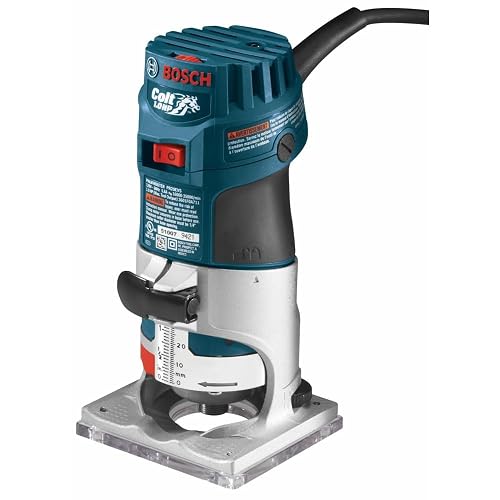
By Claire Whitaker
Updated November 2026
If you need a router jig to plane wood, you are probably dealing with a slab that cups, a board that is too thick to surface by hand, or a glue-up that is out of flat. A router sled lets you flatten those surfaces without a jointer or a thickness planer. The picks below were chosen on specifications, brand reputation and the patterns owners tend to describe in their feedback: how flat the rails are, how easily the sled adjusts, how well it handles wide slabs, and how stable it stays on a benchtop. Each one is a different style of sled, so read the “Best for” lines before you buy.
Our top picks at a glance
- 1
 TOP CHOICEBest overallGeneral Tools Woodworking Dovetail Jig – 12" Template Kit for FurniturView on Amazon
- 2
 Best for large slabsHDPE Router Sled for Flattening Slabs, Adjustable Planing Jig – 48 InchView on Amazon
- 3
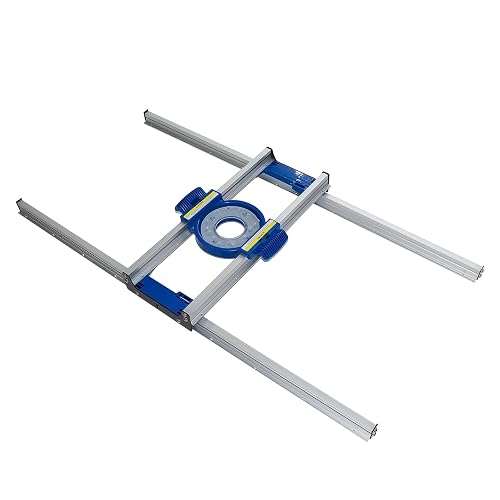 Best benchtop optionBenchtop Slab Flattening Jig, DIY Woodworking Router Sled for End-GraiView on Amazon
Our Top Picks
Quick Comparison
| Product | Best for | Key feature |
|---|---|---|
| General Tools Woodworking Dovetail Jig – 12″ Template Kit | Small boards and joinery-focused shops | 12-inch template kit with a jig-based setup |
| HDPE Router Sled for Flattening Slabs, Adjustable Planing Jig – 48 Inch | Wide slabs and rough lumber | 48-inch adjustable planing span |
| Benchtop Slab Flattening Jig DIY Woodworking Router Sled | Benchtop work and end-grain or resin boards | Compact benchtop router guide track |
General Tools Woodworking Dovetail Jig – 12″ Template Kit for Furniture & Wood Cabinet Making,Gold
General Tools Woodworking Dovetail Jig – 12" Template Kit for Furniture & Wood Cabinet Making,Gold
Best for: Best overall
This kit suits woodworkers who already own a router and want a guided setup for repeatable cuts. It is most useful for smaller stock, where a full-width slab sled would be more than the job needs. Keep in mind that it is built around a template system rather than a dedicated flattening sled, so it fits best as a general router guide.
Key specs
- 12-inch template kit (as stated in the listing name)
- Designed for furniture and cabinet making work
- Router-guided template system
Pros
- Good fit for smaller boards and repeatable joinery cuts
- Simple template approach is easy to understand for beginners
- Useful as a general router guide beyond flattening
Cons
- Not sized for wide slab flattening
- Works best with clearly marked templates and a steady setup
Bottom line: Pick this if your work leans toward furniture and cabinet stock and you want one jig for guided router work.
HDPE Router Sled for Flattening Slabs, Adjustable Planing Jig – 48 Inch
Benchtop woodworking jig for DIY enthusiasts, great for slab flattening, trimming and planing rough lumber slabs HDPE Router Sled for Flattening Slabs, Adjustable Planing Jig- 48 Inch
Best for: Best for large slabs
This is a sled built for planing wide, rough material. The 48-inch length gives you room to run long router passes across a slab in one setup. It suits shops that regularly flatten live-edge boards, table tops or thick rough lumber and want a dedicated planing jig rather than a makeshift one.
Key specs
- 48-inch planing length (as stated in the listing name)
- Adjustable planing jig design
- HDPE construction, as named in the listing
Pros
- Long span handles wide slabs in fewer passes
- Adjustable design suits varied stock thickness
- Dedicated planing purpose keeps setup straightforward
Cons
- Large footprint needs bench or floor space
- Needs a stable rig and careful depth setting for best results
Bottom line: Choose this if you flatten wide slabs regularly and have room for a long sled.
Benchtop Slab Flattening Jig, DIY Woodworking Router Sled for End-Grain Board and Resin Milling, Router Guide Track Accessory
Benchtop Slab Flattening Jig, DIY Woodworking Router Sled for End-Grain Board and Resin Milling, Router Guide Track Accessory
Best for: Best benchtop option
This benchtop sled targets smaller work: end-grain boards, resin pours and modest slab sizes. It is a practical choice if you lack floor space for a long sled and mainly work on tabletop-scale pieces. Its track-based guide also makes it useful for routing straight edges on stock that will not fit a bigger rig.
Key specs
- Benchtop format, as stated in the listing name
- Router guide track accessory design
- Intended for end-grain boards and resin milling
Pros
- Compact footprint suits small shops
- Track guide helps keep router passes straight
- Covers end-grain and resin work alongside flattening
Cons
- Shorter span is less efficient on very wide slabs
- Requires a clamped, stable benchtop setup
Bottom line: A good fit for benchtop woodworkers working on smaller boards and resin projects.
Buying Guide
Sled length and slab width
Measure your widest slab before you buy. A sled should extend past both edges of the stock so the router base can run the full width. Shorter sleds need more passes and can leave ridges where passes overlap. Longer sleds need more bench or floor room.
Good picks for this: HDPE Router Sled for Flattening Slabs, Adjustable Planing Jig 48 Inch; Benchtop Slab Flattening Jig DIY Woodworking Router Sled
Rail flatness and rigidity
The rails or track are your reference surface. Any bow or twist in them transfers directly to the slab. Look for a sled that feels rigid when clamped and does not flex under the weight of the router. Owners often report that sag in a long rail is the most common source of uneven results.
Good picks for this: HDPE Router Sled for Flattening Slabs, Adjustable Planing Jig 48 Inch; General Tools Woodworking Dovetail Jig – 12″ Template Kit
Adjustability and depth control
An adjustable sled lets you set the cutting depth and handle stock of different thicknesses. Check how the height is set and locked. Fine, repeatable adjustments make it easier to take light final passes.
Good picks for this: HDPE Router Sled for Flattening Slabs, Adjustable Planing Jig 48 Inch
Router compatibility
Confirm your router base fits the sled’s guide system. Most router sleds work with a standard plunge or fixed-base router, but the base plate and bit reach matter. Use a bit with enough cutting depth for the passes you plan, and a bit size that suits your router’s collet.
Good picks for this: Benchtop Slab Flattening Jig DIY Woodworking Router Sled; General Tools Woodworking Dovetail Jig – 12″ Template Kit
Stability on the bench
A sled that shifts under load wrecks a flattening pass. Clamp the sled or the workpiece firmly and check that nothing rocks. Benchtop sleds need a solid bench with a clamp-friendly surface. Wide sleds may need support at both ends.
Good picks for this: Benchtop Slab Flattening Jig DIY Woodworking Router Sled; HDPE Router Sled for Flattening Slabs, Adjustable Planing Jig 48 Inch
Dust collection and shop safety
Router planing throws a lot of chips. Plan a dust collection hose or shop vacuum connection, and wear eye and hearing protection. Keep hands clear of the bit and clamp the workpiece so it cannot move. Always unplug the router before changing bits or making adjustments.
Good picks for this: HDPE Router Sled for Flattening Slabs, Adjustable Planing Jig 48 Inch
Care and maintenance
Keep the rails clean of resin and sawdust buildup, and check fasteners after heavy use. Store the sled flat and out of damp conditions so the rails stay true. A quick check with a straightedge now and then will tell you whether the reference surface has moved.
Good picks for this: General Tools Woodworking Dovetail Jig – 12″ Template Kit; Benchtop Slab Flattening Jig DIY Woodworking Router Sled
FAQ
Can a router jig really replace a jointer or planer?
For flattening one face of a slab, a router sled does a similar job to a jointer or a planer’s flattening pass. It will not thickness stock evenly across a full board the way a dedicated thickness planer does, so many shops use both approaches together.
How deep should each pass be?
Most woodworkers take shallow passes, often well under 1/8 inch per pass, to reduce tear-out and strain on the router. Manufacturers’ guidance and the bit’s own rating should set your limit. Make several light passes rather than one heavy one.
Which router bit works best for planing?
A straight or surfacing bit with a flat bottom and enough cutting depth is typical for flattening. Use a sharp bit with a clean cutting edge, and check the bit’s rated maximum depth before you start.
Do I need a plunge router for this?
A fixed-base router works for many sleds, but a plunge router is easier for setting depth in small increments. Check that your base plate and the sled’s guide system are compatible before buying.
Can I use a router sled on resin or end-grain boards?
Yes, some sleds are marketed for end-grain and resin work. Go slowly on end grain, since it can chip and tear. Use a sharp bit and take light passes to get a clean surface.
How do I check that my sled is flat?
Lay a known straightedge across the rails and look for light under it. Check at several points along the length. If the rails are out of true, the flattened surface will be out of true too.
Conclusion
For most buyers who need a router jig to plane wood, the choice comes down to slab size and bench space. The HDPE Router Sled for Flattening Slabs, Adjustable Planing Jig 48 Inch suits anyone flattening wide slabs and rough lumber regularly. The Benchtop Slab Flattening Jig DIY Woodworking Router Sled fits smaller shops and end-grain or resin work. The General Tools Woodworking Dovetail Jig – 12″ Template Kit is a better fit if your main work is furniture stock and you want a general router guide. Match the sled to your widest stock and the room you have, and check the rails for flatness before your first pass.
If you are new to this technique, read through Using a Router to Plane Wood: A Step-by-Step Guide for Beginners before your first cut. For a build-it-yourself option, see Wood Router Jig Plans: 5 Shop-Compared Designs You Can Build This Weekend, and for setup details on a dedicated plane kit, Wood by Wright Router Plane Kit: Setup, Use and Tips for Beginners covers the basics. For safe technique, Wood Router Tips and Tricks: 8 Techniques for Cleaner, Safer Cuts is a useful companion.
Sources
- Workplace safety guidance on power tools, guarding and hearing protection (osha.gov)
- Consumer product safety information on power tool hazards and use (cpsc.gov)
- Guidance on wood species and working properties from a government reference (nps.gov)
Related reading
About Claire Whitaker
Claire Whitaker is part of our editorial team and reviews and edits our woodworking guides, checking product details against manufacturer specifications and owner feedback.