By Claire Whitaker
Updated November 2026
Woodworking projects from logs appeal to builders who want rustic character, unusual shapes and a material they can often source from a tree they already have. The challenge is that log work is different from working with milled lumber. Logs are wet, irregular and heavy, they move as they dry, and the joinery that works for a flat board often needs rethinking. This guide compares five books that teach log and found-wood builds, judged on how clear the plans are, how well they explain drying and milling, whether the projects scale from beginner to advanced, and how useful the book is as a long-term reference.
Our top picks at a glance
- 1
 TOP CHOICEBest overallSimply Wood: Home Projects from Branches, Logs, and Other Found WoodView on Amazon
- 2
 TOP CHOICEBest for rustic log furnitureFrom Tree to Table: How to Make Your Own Rustic Log FurnitureView on Amazon
- 3
 TOP CHOICEBest for keeping a build recordWoodworking Project Book: A Woodworking Log BookView on Amazon
- 4
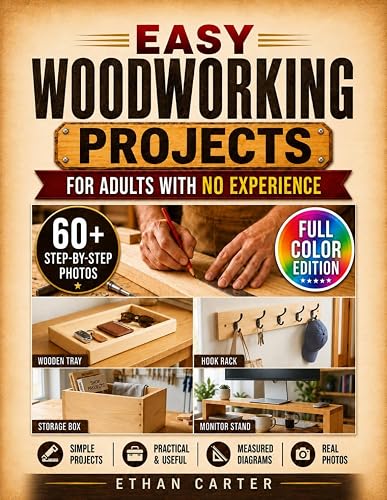 Best for absolute beginnersEasy Woodworking Projects for Adults with No ExperienceView on Amazon
- 5
 Best reference libraryThe Complete Book of WoodworkingView on Amazon
Our Top Picks
Each pick below is a book rather than a tool, since log projects depend as much on knowing how to mill, dry and join rough material as on the saw you own. Before you buy, it helps to read a general overview such as Wood for Woodworking Projects: A Step-by-Step Guide to Choosing the Right Stock, which explains how stock selection changes the result.
| Product | Best for | Key feature |
|---|---|---|
| Simply Wood: Home Projects from Branches, Logs, and Other Found Wood | Home décor and small builds from found wood | Projects built from branches and logs |
| From Tree to Table: How to Make Your Own Rustic Log Furniture | Rustic furniture from logs | Milling and furniture-scale instructions |
| Woodworking Project Book: A Woodworking Log Book | Tracking log and plan progress | Record pages for each project |
| Easy Woodworking Projects for Adults with No Experience | First-time builders | Step-by-step plans with diagrams |
| The Complete Book of Woodworking | A broad reference library | 40+ projects and skill basics |
Simply Wood: Home Projects from Branches, Logs, and Other Found Wood
Simply Wood: Home Projects from Branches, Logs, and Other Found Wood
Best for: Home décor and small builds made from found wood
This book suits builders who want to start with what the yard already offers. It focuses on smaller, practical pieces rather than heavy furniture, which makes it a sensible first step into log-based work.
Key specs
- Subject: projects made from branches, logs and other found wood
- Format: project-based guide
Pros
- Projects are scaled to manageable sizes
- Good match for reclaimed and yard-sourced material
- Encourages working with natural wood shapes
Cons
- Less depth on large furniture joinery
- Limited coverage of advanced milling
Bottom line: A strong pick for someone who wants small, found-wood projects without a large workshop.
From Tree to Table: How to Make Your Own Rustic Log Furniture
From Tree to Table: How to Make Your Own Rustic Log Furniture (Fox Chapel Publishing) Practical Woodworking Information, Detailed Building Instructions, and Expert Troubleshooting Advice
Best for: Rustic furniture built from logs
This is the most directly relevant title for builders who want full-size pieces such as tables and benches from logs. The title signals practical milling and construction guidance rather than decorative crafts.
Key specs
- Subject: rustic log furniture from tree to finished piece
- Covers milling, building instructions and troubleshooting
Pros
- Addresses the full path from raw log to furniture
- Includes troubleshooting for common log problems
- Furniture-scale projects suit serious builders
Cons
- Assumes some comfort with power tools and heavy stock
- Less suited to someone wanting only small décor builds
Bottom line: The best choice if your goal is log furniture and you are ready to handle heavy material.
Woodworking Project Book: A Woodworking Log Book
Woodworking Project Book: A Woodworking Log Book: Tracker & Record Book For Woodworking Plan or Project, DIY Gift … Woodworking Lovers | Vintage Brown Cover
Best for: Tracking log and plan progress across builds
This is a record book rather than an instruction manual. It suits makers who already have plans and want a place to log measurements, moisture readings, drying times and finishing notes for each log project.
Key specs
- Type: log book and project tracker
- Designed for recording plans and projects
Pros
- Useful for recording drying and milling timelines
- Keeps measurements and cut lists in one place
- Works alongside any plan book
Cons
- Contains no build instructions of its own
- Value depends on how consistently you record entries
Bottom line: Pick this if you already own plans and want to document your log projects.
Easy Woodworking Projects for Adults with No Experience
Easy Woodworking Projects for Adults with No Experience: From First Cut to Projects You'll Be Proud to Share | Step-by-Step Plans with Real Photos and Measured Diagrams for Every Build
Best for: First-time builders learning on simple projects
This book is written for adults starting from zero. It uses step-by-step plans and measured diagrams, which helps when you are still learning how measurements and joints translate into a finished piece. Consider it a foundation before moving to heavier log work. For a broader starting point, see Good First Woodworking Projects: 5 Easy Builds for Beginners.
Key specs
- Audience: adults with no prior experience
- Format: step-by-step plans with diagrams
Pros
- Clear sequencing for newcomers
- Diagrams support measurement-based builds
- Builds confidence before tackling logs
Cons
- Projects are mostly milled lumber, not logs
- Limited coverage of green or irregular wood
Bottom line: The right place to start if you are new to woodworking and want to build skills before working with logs.
The Complete Book of Woodworking
The Complete Book of Woodworking: Step-by-Step Guide to Essential Woodworking Skills, Techniques, Tools and Tips (Landauer) 40+ Easy-to-Follow Projects and Plans, 1,200+ Photos, and Carpentry Basics
Best for: A broad reference covering skills, techniques and projects
This is a reference-style book covering essential skills and a wide range of projects. It helps builders who want to understand techniques such as joinery and finishing that carry over into log work, even when the project itself is not log-based.
Key specs
- Coverage: essential skills, techniques, tools and tips
- Includes a large set of projects and plans
Pros
- Strong general skills reference
- Large number of projects to choose from
- Useful for building a library of techniques
Cons
- Log-specific content is a small part of the whole
- Can be more than a casual builder needs
Bottom line: A good investment for someone who wants one comprehensive reference rather than a log-only book.
Buying Guide
Log condition and moisture
Green logs contain a lot of water and will check, cup and split as they dry. Look for books that explain drying times, end-sealing and how to stack stock so it dries flat. Plan on months, not weeks, for thick sections.
Good picks for this: From Tree to Table: How to Make Your Own Rustic Log Furniture, Simply Wood: Home Projects from Branches, Logs, and Other Found Wood
Milling and processing
Turning a round log into usable boards or slabs requires a sawmill, a chainsaw mill or careful work with a bandsaw. Check whether the book covers milling methods and safety, since it affects the scale of projects you can attempt.
Good picks for this: From Tree to Table: How to Make Your Own Rustic Log Furniture, The Complete Book of Woodworking
Project scale and skill level
Decide whether you want small pieces such as birdhouses and trays or full furniture like tables and benches. Smaller projects need fewer heavy-stock skills. Match the book to your current ability rather than your ambition.
Good picks for this: Easy Woodworking Projects for Adults with No Experience, Simply Wood: Home Projects from Branches, Logs, and Other Found Wood
Joinery for irregular wood
Round and uneven stock often needs different joinery than flat boards. Look for guidance on mortise and tenon work, half-lap joints and drawbored pins, which handle movement and irregular shapes well. A clear joinery section adds long-term value.
Good picks for this: From Tree to Table: How to Make Your Own Rustic Log Furniture, The Complete Book of Woodworking
Plans, diagrams and measurements
Good plans include a cut list, measured diagrams and a sequence of steps. Check whether the measurements are given in both inches and metric if you need both, and whether diagrams are readable.
Good picks for this: Easy Woodworking Projects for Adults with No Experience, The Complete Book of Woodworking
Record keeping and planning
If you build many projects, a log book helps you track drying dates, moisture readings and finishing notes. This is especially useful for log work, where timing has a large effect on results.
Good picks for this: Woodworking Project Book: A Woodworking Log Book
Finishing and care
Log and rustic pieces often need finishes that suit open grain, checks and bark-free surfaces. Look for guidance on sealing end grain, choosing finishes for outdoor or indoor use, and maintaining the piece over time.
Good picks for this: From Tree to Table: How to Make Your Own Rustic Log Furniture, Simply Wood: Home Projects from Branches, Logs, and Other Found Wood
FAQ
Can I use any log for woodworking projects?
Not every species is suitable. Hardwoods such as oak, walnut and cherry generally work well for furniture, while some softwoods are better for rough décor. Check the species, its stability and whether it has pests or decay before you start.
How long should logs dry before I build with them?
Drying time depends on thickness, species and climate. Thin boards can dry in a few months, while thick slabs may need a year or more. Use a moisture meter where possible and let the wood reach a stable moisture content for your local conditions.
Do I need a sawmill to make log furniture?
Not always. A chainsaw mill, a bandsaw or a portable sawmill can all produce usable stock. A sawmill makes the work faster and more accurate, but smaller projects can be started with simpler tools.
Is log woodworking safe for beginners?
It can be, with proper precautions. Logs are heavy and can roll, and chainsaws and sawmills carry real kickback and injury risks. Wear appropriate protective gear and follow the manufacturer’s safety instructions. Consult a professional or a local woodworking instructor before using large milling equipment.
How do I stop logs from cracking as they dry?
Seal the end grain with a wax or commercial end sealer soon after cutting, stack the stock with stickers so air circulates, and dry it slowly in a shaded, covered area. Many log books explain these steps in detail.
Which book should I choose first?
If you are new to woodworking, start with Easy Woodworking Projects for Adults with No Experience. If you already have skills and want log furniture, choose From Tree to Table. Builders who want one general reference may prefer The Complete Book of Woodworking.
Conclusion
For most readers interested in woodworking projects from logs, From Tree to Table: How to Make Your Own Rustic Log Furniture is the most directly relevant choice, since it covers the full path from raw log to furniture. Simply Wood: Home Projects from Branches, Logs, and Other Found Wood suits smaller found-wood builds. Beginners should consider Easy Woodworking Projects for Adults with No Experience first, while The Complete Book of Woodworking works as a broad reference. The Woodworking Project Book log book is a useful companion for anyone tracking drying and build progress. Whatever you choose, plan for slow drying and take safety seriously when milling logs. For more inspiration, you can also browse Beginner Woodworking Projects: A Skill-by-Skill Path.
Sources
- Wood drying basics, moisture behavior and forest products information (usda.gov)
- Workplace safety guidance for woodworking machinery and power tools (osha.gov)
- Consumer safety information for power tools and chainsaws (cpsc.gov)
Related reading
- Woodworking Projects with 2x4s: 7 Best Books for Builders of Every Level
- Woodworking Projects to Sell on Etsy: 8 Ideas That Move (2026)
About Claire Whitaker
Claire Whitaker is part of our editorial team and reviews and edits our woodworking guides, checking product details against manufacturer specifications and owner feedback.