By Claire Whitaker
Updated November 2026
If you need to joint wood with router bits, the right bit makes the difference between a tight, glue-ready edge and a joint that gaps or slips. This list covers five router bits for joining wood, focused on finger (glue) joints and tongue-and-groove profiles. We picked them on the criteria a buyer can check: profile type and how it is described, shank size compatibility with common hand routers, whether the bit is reversible for a clean fit, carbide tipping, and the number of cutting edges. We also looked at owner feedback patterns for each brand and listing, and noted where the listing itself is unclear.
Our top picks at a glance
- 1
 TOP CHOICEBest overallNewdeli Reversible Finger Glue Joint Router Bit 1/2 Inch ShankView on Amazon
- 2
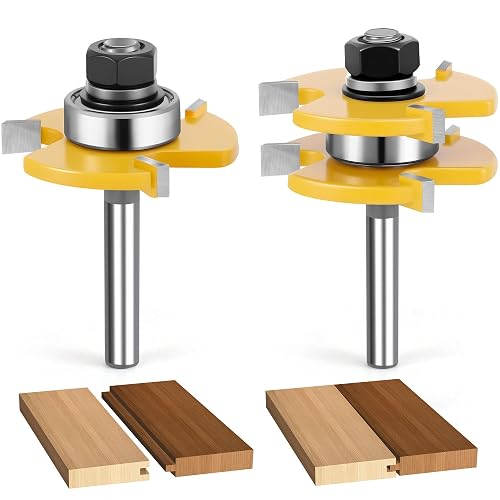 TOP CHOICEBest for shaker cabinet doorsJunreox 2PCS Tongue and Groove Router Bit SetView on Amazon
- 3
 TOP CHOICEBest 3-pack for multi-material workPrecision Wood Joinery; Clean Cutting Performance; Reversible ProfileView on Amazon
- 4
 Best for 1/4 inch shank routersFivePears Finger Joint Router Bit with 1/4" ShankView on Amazon
- 5
 Best for heavier 1/2 inch shank routersProfessional Finger Joint Router Bit 1/2" ShankView on Amazon
Our Top Picks
| Product | Best for | Key feature |
|---|---|---|
| Newdeli Reversible Finger Glue Joint Router Bit | General finger joints in furniture and cabinet stock | Reversible profile, 1/2 inch shank |
| Junreox 2PCS Tongue and Groove Router Bit Set | Shaker cabinet doors and frame-and-panel work | Two-bit set, 1/4 inch shank, adjustable teeth |
| Precision Wood Joinery Finger Joint and Tongue and Groove Set | Users who want two joint types in one pack | 3-pack, reversible profile, 1/4 inch shank |
| FivePears Finger Joint Router Bit | Compact routers using 1/4 inch collets | Reversible finger joint, 1/4 inch shank |
| Professional Finger Joint Router Bit | Heavier routers and thicker stock | Reversible finger joint, 1/2 inch shank |
Newdeli Reversible Finger Glue Joint Router Bit 1/2 Inch Shank
Reversible Finger Glue Joint Router Bit 1/2 Inch Shank, Newdeli Bearing Finger Joint Router Bits Carbide Joinery Wood Milling Cutter for DIY Door Table Cabinet Shelve Furniture
Best for: General finger joints in furniture and cabinet stock
This is a good fit for woodworkers who want a single reversible finger joint bit for common carcase and drawer-side joinery. The 1/2 inch shank suits most full-size routers and gives more stability than a 1/4 inch shank when the cutter is deep in the stock.
Key specs
- Finger glue joint profile
- 1/2 inch shank
- Reversible design, so the same bit can cut both mating pieces
- Carbide-tipped for milling hardwood and softwood
Pros
- Reversible profile simplifies setup for matching joints
- 1/2 inch shank is a good match for larger routers
- Works across a wide range of stock thicknesses listed by the brand
Cons
- Requires a router with a 1/2 inch collet or a reducer
- Setup takes patience, as the fit depends on precise height and fence settings
Bottom line: A strong first choice for woodworkers who mostly build furniture and want one dependable finger joint bit on a full-size router.
Junreox 2PCS Tongue and Groove Router Bit Set
Junreox 2PCS Tongue and Groove Router Bit Set, 3rd Gen. 1/4 Shank Router Bits for 3/4" Stock, 1/2" Cutting Depth, Adjustable 3 Teeth Shaker Cabinet Door Router Bits for Woodworking, Milling, Cutting
Best for: Shaker cabinet doors and frame-and-panel work
This set suits makers building cabinet doors, drawer fronts and panels who need matched tongue and groove cutters in a single purchase. The 1/4 inch shank fits compact routers and trim routers with the right collet.
Key specs
- Two-bit tongue and groove set
- 1/4 inch shank
- Listed for 3/4 inch stock with 1/2 inch cutting depth
- Adjustable 3-tooth design per the listing
Pros
- Two matched bits make door and panel fitting easier
- 1/4 inch shank works with many compact routers
- Listing gives clear stock thickness and depth information
Cons
- Limited to a 1/2 inch cutting depth, so thicker stock needs multiple passes
- Smaller shank can flex more on deep cuts than a 1/2 inch shank
Bottom line: Best for makers who build cabinet doors and want a matched tongue and groove pair for 3/4 inch stock.
Precision Wood Joinery Finger Joint and Tongue and Groove Router Bits Set, 1/4 Inch Shank, 3 Pack
Precision Wood Joinery; Clean Cutting Performance; Reversible Profile Design; Multi-Material Compatibility Finger Joint & Tongue and Groove Router Bits Set, 1/4 Inch Shank, 3 Pack
Best for: Users who want two joint types in one pack
This three-piece set covers both finger joints and tongue and groove profiles, which is useful for woodworkers who switch between box joinery and panel work. The listing also mentions multi-material compatibility, so it may suit some non-wood sheet stock.
Key specs
- Three-pack covering finger joint and tongue and groove profiles
- 1/4 inch shank
- Reversible profile design per the listing
Pros
- Covers two common joint types in one set
- 1/4 inch shank suits compact routers
- Good value for mixed joinery projects
Cons
- Exact profile dimensions are not always clear from the listing, so check the cut before committing to a project
- Multi-material claims should be tested on scrap before cutting finished parts
Bottom line: A practical pick for a shop that needs both finger and tongue and groove joints without buying separate sets.
FivePears Finger Joint Router Bit with 1/4″ Shank
FivePears Finger Joint Router Bit with 1/4" Shank,Reversible Finger Joint Glue Joint Router Bit for Woodworking
Best for: Compact routers using 1/4 inch collets
This bit is aimed at users with 1/4 inch shank routers, including many trim and compact models. It is a reversible finger joint profile for glue joints in boxes, drawers and shelving.
Key specs
- Reversible finger glue joint profile
- 1/4 inch shank
- Suited to woodworking joinery
Pros
- Fits common 1/4 inch collets on compact routers
- Reversible design keeps the setup straightforward
- Good for smaller projects such as boxes and drawers
Cons
- Smaller shank is less rigid for deep cuts in thick hardwood
- Shallow passes are recommended for better finish and bit life
Bottom line: Pick this if your router only takes a 1/4 inch bit and you mainly make small boxes and drawers.
Professional Finger Joint Router Bit 1/2″ Shank
Professional Finger Joint Router Bit 1/2" Shank, Reversible Finger Glue Joint Router Bit for Woodworking, Finger Joint Bit, Joinery Router Bit for DIY Door Table Cabinet Shelve Furniture
Best for: Heavier routers and thicker stock
This is a 1/2 inch shank finger joint bit for woodworkers who run heavier routers and cut thicker stock. The larger shank adds rigidity, which helps keep the profile consistent over longer cuts.
Key specs
- Reversible finger glue joint profile
- 1/2 inch shank
- Intended for DIY furniture, doors and cabinet joinery
Pros
- 1/2 inch shank offers more stability in thick stock
- Reversible profile for matching mating pieces
- Suitable for a range of furniture and cabinet parts
Cons
- Needs a full-size router with a 1/2 inch collet
- Requires careful setup to get a snug fit on the first try
Bottom line: A good choice for furniture makers with a full-size router who want a rigid finger joint bit for thicker parts.
Buying Guide
Joint profile type
Finger (glue) joints interlock square fingers and suit boxes, drawers and carcases. Tongue and groove profiles suit panels, doors and frames. Check the listing for the profile name before you buy, because similar-looking bits can cut very different shapes.
Good picks for this: Newdeli Reversible Finger Glue Joint Router Bit, Junreox 2PCS Tongue and Groove Router Bit Set
Shank size and router compatibility
Most bits are sold in 1/4 inch or 1/2 inch shanks. Confirm your router’s collet size before ordering. Compact routers usually take 1/4 inch shanks, while full-size routers usually take 1/2 inch. A 1/2 inch shank is generally more rigid on deep cuts, which helps with consistency.
Good picks for this: FivePears Finger Joint Router Bit, Professional Finger Joint Router Bit
Reversible versus fixed profile
Reversible finger joint bits let you cut both mating pieces with one bit by flipping the bit or workpiece. This reduces setup time and helps the two halves line up. Fixed profiles may need separate bits for each half.
Good picks for this: Newdeli Reversible Finger Glue Joint Router Bit, Precision Wood Joinery Finger Joint and Tongue and Groove Set
Stock thickness and cutting depth
Check the maximum cutting depth and the stock thickness the bit is designed for. Many joinery bits work best in a few shallow passes rather than one deep pass. Listings that state depth and thickness clearly make planning easier.
Good picks for this: Junreox 2PCS Tongue and Groove Router Bit Set, Professional Finger Joint Router Bit
Carbide quality and tooth count
Carbide-tipped bits hold an edge longer than high-speed steel when cutting hardwood and plywood. More teeth can give a smoother cut, while fewer teeth can clear chips faster in deep grooves. Look for clear mention of carbide in the listing.
Good picks for this: Precision Wood Joinery Finger Joint and Tongue and Groove Set, Junreox 2PCS Tongue and Groove Router Bit Set
Use case and project mix
If you only make one type of joint, a single bit may be enough. If you build doors one week and boxes the next, a multi-piece set saves time. Think about your most common projects before choosing between a single bit and a set.
Good picks for this: Precision Wood Joinery Finger Joint and Tongue and Groove Set, Newdeli Reversible Finger Glue Joint Router Bit
Setup, safety and care
Always unplug the router before changing bits. Use a sharp, clean bit and a steady feed rate. Check that the collet is tight, and wear eye and hearing protection. Clean resin off the cutting edges to keep cuts clean. For guidance on safe power tool use, consult the manufacturer’s manual and a qualified instructor.
Good picks for this: FivePears Finger Joint Router Bit, Professional Finger Joint Router Bit
FAQ
What is the difference between a finger joint and a tongue and groove joint?
A finger joint, also called a box or glue joint, uses interlocking square fingers to join two pieces end to end or at a corner. A tongue and groove joint slides a raised tongue into a matching groove, usually for panels and boards joined along their edges.
Can I use a 1/4 inch shank bit in a 1/2 inch router?
Not directly. A 1/2 inch collet will not hold a 1/4 inch shank without a reducer sleeve. Check your router’s manual before buying a reducer, and make sure it is designed for your collet.
Do I need a router table to cut joints?
Not always. Many joinery bits can be used in a handheld router with a fence or template guide. A router table gives more control on long pieces and repeated cuts, which is why many woodworkers prefer one for finger joints.
How do I set up a finger joint bit for a snug fit?
Cut a test joint in scrap stock of the same thickness. Adjust the bit height so the fingers line up with the mating piece. Small height changes make a noticeable difference, so make adjustments in very small increments.
Is a reversible finger joint bit better than two separate bits?
A reversible bit can simplify setup, since one bit cuts both halves of the joint. Two separate bits may give more control over each profile. The best choice depends on how often you cut joints and how precise your fit needs to be.
Can these bits cut plywood and MDF?
Many joinery bits can cut plywood and MDF, but edge quality and chip-out depend on the material and the bit’s tooth geometry. Test on scrap first. Some listings mention multi-material compatibility, so check the description before using a bit on sheet stock.
Conclusion
For most furniture and cabinet joinery, the Newdeli Reversible Finger Glue Joint Router Bit is a sensible starting point on a full-size router. Shaker door makers may prefer the Junreox 2PCS Tongue and Groove Router Bit Set. If you want two joint types in one pack, the Precision Wood Joinery set covers that need. Compact router owners will find the FivePears bit fits their collet, while the Professional Finger Joint Router Bit suits heavier routers and thicker stock. Match the shank size to your router first, then the profile to your project.
Sources
- Workplace power tool and woodworking machinery safety guidance (osha.gov)
- Consumer product safety information on power tools and hand-held router use (cpsc.gov)
- Wood properties and hardwood species information for joinery planning (fs.usda.gov)
Related reading
- 7 Best Finger Joints Wood Router Bits for Joinery in 2026
- Wood by Wright Router Plane Compared: 7 Best Picks for 2026
- Wood Surfacing Router Bit Review: Is It Worth It? (2026)
- Wood Router on a Stick: Build a Simple Plunge Router Jig (Step-by-Step)
About Claire Whitaker
Claire Whitaker is part of our editorial team and reviews and edits our woodworking guides, checking product details against manufacturer specifications and owner feedback.