By Claire Whitaker
Updated November 2026
Beginners who want to make easy woodworking projects for beginners that sell usually need three things: plans simple enough to follow without years of experience, clear cut lists so they can buy the right amount of lumber, and builds that look finished enough to put in front of a customer. This list focuses on plan books and project collections rather than tools, because a good set of measured drawings is what separates a weekend of frustration from a shelf of pieces you can actually sell. Each pick was evaluated on the depth of its plans, how clearly it gives dimensions and cut lists, whether its projects suit small shops with limited equipment, how many builds are realistically sellable, and what owners commonly say about the instructions.
Our top picks at a glance
- 1
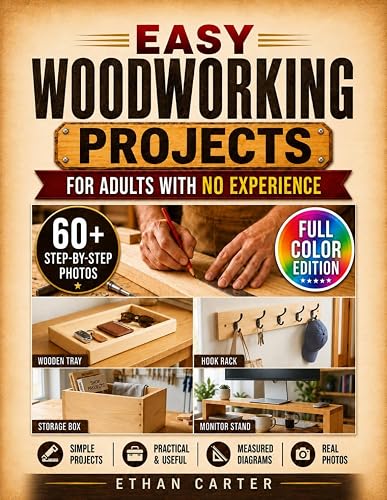 TOP CHOICEBest overallEasy Woodworking Projects for Adults with No ExperienceView on Amazon
- 2
 TOP CHOICEBest for small spaces without a table sawNo Table Saw Woodworking Projects for BeginnersView on Amazon
- 3
 TOP CHOICEBest for high plan volumeDIY Woodworking Projects for BeginnersView on Amazon
- 4
 Best for weekend buildsThe Big Book of Weekend Woodworking: 150 Easy ProjectsView on Amazon
- 5
 Best for learning fundamentals firstThe Complete Book of WoodworkingView on Amazon
- 6
 Best for building stronger jointsSmart Woodworking Projects for BeginnersView on Amazon
- 7
 Best budget pickThe Weekend Woodworker's Project BibleView on Amazon
Our Top Picks
The table below summarizes the seven books. Read the individual entries for specifics, and remember that a plan book is only as useful as the match between its projects and the space and tools you actually have.
| Product | Best for | Key feature |
|---|---|---|
| Easy Woodworking Projects for Adults with No Experience | Absolute beginners | Step-by-step plans with photos and measured diagrams |
| No Table Saw Woodworking Projects for Beginners | Small spaces, no table saw | Exact shopping and cut lists |
| DIY Woodworking Projects for Beginners | Maximum variety | 127 build-ready plans with visual steps |
| The Big Book of Weekend Woodworking | Short build sessions | 150 easy projects |
| The Complete Book of Woodworking | Learning technique alongside projects | 40+ projects and 1,200+ photos |
| Smart Woodworking Projects for Beginners | Sturdy, professional-looking results | Step-by-step system to avoid common mistakes |
| The Weekend Woodworker’s Project Bible | Budget-minded builders | All-in-one collection of easy builds and furniture |
Easy Woodworking Projects for Adults with No Experience
Easy Woodworking Projects for Adults with No Experience: From First Cut to Projects You'll Be Proud to Share | Step-by-Step Plans with Real Photos and Measured Diagrams for Every Build
Best for: Absolute beginners who want a guided path to their first sellable pieces
This book suits adults who have never run a saw or cut a mortise. It walks through foundational steps before moving to finished builds, which helps new makers avoid the common trap of starting with a project that exceeds their skill.
Key specs:
- Step-by-step plans for each build
- Real photos alongside measured diagrams
- Written for readers with no prior experience
Pros:
- Beginner-first sequencing of skills
- Photos help confirm each step visually
- Projects are presented as finished pieces you can share
Cons:
- Experienced builders may find the early chapters slow
- Plans are general, so you may need to adjust dimensions for market sizes
Bottom line: The safest starting point for someone with no shop experience who wants clear, sequential instructions.
No Table Saw Woodworking Projects for Beginners
No Table Saw Woodworking Projects for Beginners: The Easy, Stress-Free Way to Build Useful Things Even in Small Spaces – Exact Shopping & Cut Lists, No Wasted Wood, and the Pride of "I Built That"
Best for: Small spaces without a table saw
Many hobbyists work in garages or apartment corners where a table saw is impractical. This book is built around hand tools, portable saws and simple joinery, and its cut lists are designed so you can buy lumber in standard lengths and avoid waste.
Key specs:
- Exact shopping and cut lists for each project
- Designed around portable and hand-tool methods
- Focus on minimizing wasted stock
Pros:
- Practical for shops without a table saw
- Cut lists reduce lumber waste and trips to the store
- Projects aim for a “built it myself” result with modest tooling
Cons:
- Some builds take longer by hand than with machines
- Project variety is narrower than larger collections
Bottom line: Ideal for builders working in small spaces who want to make sellable items without investing in a table saw.
DIY Woodworking Projects for Beginners
DIY Woodworking Projects for Beginners: 127 Build-Ready Plans, Exact Measurements, Cut Lists & Visual Steps to Turn Raw Boards into Furniture & Decor That Looks Store-Bought | No Big Workshop
Best for: Maximum variety and plan volume
With 127 listed plans, this collection gives beginners a wide choice of decor, storage and furniture ideas. It is useful for finding a product line to test at a craft show or online shop before committing to a single design.
Key specs:
- 127 build-ready plans (as stated in the listing)
- Exact measurements and cut lists
- Visual step sequences
Pros:
- Large number of options to compare
- Covers both decor and functional furniture
- Measurements support quick material planning
Cons:
- Plan depth varies across so many projects
- Not every build is suited to a very small shop
Bottom line: Best for makers who want to explore many sellable ideas before choosing a niche.
The Big Book of Weekend Woodworking: 150 Easy Projects
The Big Book of Weekend Woodworking: 150 Easy Projects
Best for: Short build sessions and quick turnaround
The weekend format suits builders who have limited time. Many of the projects are small enough to finish in a few sessions, which makes it easier to build inventory for markets or online listings.
Key specs:
- 150 easy projects (as stated in the title)
- Oriented toward weekend-length builds
- Focus on approachable, low-complexity designs
Pros:
- Large selection of quick projects
- Good for building inventory fast
- Approachable designs for newer builders
Cons:
- Some plans may need adjustment for finish quality expected by buyers
- Less emphasis on advanced joinery
Bottom line: A good fit for hobbyists who want many small, fast projects to test in the market.
The Complete Book of Woodworking
The Complete Book of Woodworking: Step-by-Step Guide to Essential Woodworking Skills, Techniques, Tools and Tips (Landauer) 40+ Easy-to-Follow Projects and Plans, 1,200+ Photos, and Carpentry Basics
Best for: Learning fundamentals alongside projects
This reference-style book pairs skill instruction with more than 40 projects. Owners often describe it as a book they return to repeatedly, both for build plans and for technique refreshers on measuring, marking and finishing.
Key specs:
- 40+ easy-to-follow projects and plans
- More than 1,200 photos
- Covers essential skills, techniques, tools and carpentry basics
Pros:
- Strong skill foundation alongside plans
- Photo-heavy layout aids visual learners
- Useful reference after the first builds
Cons:
- Large format means more reading before building
- Project count is smaller than the higher-volume collections
Bottom line: Best for beginners who want to understand the why behind joinery and finishing, not just follow steps.
Smart Woodworking Projects for Beginners
Smart Woodworking Projects for Beginners: The Complete Step-by-Step System to Build with Basic Tools, Avoid Costly Mistakes, and Create Strong, Professional-Looking Furniture
Best for: Sturdy, professional-looking results
This title emphasizes avoiding costly mistakes and building strong furniture with basic tools. It suits builders whose main concern is that buyers will see solid construction and clean joints.
Key specs:
- Step-by-step system covering basic tools
- Focus on structural strength and clean results
- Designed for beginners building furniture
Pros:
- Attention to structural soundness
- Guidance aimed at avoiding common errors
- Furniture focus suits higher-value sales
Cons:
- Furniture builds take more time and material than small decor
- Some techniques assume access to common hand or portable tools
Bottom line: Pick this if your goal is durable furniture you can sell at a premium.
The Weekend Woodworker’s Project Bible
The Weekend Woodworker’s Project Bible: The All-in-One Collection of Step-by-Step Plans for Easy Builds, Timeless Furniture & Creative Projects You’ll Be Proud Of | No Experience or Big Budget Needed
Best for: Budget-minded builders
The listing highlights that no experience or large budget is needed, which makes it a practical choice for makers starting with limited resources. It combines easy builds, furniture and creative projects in one collection.
Key specs:
- All-in-one collection of step-by-step plans
- Mix of easy builds, furniture and creative projects
- Designed for readers with no experience
Pros:
- Broad mix of project types in one volume
- Well suited to beginners with limited tools
- Creative projects can suit craft markets
Cons:
- Breadth means some builds get less detail than others
- Specific specs are not always clear from the listing alone
Bottom line: A sensible choice for a new maker who wants variety without spending heavily on plans.
Buying Guide
Choosing a plan book is different from choosing a tool. The right book depends on your shop, your skill level and what you intend to sell. The factors below help you narrow the field.
Skill level and instruction style
Look for books that start with the basics: how to read a cut list, how to square stock and how to assemble with glue and screws. If a book jumps straight into complex joinery without explaining the steps, it will frustrate a true beginner. Photos and clear diagrams make a large difference when you are learning.
Good picks for this: Easy Woodworking Projects for Adults with No Experience, The Complete Book of Woodworking
Cut lists and material planning
A usable cut list gives finished dimensions, quantities and part names, and ideally notes how to lay out parts on standard lumber lengths. Plans without cut lists force you to do the math yourself, which often leads to wasted stock. This matters more when you are building several units to sell, because material costs compound quickly.
Good picks for this: No Table Saw Woodworking Projects for Beginners, DIY Woodworking Projects for Beginners
Shop size and required tools
Before buying, check which tools a book assumes. Many plans call for a table saw, planer or router. If you lack those machines, look for books built around hand tools or portable saws, and confirm the project list suits your space.
Good picks for this: No Table Saw Woodworking Projects for Beginners, Smart Woodworking Projects for Beginners
Project scope and sellability
Think about what you want to make. Small decor and gift items can be built quickly and sold at markets, while furniture takes longer but commands higher prices. A book with a range of scales lets you test several product lines before committing.
Good picks for this: The Big Book of Weekend Woodworking, The Weekend Woodworker’s Project Bible
Build quality and joinery
Sellable work needs joints that hold up over years of handling. Plans that explain glue-ups, reinforcement and fastener choice help you avoid racking, splitting and loose parts. Check whether the book addresses these points rather than only showing finished photos.
Good picks for this: Smart Woodworking Projects for Beginners, The Complete Book of Woodworking
Variety versus depth
Large collections offer many ideas, but depth per project can vary. A smaller book with thorough plans may serve you better than a large one with thin instructions. Read sample pages if you can before deciding.
Good picks for this: DIY Woodworking Projects for Beginners, The Complete Book of Woodworking
Finishing and care
Finishing affects how a piece looks and how long it lasts. Good plan books include finishing guidance, and it is worth checking whether a title covers sanding, sealing and final coats. Keep in mind that some finishes involve solvents and dust; follow manufacturer safety data and ventilate your workspace. For specific health or chemical questions, consult a professional.
Good picks for this: The Complete Book of Woodworking, Easy Woodworking Projects for Adults with No Experience
FAQ
What makes a woodworking project easy for a beginner?
An easy project uses few parts, simple joinery such as butt joints with screws or glue, and common lumber sizes. It should not require specialized machines or advanced measuring. Plans with clear cut lists and step-by-step photos are the best indicators that a project suits a new builder.
Which beginner projects sell best?
Small functional items such as cutting boards, shelves, planters, wall organizers and simple benches often attract buyers. Demand depends on your local market and sales channel, so test a few designs at a craft show or online before scaling up. The site’s related guides on sellable projects can help you compare options.
Do I need a table saw to start?
No. Many beginner projects can be built with a hand saw, a circular saw and a drill. A book written for small spaces without a table saw can help you plan accurate cuts using portable methods. Clamping straight edges and checking square are essential when cutting by hand.
How much lumber should I buy for a project?
Use the cut list in your plan to total the board feet or linear feet of each size, then add a margin for mistakes and defects, commonly around ten to fifteen percent. Buy extra for critical parts. Measure stock before cutting, since nominal and actual dimensions differ.
Are plan books better than free online plans?
Plan books tend to offer consistent formatting, tested dimensions and organized sequencing, which can reduce errors. Free plans can be useful, but quality varies widely. Compare any plan’s measurements against the cut list and verify the build logic before starting.
How do I price handmade woodworking pieces?
Account for lumber, hardware, finish, your time and overhead, then compare with similar handmade items in your market. Pricing guidance is outside the scope of this article, but business advice from a qualified accountant or small business adviser can help you set sustainable margins.
What safety gear should beginners use?
Wear safety glasses, hearing protection and a dust mask rated for wood dust when sanding or cutting. Keep blades and bits sharp and use push sticks where appropriate. For specific guidance on dust exposure or shop ventilation, consult a professional or the relevant safety body.
Conclusion
For most beginners, the right book depends on space, skill and what you plan to sell. Easy Woodworking Projects for Adults with No Experience is the most approachable starting point. If you have no table saw, the No Table Saw Woodworking Projects for Beginners book is built for your setup. Builders who want many options should look at the DIY Woodworking Projects for Beginners collection, while those who want to understand technique will benefit from The Complete Book of Woodworking. The Smart Woodworking Projects for Beginners title suits sturdy furniture, and the Weekend Woodworker’s Project Bible is a sensible choice for a limited budget. For further reading, see Beginner Woodworking Projects That Sell: 6 Builds for New Makers and Good First Woodworking Projects: 5 Easy Builds for Beginners.
Sources
- Consumer safety guidance on power tool and workshop hazards (cpsc.gov)
- Workplace safety standards, including guidance on wood dust and hand and power tool use (osha.gov)
- Forest Products Laboratory research on wood properties, moisture and lumber performance (fpl.fs.usda.gov)
Related reading
- Easy Woodworking Wood Projects That Sell: 7 Builds for Beginners
- Woodworking Projects to Sell on Etsy: 8 Ideas That Move (2026)
- Woodworking Projects That Sell: 7 Builds With Strong Demand (2026)
- Woodworking Projects That Sell at Craft Shows: 7 Builds That Move (2026)
About Claire Whitaker
Claire Whitaker is part of our editorial team and reviews and edits our woodworking guides, checking product details against manufacturer specifications and owner feedback.