By Claire Whitaker
Updated November 2026
Shops that run routers all day need a best commercial wood router that holds up to heavy use, keeps a steady speed under load and makes depth changes quick. This list is built on specifications, brand reputation and the patterns owners tend to report, not on hands-on testing. The criteria: motor horsepower and build quality, collet options, plunge versus fixed-base flexibility, speed control, dust and depth adjustment, and how well each model suits a professional workflow. Every pick below is a consumer-grade or prosumer tool sold on Amazon US, so check the listing for the exact configuration before you buy.
Our top picks at a glance
- 1
 TOP CHOICEBest overallDEWALT 20V Max XR Cordless Router, Brushless, Tool Only (DCW600B)View on Amazon
- 2
 TOP CHOICEBest for fixed and plunge versatilityBosch 1617EVSPK 2.25 HP Combination Plunge- and Fixed-Base RouterView on Amazon
- 3
 TOP CHOICEBest for heavy plunge workMakita RP2301FC 3-1/4 HP Plunge RouterView on Amazon
- 4
 Best for large-bit jobsWoodworking 3.25HP Router, 2400W, 4.2" Diameter, Model RT-001MView on Amazon
- 5
 Best budget pickSKIL 14 Amp Plunge and Fixed Base Router Combo (RT1322-00)View on Amazon
- 6
 Best for fixed-base precisionBosch 1617EVS 2.25 HP Electronic Fixed-Base RouterView on Amazon
- 7
 Best for shop-floor durabilityDEWALT Router, Fixed and Plunge Base Kit (DW618PKB)View on Amazon
Our Top Picks
| Product | Best for | Key feature |
|---|---|---|
| DEWALT 20V Max XR Cordless Router (DCW600B) | Mobile and job-site work | Brushless cordless motor |
| Bosch 1617EVSPK 2.25 HP Combination Router | Shops needing both bases | Quick-clamp system and electronic speed control |
| Makita RP2301FC 3-1/4 HP Plunge Router | Heavy plunge routing | Variable speed with 3-1/4 HP motor |
| Woodworking 3.25HP Router (RT-001M) | Large-bit and profile work | 2400W motor with 1/2″ and 1/4″ collets |
| SKIL 14 Amp Plunge and Fixed Base Combo (RT1322-00) | Budget-minded shops | Plunge and fixed bases in one kit |
| Bosch 1617EVS 2.25 HP Fixed-Base Router | Precision edge and dado work | Microfine depth adjustment |
| DEWALT Router Fixed and Plunge Kit (DW618PKB) | Daily production use | 12-amp motor, 24,000 RPM, soft start |
DEWALT 20V Max XR Cordless Router, Brushless, Tool Only (DCW600B)
DEWALT 20V Max XR Cordless Router, Brushless, Tool Only (DCW600B)
Best for: Mobile and job-site work where a cord is a hassle
This suits professionals who route trim, cabinet details and installation work away from the main shop. Cordless routers trade peak power for portability, so this is less suited to continuous deep cuts in hardwood.
Key specs:
- 20V Max XR battery platform
- Brushless motor
- Tool only; batteries and charger sold separately
Pros:
- No cord to manage on site
- Brushless motor is generally longer-lasting than brushed designs
- Shares batteries with other DEWALT 20V tools
Cons:
- Runtime depends on battery capacity you buy separately
- Less torque for large-bit work than corded machines
Bottom line: The right choice for pros who already run a DEWALT 20V system and need a router that goes wherever the job is.
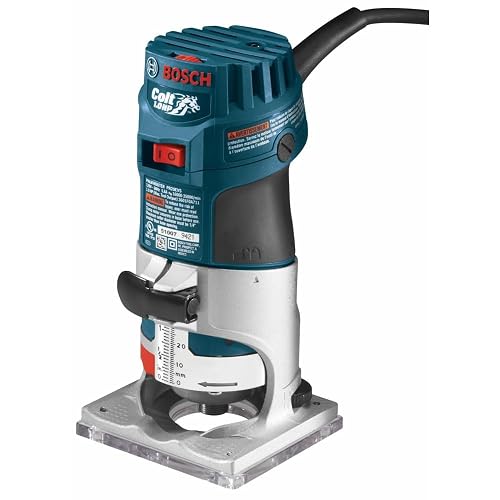
Bosch 1617EVSPK 2.25 HP Combination Plunge- and Fixed-Base Router
BoschWood router for woodworking with exclusive quick-clamp system, variable speed, microfine depth & Constant Response Circuitry 1617EVSPK 2.25 HP Combination Plunge- and Fixed-Base Router
Best for: Fixed and plunge versatility in one kit
Shops that switch between edge work and plunge cuts will value the two bases and quick-clamp system. It fits general cabinetry and furniture production well.
Key specs:
- 2.25 HP motor
- Plunge and fixed bases included
- Variable speed with electronic feedback
Pros:
- Two bases cover most routing setups
- Electronic speed control helps maintain speed under load
- Microfine depth adjustment supports repeatable settings
Cons:
- 2.25 HP is modest for the largest panel-raising bits
- Heavier than basic trim routers
Bottom line: A strong all-round pick for shops that want one router to handle most daily jobs.
Makita RP2301FC 3-1/4 HP Plunge Router
Makita RP2301FC 3-1/4 HP* Plunge Router, with Variable Speed
Best for: Heavy plunge routing and mortising
Production shops cutting dadoes, mortises and grooves all day benefit from the higher horsepower and plunge capability.
Key specs:
- 3-1/4 HP motor
- Variable speed
- Plunge base
Pros:
- Higher horsepower handles deeper passes
- Plunge action suits mortising and inlay work
- Variable speed adds control across bit sizes
Cons:
- Plunge-only setup means you may want a separate fixed base
- Larger footprint than compact routers
Bottom line: Best for shops whose main work is plunge routing and heavier stock.
Woodworking 3.25HP Router, 2400W, 4.2″ Diameter, Model RT-001M
Woodworking 3.25HP Router, 2400W, 4.2" Diameter, 1/2" and 1/4" Collets, 120V60Hz, Model RT-001M (Motor)
Best for: Large-bit and profile work
Shops producing raised panels, large profiles or edge molding will look for the power and dual collet sizes this model lists.
Key specs:
- 3.25 HP, 2400W motor
- 1/2″ and 1/4″ collets
- 120V, 60Hz
Pros:
- Strong listed power for large-diameter bits
- Two collet sizes cover common bit shanks
- Compact diameter for its power class
Cons:
- Less established brand recognition than major tool names
- Verify service and parts availability before buying
Bottom line: A power-focused option for shops that prioritize motor output over brand familiarity.
SKIL 14 Amp Plunge and Fixed Base Router Combo (RT1322-00)
SKIL 14 Amp Plunge and Fixed Base Router Combo — RT1322-00
Best for: Budget-minded shops wanting both bases
Small commercial shops and serious hobbyists who need plunge and fixed capability without a premium price tier will find this kit practical.
Key specs:
- 14-amp motor
- Plunge and fixed bases
Pros:
- Two bases in one kit
- Solid amperage for everyday routing
- Accessible option for growing shops
Cons:
- Fewer professional-grade features than top-tier brands
- Not the choice for continuous heavy production
Bottom line: A sensible budget pick for shops that need both bases without stretching their tooling budget.
Bosch 1617EVS 2.25 HP Electronic Fixed-Base Router
BoschRouter woodworking with variable speed dial, microfine depth adjust, constant response, clean router wood cuts 1617EVS 2.25 HP Electronic Fixed-Base Router
Best for: Precision edge, dado and template work
Cabinet and furniture makers who route with templates and need consistent depth will value the fixed base and micro-adjust.
Key specs:
- 2.25 HP motor
- Electronic variable speed
- Microfine depth adjustment
Pros:
- Microfine depth adjust helps repeat setups
- Constant-response circuitry supports steady cuts
- Fixed base suits table mounting
Cons:
- Fixed-base only; no plunge capability
- Limited power for the largest bits
Bottom line: The pick for shops whose work is mostly fixed-base precision routing.
DEWALT Router, Fixed and Plunge Base Kit (DW618PKB)
DEWALT Router, Fixed and Plunge Base Kit, Soft Start, 12-Amp, 24,000 RPM, Variable Speed Trigger, Corded (DW618PKB)
Best for: Daily production use with both bases
Shops that run routers in a steady workflow and want a kit with both bases and soft start will find the feature set well suited.
Key specs:
- 12-amp motor
- 24,000 RPM
- Soft start and variable speed trigger
- Fixed and plunge bases included
Pros:
- Both bases in one kit
- Soft start reduces kickback on startup
- Variable speed trigger gives direct control
Cons:
- 12 amps is less than the 14-amp SKIL kit
- Corded only
Bottom line: A dependable everyday router for shops that want two bases and smooth starts.
Buying Guide
Motor power and horsepower
Horsepower determines how much material and how large a bit you can run without bogging down. For panel raisers and large profiles, look at 2.25 HP and up. Light trim and small roundovers run well on smaller motors.
Good picks for this: Makita RP2301FC 3-1/4 HP Plunge Router, Woodworking 3.25HP Router
Fixed base versus plunge base
A fixed base is best for edge work, template routing and table mounting. A plunge base lets you start a cut in the middle of a workpiece, which matters for dadoes, mortises and inlays. Kits that include both bases give you the most flexibility.
Good picks for this: Bosch 1617EVSPK 2.25 HP Combination Router, SKIL 14 Amp Combo
Speed control and collet sizes
Variable speed matters because large bits need slower speeds for safe, clean cuts. Check whether the collets match your bit shanks; 1/2″ is the common shop standard, and 1/4″ collets handle smaller bits.
Good picks for this: Woodworking 3.25HP Router, DEWALT DW618PKB
Depth adjustment and repeatability
Microfine depth adjustment lets you dial in cuts within small fractions of an inch and return to them later. For production work, repeatable depth settings save time and reduce scrap.
Good picks for this: Bosch 1617EVS 2.25 HP Fixed-Base Router, Bosch 1617EVSPK
Cordless versus corded power
Corded routers deliver steady power for heavy work. Cordless models offer freedom on job sites but trade some torque and runtime. Choose based on where most of your routing happens.
Good picks for this: DEWALT 20V Max XR Cordless Router, DEWALT DW618PKB
Build quality and durability
Look for sturdy bases, solid height adjustment and motors built for sustained duty cycles. Owners of professional-line tools often report that brushless and well-sealed motors hold up better in dusty shops.
Good picks for this: Makita RP2301FC, DEWALT 20V Max XR Cordless Router
Soft start and safety features
Soft start reduces the jolt of sudden full speed, which helps control the tool at startup. Always unplug or remove the battery before changing bits, and use the correct collet for each shank.
Good picks for this: DEWALT DW618PKB, SKIL 14 Amp Combo
FAQ
What makes a router “commercial grade”?
There is no single official standard. In practice, buyers use the term for routers with higher horsepower, sturdier bases, durable motors and features suited to long daily use. Check the listing specs rather than the label alone.
Is a plunge router or a fixed-base router better for shops?
It depends on your work. Fixed bases excel at edge work and template routing, while plunge bases handle mortises and dadoes. A combination kit covers both.
What horsepower do I need for large bits?
For panel raisers and large profiles, most woodworkers look for 2.25 HP or more, and 3 HP-class motors give extra margin. Always run large bits at the speed the bit manufacturer recommends.
Do I need a cordless router for production work?
Not usually. Corded routers generally offer more sustained power. Cordless models are better suited to mobile work and light-to-moderate routing.
What collet size should I choose?
Most shops use 1/2″ collets because they hold bits more rigidly. Confirm which shank sizes your router accepts and whether reducer collets are included.
How do I keep a commercial router running well?
Clean dust from vents, check carbon brushes on brushed motors, keep collets clean, and tighten bits fully before each cut. Follow the manufacturer’s maintenance schedule in the owner’s manual.
Should I consult a professional before buying?
If you run a regulated business or need specialized equipment for a particular job, a tool specialist or experienced shop operator can help confirm the right configuration.
Conclusion
For most professional shops, the best commercial wood router is the one that matches your main workflow. The DEWALT DCW600B suits mobile work, the Bosch 1617EVSPK covers both bases for general production, and the Makita RP2301FC is a strong plunge-focused choice. The Woodworking RT-001M suits large-bit work, the SKIL combo fits tighter budgets, the Bosch 1617EVS excels at fixed-base precision, and the DEWALT DW618PKB offers a balanced everyday kit. Compare the specs against the bit sizes and cuts you run most often before you commit.
Sources
- Workplace power tool and machine guarding requirements for shop safety (osha.gov)
- Consumer safety information on power tool use and recalls (cpsc.gov)
- Standards and measurement resources relevant to precision tooling (nist.gov)
Before you buy: helpful guides
Related reading
- 7 Best Commercial Wood Router Table Options: Picks Compared (2026)
- 6 Best Commercial CNC Wood Router Machines for Shops in 2026
About Claire Whitaker
Claire Whitaker is part of our editorial team and reviews and edits our woodworking guides, checking product details against manufacturer specifications and owner feedback.