 By Claire Whitaker
Updated November 2026
Looking for creative and unique woodworking projects that feel like more than another shelf or cutting board? Most people searching this phrase want a short list of build-ready plans and guides they can actually follow, not a pile of generic ideas. The picks below were chosen by checking listed specifications, publisher and author track records, the kind of content each title contains, and the feedback patterns owners commonly report. We did not build these projects ourselves. Each recommendation is based on what the listing describes and what the book or kit is designed to teach.
Our top picks at a glance
- 1
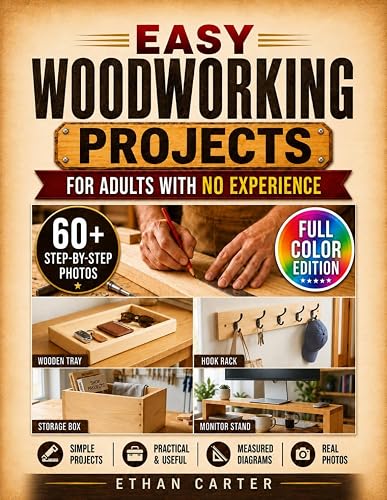 TOP CHOICEBest overallEasy Woodworking Projects for Adults with No ExperienceView on Amazon
- 2
 TOP CHOICEBest for relaxed weekend buildsRelaxing Woodworking Projects for BeginnersView on Amazon
- 3
 TOP CHOICEBest for furniture-focused buildersThe Weekend Woodworker's Project BibleView on Amazon
- 4
 Best for kids and familiesWood Shop: Handy Skills and Creative Building Projects for KidsView on Amazon
- 5
 Best for measured, build-ready plansDIY Woodworking Projects for BeginnersView on Amazon
- 6
 Best reference libraryThe Complete Book of WoodworkingView on Amazon
Our Top Picks
Quick Comparison
| Product | Best for | Key feature |
|---|---|---|
| Easy Woodworking Projects for Adults with No Experience | Adult first-timers | Step-by-step plans with real photos and measured diagrams |
| Relaxing Woodworking Projects for Beginners | Low-stress weekend builds | Complete steps for creating unique objects |
| The Weekend Woodworker’s Project Bible | Furniture and decor builds | All-in-one collection of plans for easy and timeless pieces |
| Wood Shop: Handy Skills and Creative Building Projects for Kids | Kids and family projects | Simple creative builds that teach basic skills |
| DIY Woodworking Projects for Beginners | Builders who want exact measurements | 127 build-ready plans with cut lists and visual steps |
| The Complete Book of Woodworking | Long-term reference | 40+ projects, 1,200+ photos, and carpentry basics |
Easy Woodworking Projects for Adults with No Experience
Easy Woodworking Projects for Adults with No Experience: From First Cut to Projects You'll Be Proud to Share | Step-by-Step Plans with Real Photos and Measured Diagrams for Every Build
Best for: Adult first-timers who want a guided path from first cut to finished piece.
This title suits adults who have never run a saw or clamped a glue-up and want their early projects to look intentional rather than improvised. The listing emphasizes a step-by-step structure, which is the right format for someone still learning to read a cut list.
Key specs:
- Format: step-by-step project guide
- Includes real photos and measured diagrams for each build
- Aimed at adults with no prior experience
Pros:
- Clear progression from simple builds to more finished pieces
- Diagrams reduce guesswork on dimensions
- Good match for a first shop session
Cons:
- Beginner focus means experienced builders may want more advanced joinery
- Projects are generally simpler than what a seasoned woodworker would tackle
Bottom line: A strong first pick for an adult starting from zero who wants guided, measured plans.
Relaxing Woodworking Projects for Beginners
Relaxing Woodworking Projects for Beginners: A Practical Handbook with Clear Instructions, Complete Steps, and Real Photos for Creating Unique Objects and Building Hands-On Skills Without Crazy Costs
Best for: Low-stress weekend builds focused on making unique objects without heavy equipment.
This handbook is aimed at people who want woodworking to feel calm and hands-on. The listing stresses clear instructions and practical skill-building, which suits builders who prefer slower, focused sessions over large machine-heavy projects.
Key specs:
- Format: practical handbook with complete steps
- Includes real photos throughout
- Focus on creating unique objects and building hands-on skills
Pros:
- Pace suits relaxed, hobby-style sessions
- Emphasis on unique objects rather than only furniture
- Clear written instructions for beginners
Cons:
- Less depth on advanced joinery and power-tool technique
- Owners who want large furniture plans may find the scope narrow
Bottom line: Best for beginners who want creative, low-pressure projects they can finish over a few evenings.
The Weekend Woodworker’s Project Bible
The Weekend Woodworker’s Project Bible: The All-in-One Collection of Step-by-Step Plans for Easy Builds, Timeless Furniture & Creative Projects You’ll Be Proud Of | No Experience or Big Budget Needed
Best for: Builders who want a broad collection of furniture and decor plans in one place.
This collection is designed as an all-in-one reference, mixing easy builds with timeless furniture and creative pieces. It suits someone who wants to move from small decor projects into larger furniture without buying multiple books.
Key specs:
- Format: all-in-one project collection
- Covers easy builds, timeless furniture, and creative projects
- Positioned for readers with no experience or large budgets
Pros:
- Wide range of project types in one volume
- Useful for planning a progression of builds
- Furniture plans give a sense of scale
Cons:
- A broad collection can mean less detail per project
- Some plans may assume tools beyond a basic starter setup
Bottom line: A good pick for a builder who wants variety and a path into furniture-scale projects.
Wood Shop: Handy Skills and Creative Building Projects for Kids
Wood Shop: Handy Skills and Creative Building Projects for Kids
Best for: Kids and families looking for simple creative builds that teach basic skills.
This title is aimed at younger builders and the adults who supervise them. Its focus on handy skills and creative projects makes it a sensible starting point for shared shop time.
Key specs:
- Format: skills-based project book for kids
- Focus on creative building projects
- Designed for young readers and family use
Pros:
- Projects are approachable for young builders
- Builds practical skills alongside creativity
- Works well for parent-and-child sessions
Cons:
- Not aimed at adults seeking advanced or furniture-level plans
- Adults looking for detailed cut lists may need a second reference
Bottom line: The right pick for families and young beginners rather than adult furniture builders.
DIY Woodworking Projects for Beginners
DIY Woodworking Projects for Beginners: 127 Build-Ready Plans, Exact Measurements, Cut Lists & Visual Steps to Turn Raw Boards into Furniture & Decor That Looks Store-Bought | No Big Workshop
Best for: Builders who want exact measurements, cut lists and visual steps for ready-to-build plans.
This book is built around measured, build-ready plans. It suits readers who prefer to work from precise dimensions and want decor and furniture pieces that look finished rather than rough.
Key specs:
- Includes 127 build-ready plans
- Exact measurements, cut lists and visual steps
- Focus on furniture and decor that looks store-bought
Pros:
- Large number of plans to choose from
- Cut lists make material planning easier
- Visual steps support step-by-step building
Cons:
- Plan-heavy format offers less explanation of underlying technique
- Readers without a basic workshop may need to adapt some builds
Bottom line: Ideal for builders who value measured plans and want a large library of projects to work through.
The Complete Book of Woodworking
The Complete Book of Woodworking: Step-by-Step Guide to Essential Woodworking Skills, Techniques, Tools and Tips (Landauer) 40+ Easy-to-Follow Projects and Plans, 1,200+ Photos, and Carpentry Basics
Best for: A long-term reference covering skills, techniques, tools and a wide range of projects.
This is the most reference-oriented title in the list. It combines basic carpentry instruction with a set of projects, making it useful well beyond a single build.
Key specs:
- 40+ easy-to-follow projects and plans
- 1,200+ photos
- Covers essential skills, techniques, tools and carpentry basics
Pros:
- Strong photo coverage supports visual learners
- Skills section helps beginners understand why steps work
- Useful as a long-term shelf reference
Cons:
- Large scope means individual projects get less space
- Some techniques may be covered more lightly than specialist guides
Bottom line: A solid choice for builders who want one book to cover skills and projects over several years.
Buying Guide
Before choosing among creative and unique woodworking projects resources, it helps to know which factors matter most for your skill level and goals.
Skill level and project difficulty
Check whether the plans assume you already own a table saw, router and clamps, or whether they start with hand tools. Look for a clear progression from simple builds to more involved joinery. Beginners benefit from projects that use butt joints, pocket screws or simple dadoes before tackling dovetails.
Good picks for this: Easy Woodworking Projects for Adults with No Experience, Relaxing Woodworking Projects for Beginners
Measurements and cut lists
Exact dimensions and cut lists save time and material. Confirm that each plan gives overall size, board thickness and a list of parts. Plans that include a materials list let you buy stock accurately, reducing waste.
Good picks for this: DIY Woodworking Projects for Beginners, The Weekend Woodworker’s Project Bible
Photos and visual steps
Photos and diagrams matter most when a step involves orientation or assembly order. Look for real photos of finished pieces and labeled diagrams for each stage. Visual references reduce mistakes on complex builds.
Good picks for this: The Complete Book of Woodworking, Easy Woodworking Projects for Adults with No Experience
Project scale and use case
Decide whether you want small decor, toys, or furniture. Small projects like boxes and trays build confidence, while furniture-scale plans need more material, space and clamping capacity. Match the book’s focus to what you actually plan to make.
Good picks for this: The Weekend Woodworker’s Project Bible, Relaxing Woodworking Projects for Beginners
Family and kids use
If younger builders will be in the shop, choose material that emphasizes safe, simple techniques and supervision. Hand tools and light sanding projects suit young builders better than anything requiring routers or table saws.
Good picks for this: Wood Shop: Handy Skills and Creative Building Projects for Kids
Reference value and scope
A reference book with skill chapters pays off across many years, even if you only build a few projects from it. Check the table of contents for coverage of joinery, finishing and tool use, not only finished project photos.
Good picks for this: The Complete Book of Woodworking, DIY Woodworking Projects for Beginners
Shop safety and tool readiness
Before any build, review the tool requirements listed in the plan and follow manufacturer guidance for every machine. Wear eye and hearing protection, use push sticks at the table saw, and keep guards in place. For power-tool technique specifics, consider guidance from a qualified instructor or the tool manufacturer’s manual.
Good picks for this: Relaxing Woodworking Projects for Beginners, Wood Shop: Handy Skills and Creative Building Projects for Kids
FAQ
What are creative and unique woodworking projects for beginners?
Good starter projects include small boxes, wall shelves, serving trays, planters, and simple toys. These teach measuring, cutting, sanding and finishing without requiring advanced joinery or large machines.
Do I need a lot of tools to start?
No. Many creative projects can begin with a handsaw, drill, clamps, a square and sandpaper. A table saw and router become useful as you tackle more complex builds, but they are not required for early work.
How do I choose the right woodworking project book?
Check the skill level stated, whether cut lists and measurements are included, the number and type of projects, and whether photos or diagrams accompany each build. Match the book’s scope to your goals.
Which wood is best for beginner projects?
Pine and poplar are commonly recommended for early builds because they are easy to cut, sand and paint or stain. Hardwoods like oak and maple are more durable but harder to work with. Plans usually specify the stock to use.
Are these projects suitable for kids?
Some are. Simple projects with hand tools and close adult supervision work well for children. Anything involving power tools should be supervised by an adult, and younger builders should follow manufacturer and school safety guidance.
How long does a typical beginner project take?
Small decor or box projects often take a few hours across one or two sessions, including finishing time. Larger furniture pieces can take several weekends, depending on drying times for glue and finish.
Can these projects be sold?
Some can, but selling handmade goods may involve local business rules, sales tax and product safety requirements, especially for items meant for children. Check with your local business office before selling.
Conclusion
For adults starting from zero, Easy Woodworking Projects for Adults with No Experience offers a clear, guided path. Readers who prefer relaxed, unique objects will find Relaxing Woodworking Projects for Beginners a good fit. Builders who want a wide range of furniture and decor plans in one place should look at The Weekend Woodworker’s Project Bible, while those who need exact measurements will value DIY Woodworking Projects for Beginners. Families sharing the shop will do best with Wood Shop: Handy Skills and Creative Building Projects for Kids, and anyone wanting a long-term reference should consider The Complete Book of Woodworking.
Sources
- Consumer safety guidance for power tools and workshop equipment, including recommended protective practices (cpsc.gov)
- Workplace safety standards for woodworking machinery, guarding and hearing protection (osha.gov)
- Forest Products Laboratory information on wood properties, species and moisture behavior (fs.usda.gov)
Before you buy: helpful guides
Related reading
- 6 Best Unique Woodworking Projects for Adults: Our Picks
- Choosing a First Woodworking Project: What to Consider
- YouTube Woodworking Projects That Sell: 7 Builds for Your Channel (2026)
About Claire Whitaker
Claire Whitaker is part of our editorial team and reviews and edits our woodworking guides, checking product details against manufacturer specifications and owner feedback.