By Audrey Hayes
Updated November 2026
Setting up a basic tools for woodworking shop does not require a truckload of machines. Most beginners need a reliable way to mark, measure, cut, and smooth wood before they add anything powered. This guide compares five hand-tool essentials that cover those jobs. The selection criteria were specification clarity, brand reputation, the consistency of owner feedback patterns, and how well each item fits a first or small shop. Nothing here is based on our own testing; the notes reflect manufacturer specifications and common owner reports.
Our top picks at a glance
- 1
 TOP CHOICEBest overallAmazon Basics Woodworking Hand Planer No. 4 Adjustable Bench PlaneView on Amazon
- 2
 TOP CHOICEBest for chiseling joineryHURRICANE 4 Piece Wood Chisel Set for WoodworkingView on Amazon
- 3
 TOP CHOICEBest for accurate layoutAluminum Alloy Pocket Ruler for Marking and Scribing, Metal T Square Rulers SetView on Amazon
- 4
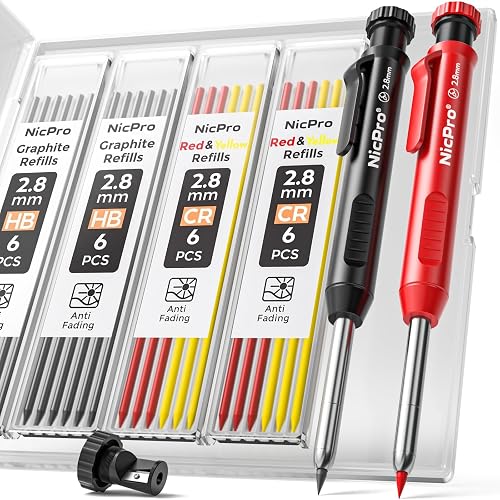 Best budget pick for markingNicpro Deep Hole Marker Pencil Set with Sharpener and RefillsView on Amazon
- 5
 Best for transferring marks to metal fixturesCenter Punch with Cap for Metal Woodworking Positioning Marking ToolView on Amazon
Our Top Picks
Quick Comparison
| Product | Best for | Key feature |
|---|---|---|
| Amazon Basics Woodworking Hand Planer No. 4 | Smoothing and flattening boards | Adjustable bench plane with 2-inch blade |
| HURRICANE 4 Piece Wood Chisel Set | Joinery and detail carving | Four widths from 1/4 inch to 1 inch |
| Aluminum Alloy Pocket Ruler Set | Layout and precise measuring | Three T-square sizes in inch and metric |
| Nicpro Deep Hole Marker Pencil Set | Marking deep cuts and rough stock | Includes sharpener and 26 refills |
| Center Punch with Cap | Marking hole and fixture locations | Spring-loaded automatic marking action |
Amazon Basics Woodworking Hand Planer No. 4 Adjustable Bench Plane
Amazon Basics Woodworking Hand Planer – No.4 Adjustable Bench Plane with 2-Inch Steel Blade for Quality Wood Smoothing Cuts, Grey/Black
Best for: Smoothing and flattening boards
This is a good fit for someone building their first tabletop, bench, or box and who needs to clean up sawn surfaces. A No. 4 bench plane is the classic size for general smoothing, so it covers most of the flattening and edge-jointing work that a beginner runs into.
Key specs
- Type: No. 4 adjustable bench plane
- Blade: 2-inch steel blade
- Body: metal, grey and black finish
Pros
- The No. 4 size handles most general smoothing tasks.
- The adjustable mouth and blade make it easier to set for fine or coarse shavings.
- Owners often describe it as a practical starter plane for learning sharpening and setup.
Cons
- Out of the box, the blade typically needs sharpening and honing before it cuts cleanly.
- A budget plane may require some tuning to flatten the sole for best results.
Bottom line: The strongest all-around choice for a beginner who wants one plane to start with. Plan to learn basic sharpening alongside it.
HURRICANE 4 Piece Wood Chisel Set for Woodworking
HURRICANE 4 Piece Wood Chisel Set for Woodworking. CR-V Steel Beveled Edge Blades with Safety Caps. Durable PVC High Impact Handle, for Precision Carving & DIY Projects (1/4", 1/2", 3/4", 1")
Best for: Chiseling joinery
Chisels are the tool you reach for to clean out mortises, pare tenons, and fit joints. This set covers the common widths a beginner will use, so it works well for someone starting joinery practice.
Key specs
- Set of four chisels: 1/4 inch, 1/2 inch, 3/4 inch, 1 inch
- Blades: CR-V steel with beveled edges
- Handles: PVC, with safety caps on the blades
Pros
- Four common widths cover most mortising and paring tasks.
- Safety caps protect the edges and your fingers during storage.
- The PVC handles are durable and resist moisture, according to owner reports.
Cons
- Budget chisels usually need honing and a flat back before they perform well.
- Plastic handles are less comfortable for long mallet work than wood handles.
Bottom line: A sensible starter chisel set for learning joinery. Consider upgrading the most-used width later.
Aluminum Alloy Pocket Ruler for Marking and Scribing, Metal T Square Rulers Set
Aluminum Alloy Pocket Ruler for Marking & Scribing, Metal T Square Rulers, Inch and Metric (6", 8", 12") 3PCS Woodworking Ruler Set, Precision Measuring Tool for Layout
Best for: Accurate layout
Every project starts with accurate measurement and marking. A set of small T-squares gives you a reference edge for scribing lines and checking square, which is useful for a shop on a tight budget.
Key specs
- Three sizes: 6 inch, 8 inch, 12 inch
- Markings in inch and metric
- Material: aluminum alloy
Pros
- Dual inch and metric scales help when working from plans in either system.
- The three sizes cover small joints and wider layout work.
- Metal construction is generally durable for shop handling.
Cons
- Small rulers can be harder to read in dim light.
- Scribing a line with a metal edge takes care to avoid slipping.
Bottom line: A practical choice for anyone who wants precise layout tools without buying a full measuring kit. Pair with a good marking gauge.
Nicpro Deep Hole Marker Pencil Set with Sharpener and Refills
Deep Hole Marker Pencil Set Includes Sharpener and 26 Refills, Comfortable Grip, Heavy Duty Woodworking Tools for Architect Nicpro Mechanical Carpenter Pencils for Construction (Black, Red) With Case
Best for: Marking deep cuts and rough stock
Carpenter pencils have flat or thick leads that stay visible on rough lumber and in tight spots where a standard pencil wears down too fast. This set includes refills, so the cost of keeping marks visible stays low over time.
Key specs
- Includes mechanical marking pencils, sharpener, and 26 refills
- Colors: black and red
- Comes with a storage case
Pros
- Refills mean you can keep the pencils in use for a long time.
- Thick leads hold up on rough, dusty stock.
- The case keeps pencils organized on the bench.
Cons
- Mechanical carpenter pencils make thicker lines than a fine marking knife.
- Lead can break if dropped on concrete.
Bottom line: A budget pick for everyday marking. Use a marking knife for final joinery lines.
Center Punch with Cap for Metal Woodworking Positioning Marking Tool
Center Punch with Cap for Metal Woodworking Positioning Marking Tool Handheld Automatic Mark Tool for DIY Workshop Projects
Best for: Marking hole and fixture locations
A center punch makes a small dimple that keeps a drill bit from wandering. It is useful when you are drilling pilot holes for hardware, mounting hinges, or locating fixtures on a bench.
Key specs
- Type: handheld automatic center punch with cap
- Use: positioning marks before drilling
Pros
- The automatic spring action makes consistent marks with one press.
- The cap protects the tip during storage.
- Helpful for drilling accurately on hardware-heavy projects.
Cons
- Designed for metal work, so its dimple is less useful on soft wood.
- Spring mechanisms can wear with heavy use.
Bottom line: A specialty marking tool for shops that add hardware, metal fixtures, or drilled jigs. Skip it if your work is entirely wood.
Buying Guide
Know Which Jobs the Shop Must Handle
List the tasks you expect in the first six months: flattening boards, cutting joints, marking layout, and drilling hardware. A basic tools for woodworking shop should cover those jobs first. Buy for the work you actually do rather than for every project in a magazine.
Good picks for this: Amazon Basics Woodworking Hand Planer, HURRICANE 4 Piece Wood Chisel Set
Check Blade and Edge Quality
Plane irons and chisels are only as good as their steel and edge. Look for listings that specify the steel type, such as CR-V for chisels, and expect to hone the edge before first use. Budget tools often need flattening and sharpening, so plan for a sharpening setup.
Good picks for this: HURRICANE 4 Piece Wood Chisel Set, Amazon Basics Woodworking Hand Planer
Confirm Measurement Systems and Scale Markings
Plans may use inches, fractions, or metric millimeters. Choose tools with the scale you need, and check that the markings are etched or printed clearly. Dual-scale rulers reduce confusion when a project uses both systems.
Good picks for this: Aluminum Alloy Pocket Ruler Set, Nicpro Deep Hole Marker Pencil Set
Match Size to the Work
Plane size, chisel width, and square length all affect how a tool performs. A No. 4 plane suits general smoothing, while small chisels handle fine mortises. Choose sizes that match the joints and boards you plan to build.
Good picks for this: Amazon Basics Woodworking Hand Planer, HURRICANE 4 Piece Wood Chisel Set
Look at Handle and Body Materials
Handles and bodies affect comfort and durability. Plastic handles resist moisture and are easy to clean, while wood handles absorb mallet blows better. Metal bodies on planes and rulers tend to hold their shape, but they can be heavier to store.
Good picks for this: HURRICANE 4 Piece Wood Chisel Set, Aluminum Alloy Pocket Ruler Set
Plan for Storage and Protection
Edge tools dull and rust when stored carelessly. Look for sets with protective caps, cases, or simple racks. Keeping layout tools in a drawer or cabinet prevents damage and helps you find them quickly.
Good picks for this: HURRICANE 4 Piece Wood Chisel Set, Center Punch with Cap
Budget for Consumables and Upgrades
Refills, sharpening stones, and replacement blades are ongoing needs. Choose tools with available spare parts and refills, and expect to upgrade the most-used items over time. A simple plan keeps the shop running without overbuying.
Good picks for this: Nicpro Deep Hole Marker Pencil Set, Amazon Basics Woodworking Hand Planer
FAQ
What are the most important basic tools for a woodworking shop?
Most beginners start with a plane for smoothing, a set of chisels for joinery, a square and rule for layout, and a marking tool such as a pencil or knife. Add a center punch when you need accurate hardware locations.
Do I need a sharpening setup for hand tools?
Yes. Plane irons and chisels usually need honing before they cut well. A basic set of sharpening stones or a honing guide will extend the life of your tools and make them more pleasant to use.
Which measuring tool should I buy first?
A steel rule and a combination square cover most layout needs. Choose one with clear inch and metric markings if you work from varied plans. Small T-squares are useful for scribing and checking narrow stock.
Are carpenter pencils better than regular pencils for woodworking?
Carpenter pencils have thicker, sturdier leads that stay visible on rough wood. For precise joinery lines, many woodworkers switch to a marking knife, which cuts a fine line the saw can follow.
Should I buy hand tools or power tools first?
Hand tools are quieter, lower-risk to learn with, and teach fundamentals like sharpening and layout. Power tools speed up production but require more safety training. Many beginners learn with hand tools before adding machines. For machine safety basics, see Woodworking Safety Basics: The Hazards and Controls.
How do I keep my basic tools in good condition?
Store edge tools in a dry place, wipe steel with a light oil film, and keep blades covered. Check the flatness of plane soles and the squareness of your square regularly. Good storage prevents most of the damage beginners see.
Conclusion
A basic tools for woodworking shop should cover marking, measuring, chiseling, and smoothing. The Amazon Basics No. 4 hand planer suits anyone who needs one plane to start, while the HURRICANE chisel set fits joinery practice. The aluminum pocket ruler set and the Nicpro pencil set cover layout on a tight budget, and the center punch helps when hardware and metal fixtures enter the work. Start with the jobs you expect to do most, then expand as your projects grow. For a wider view of starter equipment, see Essential Woodworking Shop Tools: 8 Must-Haves for Your First Shop and Woodworking Tools for Beginners: What to Buy First.
Sources
- Workplace safety guidance on hand tool use, guarding and power tool hazards (osha.gov)
- Consumer safety information on power tools and shop equipment (cpsc.gov)
- Historic woodworking and craft tool references from national park collections (nps.gov)
Related reading
- Woodworking Tools and Jigs: 5 Shop Jigs That Improve Accuracy (2026)
- Woodworking Power Tools: What Each Does and Safety Basics
About Audrey Hayes
Audrey Hayes is part of our editorial team and reviews and edits our woodworking guides, checking product details against manufacturer specifications and owner feedback.