 By Colin Foster
Updated November 2026
Woodworking with hand tools projects appeal to people who want to build furniture and small shop items without the noise, dust and setup of a power-tool shop. The challenge is choosing a book that teaches the right skills in the right order. This list focuses on books that offer clear project plans, step-by-step instructions for sawing, chiseling, planing and joinery, and enough technique to carry you past your first build. Each pick was evaluated on the scope of its projects, the clarity of its instructions, the coverage of core hand-tool skills, and the patterns owners commonly describe in their feedback.
Our top picks at a glance
- 1
 TOP CHOICEBest overallThe Complete Book of Woodworking: Step-by-Step Guide to Essential WoodView on Amazon
- 2
 TOP CHOICEBest for joinery focusWoodworking Joinery by Hand: Innovative Techniques Using Japanese Saws and JigsView on Amazon
- 3
 TOP CHOICEBest for hand-tools-only buildsWoodworking projects with hand tools only: Woodworking Projects with HView on Amazon
- 4
 Best for small spacesNo Table Saw Woodworking Projects for Beginners: The Easy, Stress-FreeView on Amazon
- 5
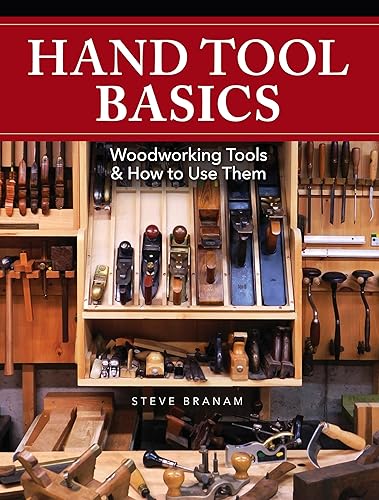 Best for tool fundamentalsHand Tool Basics: Woodworking Tools and How to Use ThemView on Amazon
- 6
 Best for a 12-tool starter kitEveryday Woodworking: A Beginner's Guide to Woodcraft With 12 Hand ToolsView on Amazon
- 7
 Best budget pickWoodworking with Hand Tools: Tools, Techniques & ProjectsView on Amazon
Our Top Picks
| Product | Best for | Key feature |
|---|---|---|
| Landauer The Complete Book of Woodworking | Broad foundation across skills and projects | 40+ projects with plans and 1,200+ photos |
| Woodworking Joinery by Hand | Learning traditional and Japanese-style joinery | Hand-saw and jig-based joinery techniques |
| Woodworking Projects with Hand Tools Only | Beginners building with no power tools | Projects covering sawing, chiseling, planing and finishing |
| No Table Saw Woodworking Projects for Beginners | Small shops and limited space | Cut lists and shopping guidance for builds without a table saw |
| Hand Tool Basics | Understanding what each hand tool does | Tool-by-tool explanations and usage |
| Everyday Woodworking | Starting with a compact tool set | Beginner woodcraft built around 12 hand tools |
| Woodworking with Hand Tools: Tools, Techniques & Projects | Learning techniques alongside projects | Combined technique and project coverage |
Landauer The Complete Book of Woodworking: Step-by-Step Guide to Essential Woodworking Skills, Techniques, Tools and Tips
The Complete Book of Woodworking: Step-by-Step Guide to Essential Woodworking Skills, Techniques, Tools and Tips (Landauer) 40+ Easy-to-Follow Projects and Plans, 1,200+ Photos, and Carpentry Basics
Best for: Broad foundation across skills and projects
This is a large reference-style book for readers who want one volume covering the core skills, tools and a wide range of builds. It suits someone who is still deciding what kind of woodworking they enjoy and wants exposure to many techniques.
Key specs
- 40+ easy-to-follow projects and plans
- 1,200+ photos
- Covers carpentry basics alongside woodworking skills
Pros
- Wide range of projects in one book
- Photo-heavy layout helps with visual learners
- Useful as a long-term reference
Cons
- Breadth can mean less depth on any single technique
- Not every project is limited to hand tools
Bottom line: A strong first purchase for readers who want a general foundation and plenty of projects to try.
Woodworking Joinery by Hand: Innovative Techniques Using Japanese Saws and Jigs
Woodworking Joinery by Hand: Innovative Techniques Using Japanese Saws and Jigs
Best for: Joinery focus
This book is aimed at readers who want to cut strong, accurate joints by hand. It is most useful once you have basic sawing and chiseling under control and want to refine your joinery.
Key specs
- Focus on hand-cut joinery
- Covers Japanese saws and shop-made jigs
Pros
- Specialized focus on joinery, a skill many books treat briefly
- Jig techniques improve repeatability
- Clear emphasis on fit and accuracy
Cons
- Less suited to absolute beginners with no sawing experience
- Narrower project range than general guides
Bottom line: Best for readers ready to move from basic cuts to precise, hand-cut joints.
Woodworking Projects with Hand Tools Only: Beginner Friendly Builds to Master Sawing, Chiseling, Planing, Joinery, and Finishing
Woodworking projects with hand tools only: Woodworking Projects with Hand Tools Only: Beginner Friendly Builds to Master Sawing, Chiseling, Planing, Joinery, and Finishing
Best for: Hand-tools-only builds
This is the most directly on-topic pick for readers who want every project to use hand tools exclusively. It works well for a beginner who wants a clear progression from sawing to finishing.
Key specs
- Projects covering sawing, chiseling, planing, joinery and finishing
- Beginner-oriented build sequence
Pros
- Every project fits a no-power-tool approach
- Skills are introduced in a logical order
- Covers finishing, which many guides skip
Cons
- Hand-only builds take longer, which may frustrate impatient readers
- Fewer large-furniture projects than broader references
Bottom line: The right choice for anyone committed to building entirely with hand tools from the start.
No Table Saw Woodworking Projects for Beginners: The Easy, Stress-Free Way to Build Useful Things Even in Small Spaces
No Table Saw Woodworking Projects for Beginners: The Easy, Stress-Free Way to Build Useful Things Even in Small Spaces – Exact Shopping & Cut Lists, No Wasted Wood, and the Pride of "I Built That"
Best for: Small shops and limited space
This book suits builders working in a garage, apartment or spare room who cannot dedicate space to a table saw. It emphasizes practical builds with shopping lists and cut lists that reduce wasted material.
Key specs
- Shopping and cut lists included
- Projects designed for small spaces
Pros
- Cut lists help plan material efficiently
- Good fit for limited workspace
- Encouraging, beginner-friendly tone
Cons
- Not all projects are purely hand-tool based
- Less focus on advanced joinery technique
Bottom line: A practical pick for beginners who need to work within a small space and want quick, useful results.
Hand Tool Basics: Woodworking Tools and How to Use Them
Hand Tool Basics: Woodworking Tools and How to Use Them
Best for: Understanding what each hand tool does
This book is useful for readers who are still unsure which hand tool does what and how to use it safely. It works well alongside a project book rather than as a standalone build guide.
Key specs
- Tool-by-tool explanations
- Focus on basic usage
Pros
- Clear introduction to tool function
- Useful reference for new shops
- Short and easy to read
Cons
- Fewer full project plans
- Limited depth on advanced technique
Bottom line: Pair this with a project book if you are building your first hand-tool shop.
Everyday Woodworking: A Beginner’s Guide to Woodcraft With 12 Hand Tools
Everyday Woodworking: A Beginner's Guide to Woodcraft With 12 Hand Tools
Best for: Starting with a compact tool set
This book is built around a small set of hand tools, which makes it a good match for readers who want to keep their initial investment and shop footprint small.
Key specs
- Built around 12 hand tools
- Beginner woodcraft focus
Pros
- Limited tool list simplifies planning
- Good for learning to get more from fewer tools
- Approachable for newcomers
Cons
- A small tool set limits the range of possible projects
- Advanced readers may want more depth
Bottom line: A good pick for beginners who want to start small and learn core skills with a compact kit.
Woodworking with Hand Tools: Tools, Techniques & Projects
Woodworking with Hand Tools: Tools, Techniques & Projects
Best for: Budget-minded readers learning techniques alongside projects
This title combines technique instruction with projects, making it a reasonable choice for readers who want a single book that covers both how and what to build.
Key specs
- Combines tools, techniques and projects
- Hand-tool focus
Pros
- Balances technique and project instruction
- Covers core hand-tool methods
- Straightforward organization
Cons
- Project depth varies by chapter
- May be less detailed than dedicated joinery or project books
Bottom line: A sensible all-round choice for readers who want technique and projects in one place.
Buying Guide
Project Scope and Skill Level
Check whether the book starts with basic sawing and chiseling or assumes you already have those skills. A beginner-focused book with step-by-step builds will get you working faster than a reference book that expects prior experience. Look for a clear progression from simple boxes and shelves to more demanding joinery.
Good picks for this: Woodworking Projects with Hand Tools Only, Everyday Woodworking
Hand-Tool-Only Versus Mixed Approaches
Some books are written entirely around hand tools, while others include power tools or assume a table saw. If your goal is a fully hand-powered shop, confirm that every project in the book can be completed without power tools. Mixed-approach books can still be useful, but read the project requirements first.
Good picks for this: Woodworking Projects with Hand Tools Only, No Table Saw Woodworking Projects for Beginners
Joinery Coverage
Joinery is where hand-tool woodworking differs most from machine work. Check whether the book covers mortise-and-tenon, dovetails, half-laps and other common joints, and whether it explains how to fit them by hand. Books with dedicated joinery chapters are worth prioritizing once you move past basic builds.
Good picks for this: Woodworking Joinery by Hand, Landauer The Complete Book of Woodworking
Tool Explanations and Setup
A good book explains how each hand tool works, how to sharpen it and how to set it up. Without this, you may struggle with dull or poorly tuned tools regardless of how good the project instructions are. Look for sections on sharpening, tuning planes and maintaining saws.
Good picks for this: Hand Tool Basics, Woodworking with Hand Tools: Tools, Techniques & Projects
Project Plans and Cut Lists
Plans with dimensioned drawings and cut lists save time and reduce wasted lumber. Check whether each project includes materials lists, dimensions and assembly steps. Books that provide cut lists are especially helpful if you are working in a small space and buying stock carefully.
Good picks for this: No Table Saw Woodworking Projects for Beginners, Landauer The Complete Book of Woodworking
Photos and Illustrations
Hand-tool technique is easier to learn when you can see the grip, stance and cutting angle. Photos and illustrations matter most for sawing, chiseling and planing. Check sample pages if possible, or look at how many photos the listing mentions.
Good picks for this: Landauer The Complete Book of Woodworking, Everyday Woodworking
Durability of Your Reference Library
You will return to a woodworking book many times, so consider whether the layout suits repeated use. Large reference volumes with many projects are good long-term references, while compact guides are easier to keep open on a bench. Choose based on whether you want a permanent library or a focused starter read.
Good picks for this: Landauer The Complete Book of Woodworking, Hand Tool Basics
FAQ
Can I build furniture using only hand tools?
Yes. Many traditional pieces, including boxes, stools, small tables and cabinets, can be built with hand saws, chisels, planes and drills. Larger pieces take longer, and you will need good stock preparation and sharp tools to keep the work efficient.
What hand tools do I need to start woodworking with hand tools projects?
A basic starter set usually includes a crosscut saw, a rip saw or panel saw, a block plane, a smoothing plane, a set of bench chisels, a marking gauge, a combination square and a sharpening system. Many beginner books list a core set of tools in their first chapters.
Do I need a workbench before I start?
A sturdy bench makes hand-tool work much easier, since you need to clamp and hold stock securely. You can start with a simple bench built from a few boards, and some beginner projects are designed to help you make one.
Is hand-tool woodworking slower than using power tools?
For many tasks, yes. Hand sawing and planing take more time, especially when preparing rough lumber. The trade-off is quieter operation, less dust and a smaller shop footprint, which many hobbyists value.
Are hand-tool woodworking books suitable for children or teens?
Many hand-tool books can be used by teens with adult supervision. Always follow tool-specific safety guidance, use sharp tools correctly and keep work areas clear. Consult a qualified instructor or parent for guidance on age-appropriate tool use.
Should I learn sharpening before building projects?
Yes. Sharp tools are essential in hand-tool work. Dull chisels and plane irons make cutting harder and less accurate. Many books include sharpening sections, and learning to sharpen early saves frustration later.
Conclusion
For most beginners, Landauer The Complete Book of Woodworking offers the broadest foundation, while Woodworking Projects with Hand Tools Only is the most direct match for a strictly hand-tool approach. Readers focused on precise joinery should consider Woodworking Joinery by Hand, and those working in small spaces will find No Table Saw Woodworking Projects for Beginners practical. Hand Tool Basics and Everyday Woodworking suit newcomers who want to understand their tools first, and Woodworking with Hand Tools: Tools, Techniques & Projects is a sensible all-round option for learning technique alongside projects.
Sources
- Workplace and tool safety guidance, including general hand tool and shop safety practices (osha.gov)
- Consumer safety information on woodworking equipment and workshop hazards (cpsc.gov)
- Standards and measurement references useful for accurate layout and marking (nist.gov)
Related reading
- Woodworking Hand Tools Only: A Step-by-Step Guide to Building Without Power
- Traditional Woodworking Hand Tools: 7 Essentials for Your First Shop (2026)
- Second Hand Woodworking Tools: How to Buy Used Gear Without Regret
- Japanese Woodworking Tools Book: 5 Titles to Start Your Hand Tool Library
- Hand Tools for Woodworking: Uses, Safety and Sharpening
About Colin Foster
Colin Foster is part of our editorial team and reviews and edits our woodworking guides, checking product details against manufacturer specifications and owner feedback.