By Claire Whitaker
Updated November 2026
Choosing the right router bit for planing wood comes down to a few practical questions: how wide a surface you need to flatten, whether your router or CNC can handle a large cutter, and whether you want carbide inserts that can be rotated or replaced. This list compares six bits sold as slab flattening and surfacing cutters. The selection criteria were cutting diameter, shank size, number of flutes or wings, insert style, and how well each product fits common jobs like leveling live-edge slabs, cleaning up spoilboards, and rabbeting. The information here comes from manufacturer listing details and patterns that owners commonly report. We did not test these bits ourselves.
Our top picks at a glance
- 1
 TOP CHOICEBest overallCNC Spoilboard Surfacing Router Bit, 1/2" Shank 2" Cutting Diameter, 6View on Amazon
- 2
 TOP CHOICEBest for multi-purpose shopsSlab Flattening Router Bit 1/2 Shank, 6-Wing, 2" Cutting Dia, Insert CView on Amazon
- 3
 TOP CHOICEBest budget pickSpoilboard Surfacing Router Bit, 1/2-Inch Shank 2-Inch Cutting DiameteView on Amazon
- 4
 Best for wide slabsHeavy Duty Surfacing Router Bits Milling Cutter, Carbide Insert PlanerView on Amazon
- 5
 Best for small or light-duty routersPOWERTEC CNC Spoilboard Surfacing Router Bit, 2" Diameter, 1/4" Shank Slab FlatteningView on Amazon
- 6
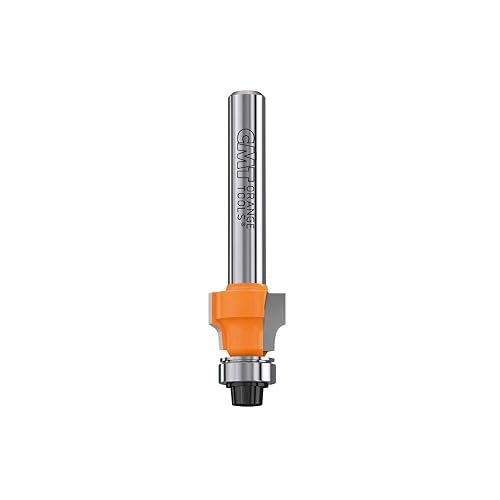 Best for flush trimming laminatesCMT 807.015.11 File-Free Flush Trim Bit for Laminates, 1/16-Inch Radius, 1/2-Inch ShankView on Amazon
Our Top Picks
Quick Comparison
| Product | Best for | Key feature |
|---|---|---|
| CNC Spoilboard Surfacing Router Bit, 1/2″ Shank 2″ Cutting Diameter | General slab flattening | 6 carbide-insert wings on a 2″ diameter |
| SICWOOD Slab Flattening Router Bit, 6-Wing | Multi-purpose shops | Flycutter, slab leveler, and rabbeting use listed |
| Spoilboard Surfacing Router Bit, 1/2-Inch Shank | Budget-minded buyers | Carbide body in a common 2″ size |
| Heavy Duty Surfacing Router Bit, 3″ Cutting Dia. | Wide slabs and large panels | 3″ cut width for fewer passes |
| POWERTEC CNC Spoilboard Surfacing Router Bit, 1/4″ Shank | Smaller routers and light work | 1/4″ shank for compact tools |
| CMT 807.015.11 File-Free Flush Trim Bit | Flush trimming laminates and edges | 1/16″ radius and 1/2″ shank |
CNC Spoilboard Surfacing Router Bit, 1/2″ Shank 2″ Cutting Diameter, 6 Wings Carbide Insert Slab Flattening Router Bits Wood Planing Planer Bit
CNC Spoilboard Surfacing Router Bit, 1/2" Shank 2" Cutting Diameter, 6 Wings Carbide Insert Slab Flattening Router Bits Wood Planing Planer Bit
Best for: General slab flattening and spoilboard surfacing
This is a good fit for woodworkers who want one bit for leveling slabs, cleaning up a CNC bed, and removing high spots on glued-up panels. The 2″ diameter is a practical middle ground: wide enough to cover ground quickly, but still manageable on most full-size routers.
Key specs
- 1/2″ shank
- 2″ cutting diameter
- 6 wings with carbide inserts
Pros
- Six wings spread the cutting load across more edges than a two- or three-wing bit.
- The 1/2″ shank is the most common size for routers and CNC spindles.
- Carbide inserts hold an edge better than high-speed steel on dense hardwood.
Cons
- Insert bits need a balanced setup and careful feed rates to avoid chatter.
- Replacement inserts and wrenches are an extra consideration for ongoing use.
Bottom line: A strong first choice for someone who wants a single surfacing bit that suits both hand-router and CNC setups.
Slab Flattening Router Bit 1/2 Shank, 6-Wing, 2″ Cutting Dia, Insert Carbide CNC Spoilboard Surfacing Router Bit
Slab Flattening Router Bit 1/2 Shank, 6-Wing, 2" Cutting Dia, Insert Carbide CNC Spoilboard Surfacing Router Bit, Wood Planer Planing Bit for Flycutter/ Slab Leveler/ Rabbeting by SICWOOD
Best for: Multi-purpose shops that also do rabbeting and flycutter work
This bit suits a shop that switches between flattening slabs, cutting rabbets, and using a flycutter sled. The listing names all three uses, which makes it a versatile option for mixed workloads.
Key specs
- 1/2″ shank
- 2″ cutting diameter
- 6 wings, carbide insert design
Pros
- Listing covers flycutter, slab leveler, and rabbeting uses.
- Six-wing design gives a smoother finish at moderate feed rates.
- Same 1/2″ shank compatibility as most routers.
Cons
- Versatile bits can be less specialized than a dedicated flattening bit.
- Requires a sturdy router base to avoid vibration on wide passes.
Bottom line: Best for buyers who want one bit that can handle several jobs in a single shop.
Spoilboard Surfacing Router Bit, 1/2-Inch Shank 2-Inch Cutting Diameter, Slab Flattening Router Bit Planing Wood Planer Bit (Carbide)
Spoilboard Surfacing Router Bit, 1/2-Inch Shank 2-Inch Cutting Diameter, Slab Flattening Router Bit Planing Wood Planer Bit (Carbide)
Best for: Budget-conscious buyers who need a dependable 2″ surfacing bit
This is a straightforward option for hobbyists who need to flatten a few slabs or resurface a CNC spoilboard without buying a premium insert system.
Key specs
- 1/2″ shank
- 2″ cutting diameter
- Carbide construction
Pros
- A common 2″ size that works in most hobby setups.
- Carbide cutting edges hold up better than steel on hardwood.
- Simple specification list makes it easy to match to a router.
Cons
- Fewer wings than six-wing designs, so feed rates need to be kept modest.
- Limited detail in the listing about insert type and replacement options.
Bottom line: A sensible pick for occasional slab work where the goal is a flat surface, not maximum speed.
Heavy Duty Surfacing Router Bits Milling Cutter, Carbide Insert Planer Bit for Wood Spoilboard Planing, 3″ Cutting Dia., 6 Wings, 1/2 Shank
Heavy Duty Surfacing Router Bits Milling Cutter, Carbide Insert Planer Bit for Wood Spoilboard Planing,Bottom Cleaning CNC Slab Flattening Router Bit 3" Cutting Dia.-6 Wings,1/2 Shank
Best for: Wide slabs and large panels where fewer passes matter
The 3″ cutting diameter is the main draw. Wider cutters remove more material per pass, which helps on wide live-edge slabs and large glued-up tops. This bit is better suited to a heavy router or a CNC with adequate power.
Key specs
- 1/2″ shank
- 3″ cutting diameter
- 6 wings with carbide inserts
Pros
- The 3″ diameter covers more width per pass than 2″ bits.
- Six wings improve balance and surface finish at the wider diameter.
- Listing explicitly positions it for heavy-duty planing.
Cons
- Larger diameter demands more torque and a rigid machine; it is a poor match for small trim routers.
- Slower feed rates are typically needed, which lengthens the job.
Bottom line: Worth choosing if you regularly flatten wide slabs and have a machine built for the load.
POWERTEC CNC Spoilboard Surfacing Router Bit, 2″ Diameter, 1/4″ Shank Slab Flattening
2" Diameter. 1/2 Inch Cutting Depth for CNC, Router Tables, Router Sleds, Full Size Router, Wood Milling (73056) POWERTEC CNC Spoilboard Surfacing Router Bit, 1/4" Shank Slab Flattening
Best for: Smaller routers and light-duty surfacing
The 1/4″ shank makes this a candidate for compact trim routers and smaller tools that cannot accept a 1/2″ collet. The 2″ diameter keeps it useful for small slabs and spoilboard touch-ups.
Key specs
- 1/4″ shank
- 2″ cutting diameter
- Designed for spoilboard and slab surfacing
Pros
- The 1/4″ shank fits compact routers that a 1/2″ bit cannot.
- 2″ diameter is a practical size for light surfacing.
- Good option for small projects where a large machine is not available.
Cons
- A 1/4″ shank has less rigidity, so take shallow passes and slow feeds.
- Not ideal for removing significant stock from large slabs.
Bottom line: A good match for compact routers and hobbyists who work with smaller pieces.
CMT 807.015.11 File-Free Flush Trim Bit for Laminates, 1/16-Inch Radius, 1/2-Inch Shank
CMT 807.015.11 File-Free Flush Trim Bit for Laminates, 1/16-Inch Radius, 1/2-Inch Shank
Best for: Flush trimming laminates and edge cleanup rather than broad surfacing
This is a different type of cutter from the slab flatteners above. It is included because many woodworkers searching for a planing bit also need a flush trim bit for edge banding and laminate work. It is not a substitute for a surfacing bit on wide wood.
Key specs
- 1/2″ shank
- 1/16″ radius
- File-free flush trim profile
Pros
- Clean flush-trim results on laminate and veneer edges.
- 1/2″ shank matches most routers.
- Well-known product line from a long-established tool maker.
Cons
- Not designed for flattening wide slabs or spoilboards.
- Small cutting diameter means it removes little material per pass.
Bottom line: Choose this for edge trimming work, and pair it with one of the surfacing bits above for slab flattening.
Buying Guide
Cutting diameter
Diameter determines how much width each pass covers. Two-inch bits are the most common for hobby and mid-size shop work, while 3″ bits remove more material per pass on wide slabs but need more torque. Match the diameter to your machine’s power and the width of the workpiece.
Good picks for this: Heavy Duty Surfacing Router Bit (3″), CNC Spoilboard Surfacing Router Bit (2″)
Shank size
The shank must fit your router collet or CNC spindle. Most full-size routers and CNCs use 1/2″ shanks, which are more rigid and less prone to deflection. Quarter-inch shanks suit compact tools but should be run at lighter depths and slower feeds.
Good picks for this: Spoilboard Surfacing Router Bit (1/2″), POWERTEC CNC Spoilboard Surfacing Router Bit (1/4″)
Number of wings and insert style
Six-wing designs spread cutting load across more edges, which generally gives a smoother surface at a given feed rate. Carbide inserts resist wear better than high-speed steel on dense hardwood. Check whether the bit uses indexable inserts or a solid carbide body, and confirm that replacement parts are available.
Good picks for this: CNC Spoilboard Surfacing Router Bit (6 wings), SICWOOD Slab Flattening Router Bit (6 wings)
Intended use
Slab flattening, spoilboard surfacing, rabbeting, and flush trimming all call for different geometry. A bit designed for flattening will not perform well as a flush trim bit, and vice versa. Decide which job you do most often before buying.
Good picks for this: SICWOOD Slab Flattening Router Bit (multi-use), CMT 807.015.11 File-Free Flush Trim Bit (edge trimming)
Machine compatibility and power
Large-diameter surfacing bits place heavy demands on the motor and the machine’s rigidity. Check your router’s horsepower and base stability before buying a 3″ bit. A small trim router is better suited to a 2″ or smaller cutter, and a CNC gantry should be checked for rigidity under side loads.
Good picks for this: POWERTEC CNC Spoilboard Surfacing Router Bit (light-duty machines), Heavy Duty Surfacing Router Bit (heavy machines)
Balance and runout
Good surfacing bits are balanced at operating speed. Vibration causes chatter marks and can damage bearings and spindles. Inspect the bit for bent wings or loose inserts before each use, and tighten the collet firmly without overtightening.
Good picks for this: CNC Spoilboard Surfacing Router Bit (6 wings), Spoilboard Surfacing Router Bit (1/2″ shank)
Care and maintenance
Keep carbide edges clean of resin and pitch. Wipe the bit after each job and store it in a dry case to prevent corrosion. Replace inserts that show chipping before they fail under load. Always wear eye and hearing protection, and use a dust collection system when surfacing wood.
Good picks for this: CMT 807.015.11 File-Free Flush Trim Bit (edge work), CNC Spoilboard Surfacing Router Bit (insert-based care)
FAQ
What is the best router bit for planing wood?
For most woodworkers, a 2″ six-wing carbide surfacing bit with a 1/2″ shank offers the best balance of coverage, rigidity, and versatility. The CNC Spoilboard Surfacing Router Bit listed above is a solid starting point for general slab flattening.
Can I use a router bit for planing wood on a handheld router?
Yes, but use a router with enough power and a stable base, and make shallow passes. Large-diameter bits are better suited to fixed-base routers or table setups. Always clamp the workpiece and follow the router’s manufacturer guidance on maximum bit size.
What diameter should I choose for slab flattening?
Two-inch bits are the most common choice for mixed hobby and shop use. Three-inch bits remove more material per pass on wide slabs but need a heavier machine. Match the diameter to your router’s power and your typical workpiece width.
Do I need a 1/2″ shank?
Most full-size routers and CNC spindles use 1/2″ collets, which provide better rigidity for surfacing work. A 1/4″ shank can work on compact routers, but expect to take lighter cuts and slow the feed rate.
Why do carbide inserts matter for planing wood?
Carbide holds a sharp edge longer than high-speed steel when cutting dense hardwood and resinous species. Insert designs also allow individual cutters to be replaced rather than the whole bit, which can extend the tool’s working life.
Can a flush trim bit replace a surfacing bit?
No. Flush trim bits have a small cutting diameter and a bearing or specialized profile for edge work. They are not designed to remove large amounts of material across a wide surface. Use a dedicated surfacing bit for flattening slabs.
How do I avoid chatter when surfacing wood?
Use a rigid setup, make shallow passes, and keep the feed rate steady. Check that the bit is balanced and that the collet is clean and properly tightened. Reducing the cutting depth often eliminates chatter marks.
Conclusion
For a single bit that handles most slab flattening and spoilboard work, the 2″ six-wing CNC Spoilboard Surfacing Router Bit is the most general-purpose pick in this list. Shops that do several different jobs may prefer the SICWOOD Slab Flattening Router Bit, which lists flycutter and rabbeting uses. Buyers on a tighter budget can consider the 2″ Spoilboard Surfacing Router Bit with a 1/2″ shank. For wide slabs and heavy machines, the 3″ Heavy Duty Surfacing Router Bit covers more width per pass. Compact routers call for the 1/4″ shank POWERTEC option, and edge trimming work is better served by the CMT flush trim bit. Match the bit to your machine, your workpiece width, and the job you do most often.
Sources
- Workplace safety guidance on power tool operation, guarding, and personal protective equipment (osha.gov)
- Consumer safety information on power tools and shop equipment hazards (cpsc.gov)
- Standards and measurement resources relevant to machining tolerances and tool precision (nist.gov)
Related reading
- Wood Surfacing Router Bit Review: Is It Worth It? (2026)
- Wood Carving with Router: 5 Best CNC Machines and Bits Compared
- Top 7 Router Bit to Level Wood Picks for Slab Flattening and Trimming
- Top 7 CNC Router Wood Signs Picks: Bits and Kits for Sign Making
- Top 7 Best CNC Router Bits for Wood Compared for Every Project
About Claire Whitaker
Claire Whitaker is part of our editorial team and reviews and edits our woodworking guides, checking product details against manufacturer specifications and owner feedback.