By Claire Whitaker
Updated November 2026
A wood slab router sled is a frame that rides on top of your slab or workpiece and carries a router across its full surface, leveling uneven boards so they lie flat and sit parallel. If you work with live-edge slabs, glued-up tabletops or thick stock that has cupped or twisted, a sled saves hours of hand planing and gives you a flat reference face before you cut joinery or apply a finish. This guide compares six sleds in the same product family. Selection criteria were specifications, maximum slab width and length, height-adjustment design, rail construction, included router plates, and owner feedback patterns about rigidity and setup time. We did not run these sleds in our own shop, so treat the notes below as a summary of published specs and common owner observations.
Our top picks at a glance
- 1
 TOP CHOICEBest overallRouter Sled, Slab Flattening JigView on Amazon
- 2
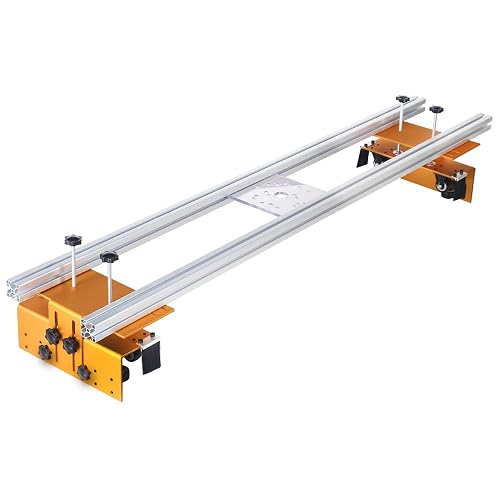 TOP CHOICEBest for wide slabsAdjustable Width and Height Router Sled with Aluminum RailsView on Amazon
- 3
 TOP CHOICEBest for precise height controlSpeTool 48 inch Router Sled for Flattening SlabsView on Amazon
- 4
 Best for simple setup48in Router Sled for Flattening Slabs with 3-Axis Height AdjustmentView on Amazon
- 5
 Best budget pickVEVOR Adjustable 6061 Aluminum Router Sled (64 inches)View on Amazon
- 6
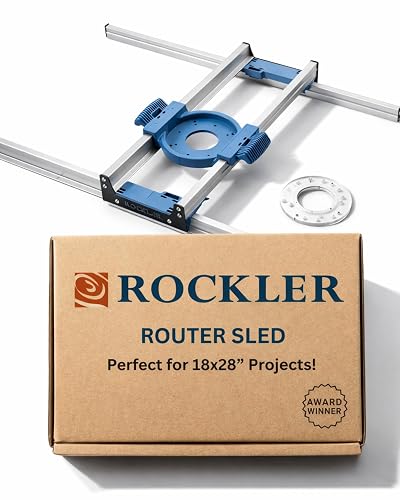 Best for benchtop useRockler Benchtop Slab Flattening JigView on Amazon
Our Top Picks
Quick Comparison
| Product | Best for | Key feature |
|---|---|---|
| Router Sled, Slab Flattening Jig (48 in.) | Most general slab work | Height-adjustable L-carriages on steel and aluminum rails |
| Adjustable Width Router Sled (58 in.) | Wide slabs and tabletops | Adjustable width with aluminum rails |
| SpeTool 48 in. Router Sled | Fine height adjustment | 3-axis height system with reinforced rails |
| 48in Router Sled (3-Axis) | First-time sled builders | 3-axis height adjustment with pre-drilled and blank plates |
| VEVOR Aluminum Router Sled (64 in.) | Long boards on a budget | Adjustable 4–10.5 inch width and 64 inch length |
| Rockler Benchtop Slab Flattening Jig | Smaller shops and benchtop use | Benchtop design with large workpiece support |
Router Sled, Slab Flattening Jig
Router Sled, Slab Flattening Jig, DIY Woodworking Router Sled for Flattening Slabs with Height Adjustable (L-Carriages, Steel and Aluminum, 48 Inches) Best Wood Routers for Woodworking goes further into this.
Best for: general slab flattening with a balance of rigidity and adjustability
This sled suits woodworkers who flatten slabs occasionally and want a sturdy frame without a large investment in setup time. Its steel and aluminum construction and L-carriage design are built to hold a router steady across a 48-inch run.
Key specs
- Length: 48 inches
- Height-adjustable L-carriages
- Steel and aluminum construction
Pros
- Good length for most live-edge slabs
- Height adjustment lets you set bit depth per pass
- Mixed-metal build keeps weight manageable
Cons
- Setup requires careful leveling of the rails before the first pass
- Router plate compatibility should be checked against your model
Bottom line: A solid default choice for hobbyists and small shops that flatten slabs a few times a year.
Adjustable Width and Height Router Sled with Aluminum Rails
Adjustable Width and Height with Aluminum Rails, Router Base Plate for Wood Slabs and Table Tops 58 Inch Router Sled and Slab Flattening Jig for Woodworking
Best for: wide slabs and tabletops that exceed the width of standard sleds
If your slabs regularly run wide, the adjustable-width frame and aluminum rails give you room to clamp and mill boards that narrower sleds cannot accommodate.
Key specs
- Overall length: 58 inches
- Adjustable width and height
- Aluminum rails
Pros
- Handles wide tabletops and slabs
- Aluminum rails resist warping in a humid shop
- Adjustable width supports varied workpiece sizes
Cons
- Wider footprint needs more bench or floor space
- Heavier than narrower sleds when fully assembled
Bottom line: The right pick if your typical workpiece is wider than about 40 inches.
SpeTool 48 inch Router Sled for Flattening Slabs
SpeTool 48 inch Router Sled for Flattening Slabs, 3-Axis Precision Height Adjustment System with Reinforced Rails, Wood Slab Flattening Jig for Woodworking, Includes Pre-drilled & Blank Router Plates
Best for: precise height control and repeatable depth settings
The three-axis height system is aimed at users who want to dial in small depth changes between passes and keep a consistent finish across the slab.
Key specs
- Length: 48 inches
- 3-axis precision height adjustment
- Reinforced rails
- Includes pre-drilled and blank router plates
Pros
- Fine height control for consistent passes
- Reinforced rails reduce flex under router load
- Pre-drilled and blank plates cover more router models
Cons
- More adjustment points mean more setup steps
- Blank plates require you to drill mounting holes yourself
Bottom line: Best for woodworkers who value fine depth control and plan to flatten slabs regularly.
48in Router Sled for Flattening Slabs with 3-Axis Height Adjustment
48in Router Sled for Flattening Slabs,3-Axis Height Adjustment System,Slab Flattening Jig for Woodworking Includes Pre-drilled and Blank Router Plates
Best for: straightforward setup for first-time sled builders
This sled shares the 3-axis height design found in the higher-end listing, making it a practical entry point for woodworkers new to slab flattening.
Key specs
- Length: 48 inches
- 3-axis height adjustment
- Includes pre-drilled and blank router plates
Pros
- Clear, all-in-one kit for getting started
- Pre-drilled plate works with common router bases
- Compact enough for smaller shops
Cons
- Shorter length limits the largest slabs you can run
- Fewer reinforcement details are published than some competitors
Bottom line: A sensible choice for beginners who want the 3-axis system without extra complexity.
VEVOR Adjustable 6061 Aluminum Router Sled (64 inches)
Adjustable, 6061 Aluminum Alloy, for Workbenches, Wood Board Processing, Width 4"-10.5", Length 64", 4 Rail Limit Clamps VEVOR Router Sled Wood Slab Flattening Mill Router Jig 64" Length Home DIY
Best for: long boards and budget-conscious shops
The 64-inch length and adjustable 4 to 10.5 inch width make this sled useful for long, narrow boards and for shops that need to stretch their tooling budget.
Key specs
- Length: 64 inches
- Width adjustable from 4 to 10.5 inches
- 6061 aluminum alloy construction
- Four rail limit clamps
Pros
- Longest run of the six sleds compared here
- Aluminum alloy resists corrosion
- Limit clamps help keep runs consistent
Cons
- Adjustable width range is narrower than some wide-slab sleds
- Owners often note that rail alignment takes patience during setup
Bottom line: A strong pick for long boards and shops that want maximum length without a premium build.
Rockler Benchtop Slab Flattening Jig
Slab Flattening Jig – Precision Surface Flattening – Router Sled – Benchtop Design – Large Workpiece Support Rockler Benchtop Board Slab Flattening Jig for Precision Woodworking
Best for: smaller shops and benchtop flattening
The benchtop design is intended for woodworkers who have limited floor space and want to flatten workpieces on a bench rather than a dedicated sled footprint.
Key specs
- Benchtop design
- Large workpiece support
Pros
- Fits small shops and mobile setups
- Support surface helps stabilize larger workpieces
- Designed for precision surface flattening
Cons
- Benchtop capacity is smaller than full-length floor sleds
- Very large slabs may still need a longer rig
Bottom line: Choose this if floor space is tight and your slabs are manageable on a bench.
Buying Guide
Length and Width Capacity
Measure the longest and widest slab you expect to flatten, then add 6 to 8 inches on each side so the router has room to start and finish cleanly. Sleds in the 48-inch range suit most tabletops, while 58- and 64-inch frames handle longer live-edge boards.
Good picks for this: Adjustable Width Router Sled (58 in.), VEVOR Aluminum Router Sled (64 in.)
Height Adjustment System
Look for a height mechanism that lets you change bit depth in small, repeatable steps. Three-axis designs help you keep the carriage square to the rails across multiple passes. Many woodworkers take passes of 1/16 inch or less to reduce tearout on figured wood.
Good picks for this: SpeTool 48 inch Router Sled, 48in Router Sled (3-Axis)
Rail Construction and Rigidity
Rails that flex under router load produce waves in the surface. Steel, aluminum and reinforced rails each have trade-offs in weight and stiffness. Check that rails are straight and that the frame stays square before you start a pass.
Good picks for this: Router Sled, Slab Flattening Jig (steel and aluminum), SpeTool 48 inch Router Sled
Router Plate Compatibility
Confirm that the included or pre-drilled plate matches your router’s base pattern. Blank plates give flexibility for other models but require drilling and layout. Check your router’s manual for base dimensions before buying.
Good picks for this: SpeTool 48 inch Router Sled, 48in Router Sled (3-Axis)
Workshop Space and Portability
A full-length sled needs a flat area longer than the sled itself, plus room to walk around the slab. If you work in a small shop or need to move your setup, a benchtop jig may be the more practical choice.
Good picks for this: Rockler Benchtop Slab Flattening Jig, 48in Router Sled (3-Axis)
Material and Durability
Aluminum resists rust and stays lightweight, while steel adds stiffness. Store your sled flat and dry, and wipe rails after use to prevent resin or dust from building up in the carriage tracks.
Good picks for this: VEVOR Aluminum Router Sled (64 in.), Adjustable Width Router Sled (58 in.)
Setup and Alignment
Plan on spending extra time on the first setup. Shim the sled to the workpiece if needed, check rail parallelism with a straightedge, and run a test pass on scrap before committing to your slab.
Good picks for this: Router Sled, Slab Flattening Jig, VEVOR Aluminum Router Sled (64 in.)
FAQ
What is a wood slab router sled used for?
A wood slab router sled holds a router on a frame that travels across a slab or board, removing high spots and leveling the surface. It is most often used on live-edge slabs, glued-up panels and thick stock that has cupped or warped.
How deep should each pass be?
Many woodworkers take passes of 1/16 inch or less, especially on figured or interlocked grain. Heavier passes can work on straight-grained softwood, but shallow passes reduce tearout and router strain.
Do I need a router sled if I have a planer?
A planer is limited by its bed width and the thickness it can accept, so it cannot flatten very wide or very thick slabs. A router sled handles those sizes and works on fixed, heavy pieces that will not fit through a planer.
What router bit should I use with a sled?
A straight or surfacing bit with a large cutting diameter is common for flattening. Many woodworkers choose a bit sized to cover the router base’s travel path efficiently. Check the bit manufacturer’s guidance for maximum depth and feed rate.
Can I build my own router sled?
Yes. DIY sleds use straight rails, a sturdy frame and a router mounting plate. The key is rail straightness and rigidity. Commercial sleds offer pre-engineered height systems that can be harder to replicate precisely.
Is a router sled safe to use?
Router sleds involve high-speed cutters and heavy workpieces. Wear eye and hearing protection, secure the slab with clamps, keep hands clear of the bit, and check that the router is firmly mounted before starting. Consult an experienced woodworker or your tool’s manual if you are unsure about setup.
Conclusion
For most woodworkers flattening slabs, the 48-inch steel and aluminum sled offers a balanced starting point. If your boards are wide, the 58-inch adjustable-width frame is the logical step up. Shops that need fine depth control should consider the SpeTool 48 inch sled, while beginners may find the 48in 3-axis model easier to set up. The 64-inch VEVOR sled suits long boards on a tighter budget, and the Rockler benchtop jig fits small shops where floor space is limited. Compare the specs against your typical slab size and workspace before you buy.
Sources
- Workplace guidance on machine guarding and power tool safety (osha.gov)
- Consumer safety information on power tool hazards and protective practices (cpsc.gov)
- Standards and measurement references relevant to precision woodworking tolerances (nist.gov)
Related reading
- Wood Flattening Router Bit: 5 Best Picks for Slabs and Spoilboards (2026)
- Top 7 Router Bit to Level Wood Picks for Slab Flattening and Trimming
- Router Bit for Planing Wood: 6 Best Picks for Flattening Slabs (2026)
- How to Flatten a Wood Slab with a Router: A Step-by-Step Guide
About Claire Whitaker
Claire Whitaker is part of our editorial team and reviews and edits our woodworking guides, checking product details against manufacturer specifications and owner feedback.