By Claire Whitaker
Updated November 2026
If you want to recommend some small woodworking projects for beginners, the best starting point is a book that pairs clear plans with exact measurements, cut lists, and photos. New builders need projects that teach core skills like measuring, squaring stock, driving screws, and sanding without demanding a full shop. The picks below were selected by reviewing listing details, publisher specifications, brand reputation, and the kinds of feedback owners commonly describe, with a focus on plan clarity, beginner-friendly scope, and practical tool requirements.
Our top picks at a glance
- 1
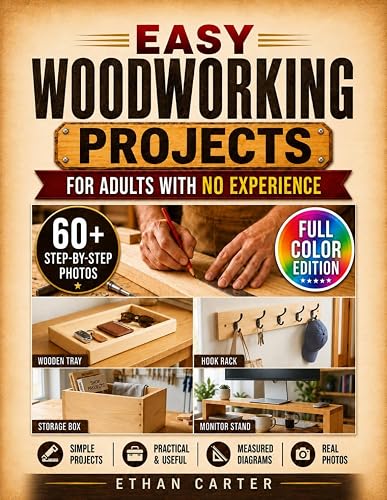 TOP CHOICEBest overallEasy Woodworking Projects for Adults with No Experience: From First CuView on Amazon
- 2
 TOP CHOICEBest for weekend buildersFoolproof Woodworking Projects: Weekend Builds for Beginners with ExacView on Amazon
- 3
 TOP CHOICEBest for relaxed, hobby-paced learningRelaxing Woodworking Projects for Beginners: A Practical Handbook withView on Amazon
- 4
 Best for refined, traditional styleBuilding Small Projects: The New Best of Fine WoodworkingView on Amazon
- 5
 Best budget pick with the most plansDIY Woodworking Projects for Beginners: 127 Build-Ready Plans, Exact MView on Amazon
Our Top Picks
Quick Comparison
| Product | Best for | Key feature |
|---|---|---|
| Easy Woodworking Projects for Adults with No Experience | Complete beginners who want guided first builds | Step-by-step plans with real photos and measured diagrams |
| Foolproof Woodworking Projects | Weekend builders with basic tools | Exact cut lists and color step images, no table saw needed |
| Relaxing Woodworking Projects for Beginners | Hobbyists who prefer a slower pace | Practical handbook focused on hands-on skill building |
| Building Small Projects: The New Best of Fine Woodworking | Builders drawn to refined, traditional pieces | Curated small projects from a respected woodworking magazine |
| DIY Woodworking Projects for Beginners | Readers who want the widest selection of plans | 127 build-ready plans with cut lists and visual steps |
Easy Woodworking Projects for Adults with No Experience: From First Cut to Projects You’ll Be Proud to Share | Step-by-Step Plans with Real Photos and Measured Diagrams for Every Build
Easy Woodworking Projects for Adults with No Experience: From First Cut to Projects You'll Be Proud to Share | Step-by-Step Plans with Real Photos and Measured Diagrams for Every Build
Best for: Complete beginners who want guided first builds
This title is aimed at adults who have never picked up a saw. It walks through the process one step at a time, so readers can build confidence before moving to more complex joinery. It is a good fit for someone who wants to learn by following a sequence rather than designing their own pieces.
Key specs
- Format: step-by-step project guide
- Includes real photos and measured diagrams for each build
- Written for adults with no prior experience
Pros
- Plans start from the very first cut, which suits true beginners
- Photos and diagrams help confirm each step visually
- Projects are framed as pieces worth showing off
Cons
- Beginners may still need to learn a few tool basics from another source
- Readers wanting advanced joinery will need to move on afterward
Bottom line: Pick this if you are starting from zero and want a clear path through your first few builds.
Foolproof Woodworking Projects: Weekend Builds for Beginners with Exact Cut Lists and Step-by-Step Color Images. Basic Tools, No Table Saw, and a First Project That Makes Them Ask “You Built This?”
Foolproof Woodworking Projects: Weekend Builds for Beginners with Exact Cut Lists and Step-by-Step Color Images. Basic Tools, No Table Saw, and a First Project That Makes Them Ask “You Built This?”
Best for: Weekend builders with basic tools
This book is designed around short build sessions and a limited tool list. It suits someone with a drill, a handsaw or miter saw, and a few clamps who wants a finished piece in a weekend.
Key specs
- Format: project book with cut lists and color step images
- Designed to avoid the need for a table saw
- Focused on weekend-length builds
Pros
- Exact cut lists reduce guesswork at the lumber rack
- Color images make each step easier to follow
- Basic tool requirements keep the entry barrier low
Cons
- Limited tool list may restrict the size of some builds
- Readers seeking deep technical explanation may want more theory
Bottom line: A strong choice for a beginner with a small home setup who wants quick, satisfying results.
Relaxing Woodworking Projects for Beginners: A Practical Handbook with Clear Instructions, Complete Steps, and Real Photos for Creating Unique Objects and Building Hands-On Skills Without Crazy Costs
Relaxing Woodworking Projects for Beginners: A Practical Handbook with Clear Instructions, Complete Steps, and Real Photos for Creating Unique Objects and Building Hands-On Skills Without Crazy Costs
Best for: Relaxed, hobby-paced learning
This handbook frames woodworking as a calm, enjoyable pastime. It suits readers who want to build skills gradually and find pleasure in the process as much as the finished object.
Key specs
- Format: practical handbook with complete steps and real photos
- Focused on creating unique objects and developing hands-on skill
Pros
- Clear instructions suit a patient, unhurried learning style
- Covers a range of small objects for varied practice
- Emphasis on skill-building rather than only finished decor
Cons
- Shorter on the exact measurement detail some builders prefer
- Readers looking for large furniture plans will need another book
Bottom line: Best for readers who value a steady, enjoyable pace and want to learn by making small, varied objects.
Building Small Projects: The New Best of Fine Woodworking
Building Small Projects: The New Best of Fine Woodworking
Best for: Refined, traditional style
This anthology gathers small projects drawn from the pages of Fine Woodworking, a long-running magazine known for detailed craft content. It suits builders who want to learn traditional methods and produce polished, heirloom-quality small pieces.
Key specs
- Format: curated collection of small projects
- Drawn from Fine Woodworking magazine content
Pros
- Projects reflect established, traditional craft standards
- Good source of ideas for small boxes, shelves, and accessories
- Detailed presentation suits readers who enjoy design thinking
Cons
- Some projects assume a few years of skill or a well-equipped shop
- Less hand-holding than step-by-step beginner guides
Bottom line: A good pick once you have a few basic builds behind you and want to step up toward refined work.
DIY Woodworking Projects for Beginners: 127 Build-Ready Plans, Exact Measurements, Cut Lists & Visual Steps to Turn Raw Boards into Furniture & Decor That Looks Store-Bought | No Big Workshop
DIY Woodworking Projects for Beginners: 127 Build-Ready Plans, Exact Measurements, Cut Lists & Visual Steps to Turn Raw Boards into Furniture & Decor That Looks Store-Bought | No Big Workshop
Best for: Readers who want the widest selection of plans
This title packs a large number of plans into one volume and emphasizes a no-big-workshop approach. It suits someone who wants many options to choose from and plans to work through over several months.
Key specs
- Format: plan collection with cut lists and visual steps
- Lists 127 build-ready plans according to the listing
- Written with a small home workshop in mind
Pros
- Large number of plans provides long-term project variety
- Exact measurements and cut lists support accurate builds
- Designed for limited space and modest equipment
Cons
- Volume of plans can feel overwhelming for a first-time reader
- Quality of photos and diagrams varies by project, based on owner feedback patterns
Bottom line: Ideal for a beginner who wants plenty of ready-to-build options and is comfortable choosing among them.
Buying Guide
Before choosing a book or plan set, it helps to know what makes a beginner project successful. The factors below cover the points that matter most for a first build.
Plan clarity and step detail
Look for plans that show each step in order, with dimensions called out where cuts happen. Sequential instructions reduce mistakes, especially when you are still learning how joints fit together.
Good picks for this: Easy Woodworking Projects for Adults with No Experience, Foolproof Woodworking Projects
Exact cut lists
A good cut list gives the length, width, thickness, and quantity of every part. It saves time at the lumber rack and helps you avoid buying more stock than you need.
Good picks for this: Foolproof Woodworking Projects, DIY Woodworking Projects for Beginners
Tool requirements
Check which tools a project assumes. Plans that avoid a table saw or large stationary machines are easier to start with in a garage or spare room. Confirm you have the basics such as a tape measure, combination square, drill, clamps, and a handsaw before committing.
Good picks for this: Foolproof Woodworking Projects, Relaxing Woodworking Projects for Beginners
Project scope and build time
Small projects such as boxes, shelves, and trays typically take a few hours to a weekend. Match the scope to your available time so you finish pieces and stay motivated. Larger furniture builds can take weeks and multiple workdays.
Good picks for this: Relaxing Woodworking Projects for Beginners, Building Small Projects: The New Best of Fine Woodworking
Skill progression
Beginners benefit from projects that introduce one or two new skills at a time, such as square cuts, pilot holes, or simple butt joints. Avoid jumping straight to dovetails or complex panel work before you have confidence with basics.
Good picks for this: Easy Woodworking Projects for Adults with No Experience, DIY Woodworking Projects for Beginners
Wood selection and durability
Pine, poplar, and birch plywood are common choices for beginner builds because they are affordable and easy to cut. Hardwoods like oak and maple are harder to work but produce more durable pieces. Check that the plan specifies a material you can actually source locally.
Good picks for this: Building Small Projects: The New Best of Fine Woodworking, DIY Woodworking Projects for Beginners
Finishing and care
Sanding to a consistent grit, usually progressing from 120 to 180 or 220, makes finishes look cleaner. Plans that include finishing steps help you avoid blotchy stain or rough surfaces. Always follow the finish manufacturer’s ventilation and drying instructions.
Good picks for this: Relaxing Woodworking Projects for Beginners, Easy Woodworking Projects for Adults with No Experience
FAQ
What is the easiest woodworking project for a total beginner?
A simple box, a basic shelf, or a small tray is usually the easiest starting point. These builds involve straight cuts, a few screws or glue joints, and minimal measuring. Plans with exact cut lists make them even more approachable.
Do I need a table saw to start woodworking?
No. Many beginner projects can be built with a handsaw or miter saw, a drill, clamps, and sandpaper. A table saw speeds up ripping long boards, but it is not essential for your first builds.
What tools should a beginner buy first?
A tape measure, combination square, drill/driver, clamps, a handsaw or miter saw, and a sanding block cover most early projects. Add a few drill bits and a pencil and you can complete many plans without a large shop.
What wood is best for beginner projects?
Pine and poplar are widely recommended because they cut and sand easily and cost less than many hardwoods. Birch plywood is also a practical choice for flat panels and shelves.
How long does a small woodworking project usually take?
Most small boxes and shelves take a few hours of build time, plus drying time for glue and finish. Allow an extra day or two if you are learning new techniques, since rushing often leads to mistakes.
Is woodworking safe for beginners?
It can be, provided you use proper safety habits. Wear eye and hearing protection, keep fingers clear of blades, use clamps instead of hands to hold work, and read tool manuals carefully. Consult a qualified instructor or the tool manufacturer for guidance on any machine you are unsure about.
Should I learn with a book or a class?
A book with clear plans is a convenient way to start at your own pace. A local class or woodworking club can add hands-on feedback, which many beginners find valuable once they have a few projects completed.
Conclusion
For most readers who want to recommend some small woodworking projects for beginners, the right choice depends on where you are starting. Complete newcomers will get the most from Easy Woodworking Projects for Adults with No Experience, which walks through each build step by step. Weekend builders with a basic tool kit may prefer Foolproof Woodworking Projects, while readers who enjoy a slower, more thoughtful pace will find Relaxing Woodworking Projects for Beginners a good fit. Builders interested in traditional, refined pieces should look at Building Small Projects: The New Best of Fine Woodworking once they have some basics under their belt. If you want the widest selection of plans to work through over time, DIY Woodworking Projects for Beginners offers the most variety.
For more ideas, you can also browse 7 Best Pinterest Small Woodworking Projects for Beginners (2026), Good First Woodworking Projects: 5 Easy Builds for Beginners, Beginner Woodworking Projects: A Skill-by-Skill Path, 6 Best Woodworking Tools for Small Projects: Our Picks (2026), and 7 Best Easy to Make Woodworking Projects for Beginners (2026).
Sources
- Consumer safety guidance on power tool use, guarding, and home workshop hazards (cpsc.gov)
- Workplace and shop safety standards covering hand and power tool operation and eye protection (osha.gov)
- Wood properties and species characteristics relevant to selecting lumber for small projects (fpl.fs.usda.gov)
Related reading
- 5 Best Clever Small Woodworking Projects for Beginners (2026)
- Top 3 CNC Router Woodworking Projects Books for Beginners (2026)
About Claire Whitaker
Claire Whitaker is part of our editorial team and reviews and edits our woodworking guides, checking product details against manufacturer specifications and owner feedback.