 By Audrey Hayes
Updated November 2026
Choosing basic home woodworking tools can feel overwhelming, especially when every catalog promises a complete shop. Most home builders need a short list of reliable hand tools, a few measuring and marking aids, and a learning resource that teaches them how to use everything safely. This guide narrows the field to six options that fit those needs. We weighed each pick against five criteria: how well it covers core beginner tasks, how clearly its specifications are published, the reputation of the brand or author, the kind of feedback owners commonly report, and how easily a newcomer can start using it without extra equipment.
Our top picks at a glance
- 1
 TOP CHOICEBest overallThe Complete Book of Woodworking: Step-by-Step Guide to Essential WoodView on Amazon
- 2
 TOP CHOICEBest for learning projectsWoodworking Basics: Mastering the Essentials of CraftsmanshipView on Amazon
- 3
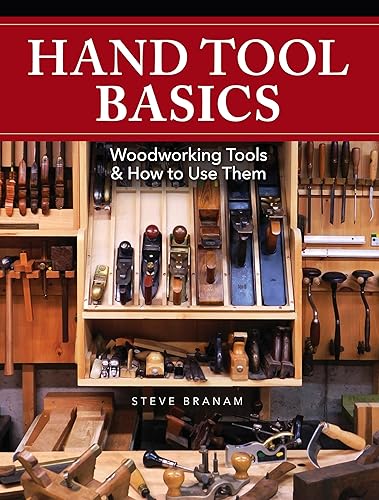 TOP CHOICEBest for hand tool beginnersHand Tool Basics: Woodworking Tools and How to Use ThemView on Amazon
- 4
 Best budget pick for clampingAmazon Basics Adjustable Metal Face Clamps for Woodworking, Welding, or Repairs, 2-PackView on Amazon
- 5
 Best for smoothing and flatteningAmazon Basics Woodworking Hand Planer, No.4 Adjustable Bench Plane with 2-Inch Steel BladeView on Amazon
- 6
 Best for joinery and paringAmazon Basics 8-Piece Wood Chisel Set with Honing Guide, Sharpening Stone and Storage CaseView on Amazon
Our Top Picks
| Product | Best for | Key feature |
|---|---|---|
| The Complete Book of Woodworking (Landauer) | Learning core skills | 40+ step-by-step projects with plans |
| Amazon Basics Adjustable Metal Face Clamps, 2-Pack | Glue-ups and holding work | 3-inch jaw reach |
| Amazon Basics No.4 Adjustable Bench Plane | Smoothing and flattening stock | 2-inch steel blade |
| Amazon Basics 8-Piece Wood Chisel Set | Joinery and cleanup | Sizes from 1/4″ to 1-1/2″ with honing guide |
| Woodworking Basics: Mastering the Essentials of Craftsmanship | Foundational technique | Covers the essentials of craftsmanship |
| Hand Tool Basics: Woodworking Tools and How to Use Them | Hand tool beginners | Explains each tool and its use |
The Complete Book of Woodworking: Step-by-Step Guide to Essential Woodworking Skills, Techniques, Tools and Tips (Landauer)
The Complete Book of Woodworking: Step-by-Step Guide to Essential Woodworking Skills, Techniques, Tools and Tips (Landauer) 40+ Easy-to-Follow Projects and Plans, 1,200+ Photos, and Carpentry Basics
Best for: Learning core skills
This is a good fit for someone who wants a structured reference that pairs technique with projects. It suits readers who prefer to learn by building rather than by reading theory alone.
Key specs
- 40+ easy-to-follow projects and plans
- More than 1,200 photos
- Covers carpentry basics
Pros
- Projects build skills in a logical order
- Photo-heavy layout helps with visual learners
- Covers tools, techniques and tips in one place
Cons
- Some readers find the scope broader than they need at first
- Printed plans may need adapting to your own lumber sizes
Bottom line: A strong first purchase for anyone who wants a single book to guide their first builds.
Amazon Basics Adjustable Metal Face Clamps for Woodworking, Welding, or Repairs, 2-Pack
Amazon Basics Adjustable Metal Face Clamps for Woodworking, Welding, or Repairs, 3-inch Jaw Reach, 2-Pack, Black/Silver
Best for: Glue-ups and holding work
Clamps are among the most-used items in any beginner shop. This two-pack suits someone assembling their first face frames, boxes or small tabletops.
Key specs
- 3-inch jaw reach
- Sold as a 2-pack
- Metal face construction
Pros
- Useful for both woodworking and general repair
- Two clamps let you hold a joint while you work
- Simple adjustment for varied stock thickness
Cons
- Limited reach for wide panels
- You will likely want more clamps as projects grow
Bottom line: A practical starting point for small glue-ups, and a sensible addition to a growing clamp collection.
Amazon Basics Woodworking Hand Planer, No.4 Adjustable Bench Plane with 2-Inch Steel Blade
Amazon Basics Woodworking Hand Planer – No.4 Adjustable Bench Plane with 2-Inch Steel Blade for Quality Wood Smoothing Cuts, Grey/Black
Best for: Smoothing and flattening stock
A bench plane is one of the most versatile hand tools for flattening boards and taking off saw marks. It suits builders who want to work rough lumber without a power jointer.
Key specs
- No.4 bench plane size
- 2-inch steel blade
- Adjustable blade depth
Pros
- Smooths and flattens both edges and faces
- Adjustable for fine or coarse cuts
- Familiar format for learning hand planing
Cons
- Requires regular blade sharpening to perform well
- Owners often report that setup takes practice
Bottom line: Best for builders ready to learn hand planing and willing to maintain a sharp blade.
Amazon Basics 8-Piece Wood Chisel Set with Honing Guide, Sharpening Stone and Storage Case
Amazon Basics 8-Piece Wood Chisel Set for Woodworking, with Honing Guide, Sharpening Stone and Storage Case, 1/4" – 1-1/2"
Best for: Joinery and cleanup
Chisels handle mortises, dovetail cleanup and paring. This set is aimed at a beginner who wants several widths without buying each one separately.
Key specs
- 8 pieces, sizes from 1/4″ to 1-1/2″
- Includes honing guide and sharpening stone
- Storage case included
Pros
- Covers the most common joinery widths
- Honing guide helps beginners hold a consistent angle
- Case keeps edges protected in storage
Cons
- Owners often report that edges need honing before first use
- Entry-level steel may not hold an edge as long as premium chisels
Bottom line: A good value for beginners who plan to cut joints by hand and are willing to sharpen regularly.
Woodworking Basics: Mastering the Essentials of Craftsmanship
Woodworking Basics: Mastering the Essentials of Craftsmanship
Best for: Foundational technique
This title suits readers who want a focused introduction to the core principles of woodworking before tackling larger projects.
Key specs
- Focuses on essential skills and craftsmanship
- Written as a beginner introduction
Pros
- Concentrates on fundamentals rather than advanced topics
- Useful companion to hands-on practice
- Helps build a shared vocabulary for tools and joinery
Cons
- Less project-driven than some comparable books
- Readers wanting detailed plans may need another resource
Bottom line: Pick this if you want a concise grounding in technique before starting projects.
Hand Tool Basics: Woodworking Tools and How to Use Them
Hand Tool Basics: Woodworking Tools and How to Use Them
Best for: Hand tool beginners
Builders who plan to rely mostly on hand tools will find this guide useful for learning what each tool does and how to hold and use it.
Key specs
- Covers woodworking hand tools and their use
- Written for beginners
Pros
- Explains tool purpose clearly
- Good match for a hand-tool-only shop
- Helps avoid common beginner mistakes
Cons
- Narrower focus than a full project book
- Less coverage of power tools
Bottom line: A focused choice for someone building a hand-tool foundation.
Buying Guide
Core hand tools to start with
Most beginners need a saw, a plane, a set of chisels, a square and a few clamps. Start with those before adding specialty items. A bench plane and a sharp chisel set cover a wide range of tasks, from flattening a board to cleaning out a joint.
Good picks for this: Amazon Basics No.4 Adjustable Bench Plane, Amazon Basics 8-Piece Wood Chisel Set
Clamping capacity
Clamps hold glue-ups and work pieces while adhesive sets or while you cut. Check the jaw reach against the widest piece you expect to join. A 3-inch reach handles small boxes well but will not span a wide tabletop, so plan to add longer clamps as projects grow.
Good picks for this: Amazon Basics Adjustable Metal Face Clamps, 2-Pack
Blade and edge quality
Hand tools depend on sharp edges. Many entry-level chisels and plane blades arrive needing honing. Look for included sharpening stones or a honing guide, and budget time to learn basic sharpening. Dull tools cause tearout and are more dangerous than sharp ones.
Good picks for this: Amazon Basics 8-Piece Wood Chisel Set, Amazon Basics No.4 Adjustable Bench Plane
Size and fit for your bench
A No.4 bench plane is a common general-purpose size, and chisels from 1/4″ to 1-1/2″ cover most joinery. Consider how much bench space you have and whether tools store easily. A case or rack keeps edges protected and makes a small shop easier to organize.
Good picks for this: Amazon Basics 8-Piece Wood Chisel Set, Hand Tool Basics: Woodworking Tools and How to Use Them
Your intended projects
If you plan to build furniture, prioritize joinery and flattening tools. If you plan to build small boxes or birdhouses, clamps and a chisel set may be enough at first. Matching the tool list to your first project avoids buying things you will not use for months.
Good picks for this: The Complete Book of Woodworking (Landauer), Woodworking Basics: Mastering the Essentials of Craftsmanship
Learning resources
Tools only help when you know how to use them. A book with projects and clear photos speeds up the learning curve, especially for techniques like sharpening, marking and cutting joints. Pick a resource that matches your current skill level.
Good picks for this: The Complete Book of Woodworking (Landauer), Hand Tool Basics: Woodworking Tools and How to Use Them
Durability and care
Store hand tools dry and lightly oiled, since moisture causes rust on plane soles and chisel edges. Keep blades sharp, and store chisels so edges do not knock against each other. Good care extends the life of any mid-range tool.
Good picks for this: Amazon Basics 8-Piece Wood Chisel Set, Amazon Basics No.4 Adjustable Bench Plane
FAQ
What are the most basic home woodworking tools to buy first?
A square, a tape measure, a saw, a bench plane, a chisel set and at least two clamps cover the core tasks of most beginner projects. Add a sharpening setup early, since every hand tool depends on it.
Do I need power tools to start woodworking?
No. Many beginners learn with hand tools alone. Hand tools are quieter, cost less space and teach you how wood behaves. Power tools can be added later as your projects and budget grow.
How do I keep hand tools sharp?
Use sharpening stones with a honing guide to maintain a consistent bevel angle. Check the edge often and resharpen before it feels dull, since a slightly dull chisel is harder to control.
How many clamps do I need as a beginner?
Most beginners find four to six clamps useful for small projects. Start with a few and add longer ones as your work grows. Clamp capacity should match the largest panel you plan to build.
Is a book enough to learn woodworking?
A good book gives you technique and project plans, but hands-on practice is essential. Pair reading with small test cuts in scrap wood, and check each step against a safety reference before using a tool.
What safety gear should a beginner use?
Safety glasses are the minimum for any cutting or planing. Hearing protection and dust control matter once you use power tools. Keep blades sharp, since dull edges slip more often. For detailed guidance, consult the resources listed below and a qualified instructor when possible.
Conclusion
For most home builders, the best starting kit combines a learning resource with a few reliable hand tools. The Landauer book suits readers who want projects alongside technique, while the Woodworking Basics title fits someone who wants fundamentals first. For hands-on work, the clamps cover holding and gluing, the bench plane handles flattening, and the chisel set covers joinery. Choose based on the projects you plan to build first, and add tools as your skills and needs grow.
Sources
- Workplace tool and machine safety guidance, including hazard controls for hand and power tools (osha.gov)
- Consumer product safety information relevant to shop tools and safe use (cpsc.gov)
- Standards information for power tool and hand tool safety requirements
Before you buy: helpful guides
Related reading
- Woodworking Power Tools: What Each Does and Safety Basics
- Woodworking Tools Table Saw: 6 Best Picks Compared for Home Shops (2026)
About Audrey Hayes
Audrey Hayes is part of our editorial team and reviews and edits our woodworking guides, checking product details against manufacturer specifications and owner feedback.