By Claire Whitaker
Updated November 2026
If you need the best wood router for flattening slabs, the real question is what kind of setup will actually level a live-edge board or a glued-up tabletop without tearing out grain or leaving ridges. Most flattening work comes down to three things: how much weight and width the rig can handle, how well it holds height across a long span, and whether the cutter is sized for the job. This guide compares six products that fall into two groups, router sleds and dedicated surfacing bits, and explains which one fits a given shop and slab size.
Our top picks at a glance
- 1
 TOP CHOICEBest overallRouter Sled, Slab Flattening Jig, DIY Woodworking Router Sled for FlatView on Amazon
- 2
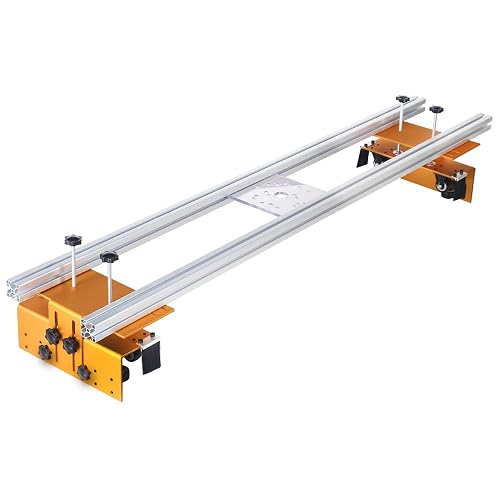 TOP CHOICEBest for wide slabsAdjustable Width and Height with Aluminum Rails, Router Base Plate forView on Amazon
- 3
 TOP CHOICEBest for precise height controlSpeTool 48 inch Router Sled for Flattening Slabs, 3-Axis Precision HeiView on Amazon
- 4
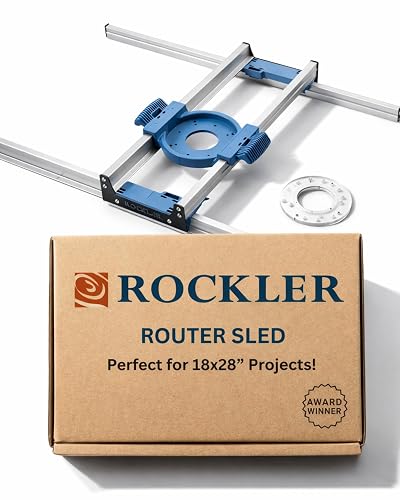 Best for small shopsSlab Flattening Jig – Precision Surface Flattening – Router Sled – BenView on Amazon
- 5
 Best budget pickCNC Spoilboard Surfacing Router Bit 1/4 Inch Shank, Extra Large 1-1/2View on Amazon
- 6
 Best for CNC and heavy stockHeavy Duty Surfacing Router Bits Milling Cutter, Carbide Insert PlanerView on Amazon
Our Top Picks
The six products below were selected by comparing manufacturer specifications, the reputation of the designs, and patterns that owners tend to report in their reviews. None of these were tested in a shop for this article. The picks are ordered roughly by how well they match the most common flattening job: a hand-guided router pass over a slab too big to run through a planer. For another angle, check out Top 7 Tools for Wood Flooring Installation Compared (2026).
Router Sled, Slab Flattening Jig, DIY Woodworking Router Sled for Flattening Slabs with Height Adjustable (L-Carriages, Steel and Aluminum, 48 Inches)
Router Sled, Slab Flattening Jig, DIY Woodworking Router Sled for Flattening Slabs with Height Adjustable (L-Carriages, Steel and Aluminum, 48 Inches)
Best for: Best overall, general slab flattening in a home shop
This sled suits woodworkers who have a standard router and want a rig that spans most common slab widths without a large investment in shop space. The 48-inch length covers the majority of live-edge tabletop blanks.
Key specs
- Overall length: 48 inches
- Construction: steel and aluminum components
- Height-adjustable router carriages (L-shaped)
Pros
- Long rails give a stable reference across a full-width slab
- Mixed steel and aluminum keeps the frame rigid without excess weight
- Height adjustment lets you set the cut depth in small increments
Cons
- Assembly and leveling the rails takes care and a few checks
- Slabs much wider than 48 inches will need repositioning
Bottom line: A strong first choice for a hobbyist who flattens a few slabs a year and wants one versatile sled.
Adjustable Width and Height with Aluminum Rails, Router Base Plate for Wood Slabs and Table Tops 58 Inch Router Sled and Slab Flattening Jig for Woodworking
Adjustable Width and Height with Aluminum Rails, Router Base Plate for Wood Slabs and Table Tops 58 Inch Router Sled and Slab Flattening Jig for Woodworking
Best for: Best for wide slabs
Aimed at builders who regularly work with extra-wide slabs, such as dining tables or bar tops, where a 48-inch rail would leave gaps at the ends.
Key specs
- Overall length: 58 inches
- Aluminum rails
- Adjustable width and height, with a router base plate
Pros
- Longer span handles wide tabletop blanks in fewer passes
- Aluminum rails are light enough to move between benches
- Adjustable width helps match different router bases
Cons
- Longer rails can flex more if not supported on both ends
- Needs a wider work area to store and set up
Bottom line: The right pick for a shop that mostly flattens large tabletops and has the floor space to match.
SpeTool 48 inch Router Sled for Flattening Slabs, 3-Axis Precision Height Adjustment System with Reinforced Rails, Wood Slab Flattening Jig for Woodworking, Includes Pre-drilled & Blank Router Plates
SpeTool 48 inch Router Sled for Flattening Slabs, 3-Axis Precision Height Adjustment System with Reinforced Rails, Wood Slab Flattening Jig for Woodworking, Includes Pre-drilled & Blank Router Plates
Best for: Best for precise height control
Suited to woodworkers who want consistent depth across the full slab and who value the option of making their own router plate for a specific base.
Key specs
- Overall length: 48 inches
- 3-axis height adjustment system
- Reinforced rails; pre-drilled and blank router plates included
Pros
- Three-axis adjustment makes leveling easier across the span
- Reinforced rails resist deflection under a heavy router
- Blank plate allows fitting to non-standard bases
Cons
- Fine adjustment system takes time to learn
- Blank plate requires drilling and fitting by the user
Bottom line: Best for a builder who cares most about flatness and is comfortable setting up the sled carefully.
Slab Flattening Jig – Precision Surface Flattening – Router Sled – Benchtop Design – Large Workpiece Support Rockler Benchtop Board Slab Flattening Jig for Precision Woodworking
Slab Flattening Jig – Precision Surface Flattening – Router Sled – Benchtop Design – Large Workpiece Support Rockler Benchtop Board Slab Flattening Jig for Precision Woodworking
Best for: Best for small shops
A compact benchtop design for woodworkers with limited floor space who still want to flatten boards of moderate size.
Key specs
- Benchtop form factor
- Designed for large workpiece support
- Rockler brand design
Pros
- Sits on a bench, so it does not take a dedicated floor footprint
- Workpiece support helps keep larger boards from rocking
- Brand has a long track record with router accessories
Cons
- Limited span compared with full-length sleds
- Very long slabs may need several setup changes
Bottom line: A practical choice for a small shop that works mainly with boards rather than very long slabs.
CNC Spoilboard Surfacing Router Bit 1/4 Inch Shank, Extra Large 1-1/2 Inch Cutting Diameter, Slab Flattening Router Bit Planing Bit Wood Planing Bit Dado Planer Bit(Carbide-4 Wings)
CNC Spoilboard Surfacing Router Bit 1/4 Inch Shank, Extra Large 1-1/2 Inch Cutting Diameter, Slab Flattening Router Bit Planing Bit Wood Planing Bit Dado Planer Bit(Carbide-4 Wings)
Best for: Best budget pick
For woodworkers who already own a router and want to flatten smaller slabs or spoilboards without buying a full sled.
Key specs
- Cutting diameter: 1-1/2 inches
- Shank: 1/4 inch
- Four carbide wings
Pros
- Lower entry point than a sled setup
- Four wings help clear chips at a moderate feed rate
- The 1/4-inch shank fits compact handheld routers
Cons
- Small shank limits how aggressive a pass can be
- Needs a flat reference on the workpiece, so results depend on the setup
Bottom line: A sensible starting point for light flattening work and small boards.
Heavy Duty Surfacing Router Bits Milling Cutter, Carbide Insert Planer Bit for Wood Spoilboard Planing, Bottom Cleaning CNC Slab Flattening Router Bit 3″ Cutting Dia.-6 Wings, 1/2 Shank
Heavy Duty Surfacing Router Bits Milling Cutter, Carbide Insert Planer Bit for Wood Spoilboard Planing,Bottom Cleaning CNC Slab Flattening Router Bit 3" Cutting Dia.-6 Wings,1/2 Shank
Best for: Best for CNC and heavy stock
Intended for CNC users or heavy-duty routers who need to remove material quickly across wide surfaces.
Key specs
- Cutting diameter: 3 inches
- Shank: 1/2 inch
- Six wings with carbide inserts
Pros
- Large diameter removes material in fewer passes
- 1/2-inch shank is more stable at high speeds
- Six wings give a smoother finish on wide cuts
Cons
- Requires a router or CNC with enough power and speed control
- Large cutter increases vibration on lightweight machines
Bottom line: Best for a shop with a capable spindle or a CNC that flattens spoilboards and heavy slabs regularly.
Quick Comparison
| Product | Best for | Key feature |
|---|---|---|
| Router Sled, Slab Flattening Jig (48 Inches) | Best overall | Height-adjustable L-carriages |
| Adjustable Width Router Sled (58 Inch) | Wide slabs | Longer span with aluminum rails |
| SpeTool 48 inch Router Sled | Precise height control | 3-axis height adjustment |
| Rockler Benchtop Slab Flattening Jig | Small shops | Benchtop design |
| CNC Spoilboard Surfacing Router Bit (1-1/2 Inch) | Budget pick | Four-wing carbide bit |
| Heavy Duty Surfacing Router Bit (3 Inch) | CNC and heavy stock | Six-wing 3-inch cutter |
Buying Guide
Choosing the right flattening setup depends less on brand than on how the tool fits your slabs, your router and your shop. The factors below are the ones that matter most in practice.
Slab size and span
Measure your widest slab before buying. A sled should run at least a few inches past both edges of the board so the router base always has full support. Sleds in the 48-inch range suit most tabletops, while 58-inch models help with wider dining slabs.
Good picks for this: Router Sled (48 Inches), Adjustable Width Router Sled (58 Inch)
Height adjustment and flatness
Look for a sled with an easy, repeatable height adjustment. Multi-axis systems let you set the cutter depth at several points along the rail, which helps when the rails themselves are not perfectly parallel to the slab.
Good picks for this: SpeTool 48 inch Router Sled, Router Sled (48 Inches)
Router compatibility
Check the base plate pattern and the router’s motor size before buying a sled. A blank or adjustable plate makes it easier to fit a router that does not match the standard hole layout.
Good picks for this: SpeTool 48 inch Router Sled, Adjustable Width Router Sled (58 Inch)
Cutter diameter and shank size
Larger cutters remove material faster but demand more power and stability. Smaller shanks suit compact routers, while 1/2-inch shanks give more rigidity at larger diameters.
Good picks for this: CNC Spoilboard Surfacing Router Bit, Heavy Duty Surfacing Router Bit
Shop space and portability
A benchtop jig saves floor space, but it limits the length of slab you can run in one setup. Full-length sleds need room to store and support the rails. Decide which trade-off suits your shop before you buy.
Good picks for this: Rockler Benchtop Slab Flattening Jig, Router Sled (48 Inches)
Build quality and durability
Steel and aluminum components resist flexing better than lighter materials. Reinforced rails and solid carriages hold their setting over repeated passes. Check whether the rails can be re-leveled if they shift.
Good picks for this: SpeTool 48 inch Router Sled, Adjustable Width Router Sled (58 Inch)
Care and maintenance
Keep rails clean of resin and sawdust, check fasteners after each session, and store the sled flat so the rails stay straight. Replace router bit carbide inserts or sharpen them when cuts start to chatter or burn.
Good picks for this: Router Sled (48 Inches), Heavy Duty Surfacing Router Bit
FAQ
What is the best wood router for flattening slabs?
There is no single answer, because the right choice depends on slab width, router type and shop space. For most home woodworkers, a 48-inch router sled with height adjustment is the most versatile option. Builders with wider slabs may prefer a 58-inch sled, and CNC users often choose a large surfacing bit.
Do I need a router sled to flatten a slab?
Not always. Small boards can be flattened with a surfacing bit and a flat reference, but a sled gives more consistent results on wide slabs because it spans the full width and keeps the router base on a stable track.
What router size is best for slab flattening?
A medium to large plunge or fixed-base router with variable speed control is typically preferred. Larger cutters need more power, so match the bit diameter to the router’s rated capacity and always follow the manufacturer’s speed recommendations.
Which bit diameter should I use?
Diameter affects how much material each pass removes and how much vibration the setup produces. Wider cutters remove material faster, but they demand more power and a more rigid setup. Smaller diameters are gentler on lightweight routers.
How do I avoid tearout when flattening?
Take shallow passes, make sure the cutter is sharp, and feed in the direction that supports the grain. Reverse your feed direction if you see tearout on one side of the board, and consider a final light pass to clean up the surface.
Is a benchtop flattening jig good enough for large slabs?
It depends on the slab. Benchtop designs suit boards that fit within their support range. For very long or heavy slabs, a full-length sled with supported rails is usually more practical and safer to operate.
Conclusion
For most home shops, the best wood router for flattening slabs is a 48-inch router sled with height adjustment, which covers standard tabletop widths and fits a wide range of routers. Builders who regularly flatten wide dining slabs should look at the 58-inch sled, while those who prioritize precise depth control may prefer the three-axis SpeTool design. Small shops benefit from the benchtop Rockler jig, and budget-minded woodworkers can start with a single surfacing bit. CNC owners and heavy-duty router users will get the most from the six-wing 3-inch cutter. Match the tool to your slab size and shop space, and you will get flat results without guesswork.
Sources
- Workplace safety guidance for power tools and router operation (osha.gov)
- Consumer safety information on power tool use and guarding (cpsc.gov)
- Forest Products Laboratory research on wood properties, grain and machining behavior (fs.usda.gov)
Related reading
- Wood Flattening Router Bit: 5 Best Picks for Slabs and Spoilboards (2026)
- Top 7 Router Bit to Level Wood Picks for Slab Flattening and Trimming
- Router Bit for Planing Wood: 6 Best Picks for Flattening Slabs (2026)
- 6 Best Wood Slab Router Sled Options for Flattening Slabs (2026)
- 6 Best Router Bits for Flattening Wood Slabs (2026)
About Claire Whitaker
Claire Whitaker is part of our editorial team and reviews and edits our woodworking guides, checking product details against manufacturer specifications and owner feedback.