 By Claire Whitaker
Updated November 2026
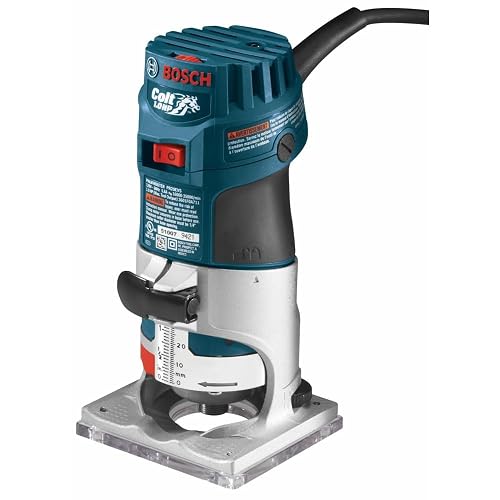
A bosch wood router machine is one of the most common handheld routers in home workshops, and it can handle everything from edge profiles to dadoes and mortises. In this guide you will learn how to pick the right Bosch model for your work, set it up correctly, make your first clean cuts, and avoid the mistakes that cause tear-out, burn marks and kickback. The steps apply to most Bosch fixed-base and plunge routers, so you can use them whether you are building a birdhouse or a dining table.
What a Bosch Wood Router Machine Does
A router is a high-speed motor that spins a cutting bit, usually between roughly 8,000 and 25,000 RPM depending on the model and bit size. You guide it across the workpiece or along a template, and the bit removes material to form grooves, profiles, joints and decorative edges. Bosch makes routers in several sizes, typically grouped as compact trim routers for light edge work and full-size routers for heavier cuts and larger bits.
Shopping for one? See our guide: 7 Best 4×8 CNC Wood Router Machines of 2026: Buyer's Guide.
The most useful work for a home woodworker includes rounding over edges, cutting rabbets and dadoes for shelves and cabinet sides, routing mortises for hinges, and trimming laminate or plywood flush to a template. Each of these tasks depends on choosing the right bit and setting the right depth, which is why the rest of this guide focuses on those two decisions.
Choosing the Right Model
Before you buy or set up a router, match the tool to the jobs you plan to do most. Bosch’s product line includes fixed-base models, which are simple and accurate for shallow, repeated cuts, and plunge models, which let you lower the spinning bit into the wood at a set point. Plunge bases are more versatile for mortises and stopped grooves. Fixed-base routers are often preferred for edge work and for beginners because they are lighter and easier to control.
Check these specifications on the manufacturer’s data sheet:
- Collet size: Most Bosch routers accept 1/4-inch shank bits. Full-size models may also accept 1/2-inch shank bits, which are more stable for large-diameter cutters.
- Motor horsepower and amperage: Higher output helps when you run large bits or cut hardwoods like oak and maple at full depth.
- Speed control: Variable speed lets you slow the bit for large-diameter cutters and hardwoods, reducing burning.
- Depth adjustment: Look for fine-adjustment knobs or a micro-adjust system, which make repeatable depth settings far easier.
- Base compatibility: Confirm that the base accepts edge guides, template guides and dust collection adapters you may need later.
Compact vs. Full-Size Routers
A compact trim router weighs less and fits one-handed work, which is useful for light profiles on narrow stock. A full-size router handles deeper passes and bigger bits with less vibration. If your projects include cabinet doors, table tops or raised-panel work, a full-size model is the better match. If you mostly rout birdhouse entrance holes, box edges or small trim, a compact model will feel more comfortable.
Tools and Supplies You Will Need
Gather everything before you start the first cut. Working without the right accessories is the most common reason beginners end up with rough edges or unsafe setups.
- Your Bosch router with the correct base for the job
- Router bits in 1/4-inch shank (or 1/2-inch if your model requires it)
- A straight edge guide or fence for straight cuts
- A flat, stable work surface such as a benchtop or sawhorses with plywood on top
- Clamps to secure the workpiece firmly
- A combination square and ruler for layout
- A dust collection hose or shop vacuum
- Eye and hearing protection, and a dust mask
- Scrap wood of the same species and thickness as your project for test cuts
- Collet wrench and a bit wrench or the tools supplied with the router
Step-by-Step: Setting Up and Making Your First Cut
Step 1: Unplug and Install the Bit
Always unplug the router or remove the battery before touching the bit. Insert the bit shank into the collet until it bottoms out, then pull it back about 1/16 inch to prevent bottoming and reduce vibration. Tighten the collet nut firmly with the wrench, but do not overtighten it. Press the spindle lock and turn the collet nut to make sure the bit does not spin when you hold the motor.
Step 2: Set the Cutting Depth
For most edge and groove work, make multiple shallow passes instead of one deep cut. A common guideline is to remove no more than 1/4 inch of material per pass in hardwood, and a bit more in softwood. Set the depth with the base’s adjustment knob, then make a test cut in scrap. Measure the result with a ruler and adjust until it matches your target.
Step 3: Choose the Correct Feed Direction
A router turns clockwise when viewed from above, so the bit cuts most cleanly when you feed it from right to left along the edge of the workpiece. This pushes the bit into the wood rather than letting it climb out. Moving the router the wrong way, called climb cutting, can pull it out of your hands and cause kickback. Keep the base flat on the wood and the fence or guide firmly against the edge.
Step 4: Start the Motor Before Contact
Turn the router on while it is away from the workpiece, let it reach full speed, then lower or move it into the wood. Keep both hands on the router, and keep the cord clear of the cutting path.
Step 5: Make the Cut
Move at a steady pace that produces a smooth cut with light dust and no burning. If the router bogs down, reduce the depth or slow the feed rate. If you see black marks, you are either feeding too slowly or the bit is dull. Make the full pass at your set depth, then repeat until you reach final depth. Turn the router off and wait for the bit to stop before lifting it from the work.
Speed, Depth and Feed Settings Reference
Use the table below as a starting point. Always test on scrap, because wood species, bit condition and moisture content all change the results. Check the bit manufacturer’s recommended speed for large-diameter bits, and follow the router’s owner’s manual for speed ranges.
| Task | Suggested Max Depth per Pass | Speed Setting Guidance | Feed Direction |
|---|---|---|---|
| Edge profile (roundover, chamfer) | 1/4 inch in hardwood, up to 3/8 inch in softwood | High speed for small bits; slower for large bits | Right to left along outside edge |
| Dado or groove | 1/8 to 1/4 inch per pass | Mid to high speed | Right to left with fence or guide |
| Rabbet | 1/4 inch per pass | Mid to high speed | Right to left with edge guide |
| Mortise (plunge base) | 1/4 inch per plunge increment | Mid speed for hardwood | Plunge, then move side to side |
| Flush trim to template | Full depth in one pass for thin stock | High speed | Bearing follows template edge |
Common Mistakes and Tips
- Cutting too deep in one pass. This causes burning, tear-out and motor strain. Multiple shallow passes give cleaner results.
- Climb cutting. Feeding the router left to right can cause kickback. Keep the feed direction right to left on outside edges.
- Using a dull bit. Dull bits burn wood and leave fuzzy edges. Inspect bits before each project and sharpen or replace them as needed.
- Skipping test cuts. Always check depth and fit on scrap of the same material.
- Loose workpiece. Clamp everything. A moving board is a hazard and ruins the cut.
- Ignoring dust. Connect a vacuum to the router’s dust port. Chips can obscure your line and create respiratory hazards.
- Forgetting to let the motor stop. Lifting the router while the bit still spins can gouge the work and cause injury.
For more on related setups, see the step-by-step notes in Bosch 1617evs Wood Router: Setup, Settings and Safe Use Guide. If you are comparing router types before you buy, Best Wood Router Machine: 6 Types Compared for Home Woodworkers (2026) covers the main options. Builders who work with handheld routers in hand-guided setups may also find Hand Router Machine for Wood: A Step-by-Step Guide to Choosing and Using One useful.
Recommended gear
- Bosch 1617EVS fixed-base router is a widely recognized full-size model that many home woodworkers use for edge and groove work. View on Amazon
- Bosch Colt compact router suits lighter trim and small-stock projects where a full-size tool feels heavy. View on Amazon
- Router edge guide keeps straight cuts parallel to the board edge and makes repeat grooves more consistent. View on Amazon
- Router bit set with 1/4-inch shank gives you roundover, chamfer and straight bits in one kit, which covers most beginner projects. View on Amazon
FAQ
What is the best Bosch router for a beginner woodworker?
A fixed-base, full-size or mid-size model is usually the easiest starting point, because it is stable and accepts a wide range of bits. Choose a compact model if you mainly work on small stock and want lighter handling.
Can a Bosch wood router machine cut dadoes and mortises?
Yes. A straight bit in a fixed base cuts dadoes with a guide or fence, and a plunge base with a straight or spiral bit cuts mortises. For mortises, make the cut in several plunges and move the router side to side to clear the waste.
Why is my router leaving burn marks?
Burn marks usually come from feeding too slowly, cutting too deep in one pass, using a dull bit, or running at the wrong speed for the bit size. Reduce depth, increase your feed rate, and check the bit for dullness.
Should I use a 1/4-inch or 1/2-inch shank bit?
Use the shank size your router supports. 1/4-inch shanks work in nearly all compact and mid-size routers and are fine for small and medium bits. Large-diameter bits benefit from 1/2-inch shanks, which resist vibration better, but only if your router accepts them.
How deep should I cut in one pass?
A practical guideline is no more than 1/4 inch per pass in hardwood and up to about 3/8 inch in softwood, with larger bits usually requiring shallower passes. Always check the bit manufacturer’s recommendation.
Do I need a router table?
A router table is helpful for small pieces, repeated profiles and safer control of stock that is hard to hold with the handheld router. It is not required for most edge and groove work done with a guide.
Is a router safe to use without training?
Routers are safe when used with proper setup, guards, eye and hearing protection, and correct feed direction. If you are new to power tools, consider a hands-on class or a supervised session with an experienced woodworker before tackling large or complex cuts. Consult a qualified instructor for any work beyond basic edge profiles.
Conclusion
A bosch wood router machine rewards careful setup more than raw power. Match the model to your projects, use sharp bits, make shallow passes, and always feed in the correct direction. Practice on scrap until your depth settings and feed rate feel natural, and your edges, grooves and joints will come out cleaner and safer.
Related reading
- Wood Carving with Router: 5 Best CNC Machines and Bits Compared
- Wood Carving with CNC Router: 5 Best Machines for Hobbyists in 2026
- Vertical CNC Wood Router Picks: 6 Best Desktop Machines Compared (2026)
- Used CNC Wood Router for Sale: 6 Best Hobby Machines Compared (2026)
Ready to choose one?
About Claire Whitaker
Claire Whitaker is part of our editorial team and reviews and edits our woodworking guides, checking product details against manufacturer specifications and owner feedback.