 By Colin Foster
Updated November 2026
Building a useful essential power tools for woodworking shop starts with knowing which machines will do the most work for the least clutter. Most home woodworkers need a handful of tools that handle cutting, shaping, sanding and finishing cuts well, and they need them to fit into a real space with a real power supply. The seven picks below were chosen by comparing manufacturer specifications, brand reputation and the patterns owners tend to report after months of use. We did not test these tools ourselves, so treat the notes as research-based guidance rather than hands-on results. The selection criteria were simple: each tool needs to solve a common shop task, be practical for a beginner or hobbyist, and have a clear, identifiable model behind it.
Our top picks at a glance
- 1
 TOP CHOICEBest overallPower Tool Woodworking for EveryoneView on Amazon
- 2
 TOP CHOICEBest for project ideas40 Power Tools You Can MakeView on Amazon
- 3
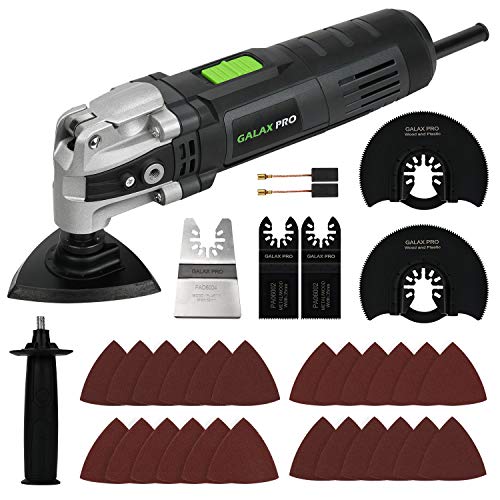 TOP CHOICEBest for multi-tasking22000OPM Oscillating Power Tool KitView on Amazon
- 4
 Best for hand-powered finish cutsRUITOOL Japanese Hand SawView on Amazon
- 5
 Best for dust controlOrtis Automatic Vacuum SwitchView on Amazon
- 6
 Best for edge and joinery workAVID POWER Palm RouterView on Amazon
- 7
 Best for resawing and curvesDeWalt 9" Band SawView on Amazon
Our Top Picks
Quick Comparison
| Product | Best for | Key feature |
|---|---|---|
| Power Tool Woodworking for Everyone | Beginners building a foundation | Broad coverage of shop machines |
| 40 Power Tools You Can Make | Builders who want shop-made tools | Plans for jigs and shop-built tools |
| 22000OPM Oscillating Power Tool Kit | Flush cuts and detail sanding | Quick clamp system, 6 speeds |
| RUITOOL Japanese Hand Saw | Fine, clean cuts in hardwood and softwood | Double-edge 14/17 TPI blade |
| Ortis Automatic Vacuum Switch | Keeping dust collection tied to tools | Delayed vacuum on/off |
| AVID POWER Palm Router | Trimming edges and small joinery | 35,000 RPM with 1/4″ collet |
| DeWalt 9″ Band Saw | Resawing and curved cuts | Two-speed operation with LED worklight |
DeWalt 9″ Band Saw
DeWalt 9" Band Saw – Powerful 3.5 AMP Motor, Two-Speed Operation (1700 & 2500 SPM), Integrated LED Worklight
Best for: Resawing, curved cuts and general stock breakdown
This is a good fit for woodworkers who want a dedicated saw for curves and thick stock rather than forcing a table saw or jigsaw to do the job. It suits small and medium shops where floor space matters.
Key specs
- 9-inch band saw format
- 3.5 amp motor
- Two-speed operation at 1700 and 2500 SPM
- Integrated LED worklight
Pros
- Two speeds let you match blade speed to the material
- Built-in worklight helps with fine layout lines
- Suited to curves and resawing tasks
Cons
- A 9-inch throat limits the size of work you can handle
- Blade changes and tension take practice to set correctly
Bottom line: Pick this if curved work and resawing are central to your builds and you have room for a benchtop-style saw.
AVID POWER Palm Router
Palm Router with Fixed Base for Trimming, 35,000 RPM, 1/4" Collet, Straight & Roller Guide, 2 Wrenches, Carbon Brushes – Red AVID POWER Compact Wood Router Tool for Woodworking 630W 5.3 Amp, Trim Bits
Best for: Trimming edges, small profiles and light joinery
This suits woodworkers who need a compact router for edge work and detail cuts without a full-size plunge router. It is a practical second router for a shop that already has a larger machine.
Key specs
- 630W, 5.3 amp motor
- 35,000 RPM
- 1/4″ collet
- Fixed base with straight and roller guide options
Pros
- Compact size makes it easy to control on small stock
- Roller guide helps with consistent edge profiles
- Fixed base suits trimming and shallow passes
Cons
- Lighter build than a full-size plunge router for heavy work
- Bit selection and depth setup need care to avoid tear-out
Bottom line: A good match for makers who want an affordable, handy router for edges and small joinery.
Power Tool Woodworking for Everyone
Power Tool Woodworking for Everyone
Best for: Beginners who want a broad foundation in shop machines
This book is aimed at people new to power tools who want to understand what each machine does and how to use it safely. It is a useful starting reference before buying a full set of machines.
Key specs
- Covers common shop power tools and their uses
- Written for beginners and hobbyists
Pros
- Explains tool function and basic setup clearly
- Helps you decide which machines to buy first
- Useful reference for safety habits
Cons
- Not a substitute for hands-on instruction
- Some techniques may feel dated compared with newer tools
Bottom line: A strong first read for anyone building their power tool knowledge before investing in machines.
40 Power Tools You Can Make
40 Power Tools You Can Make (Woodworking Classics Revisited)
Best for: Builders who want to make their own shop tools and jigs
This suits woodworkers who enjoy building their own shop aids and want to expand what their existing machines can do. It rewards patience and basic skills.
Key specs
- Project-based book covering shop-made power tools
- Focused on woodworking classics
Pros
- Provides practical shop-built tools and jigs
- Good for developing construction skills
- Ideas can save money on specialty fixtures
Cons
- Assumes some existing tool knowledge
- Plans may need adaptation to your specific machines
Bottom line: Best for hands-on builders who want to make useful shop tools rather than buy every one.
22000OPM Oscillating Power Tool Kit
GALAX PRO Corded Oscillating Multi Tool Kit 3.5A with 30Pcs Accessories | 22000OPM Oscillating Power Tools for Home Improvement, Woodworking, 6-Speed, Quick Clamp System, 4.5° Oscillating Angle
Best for: Flush cuts, detail sanding and tight-space work
This oscillating multi-tool suits woodworkers who need to trim, scrape and sand in corners and tight spots. It works well alongside a sander rather than replacing one.
Key specs
- 6-speed oscillating operation
- 4.5° oscillating angle
- Quick clamp system for blade changes
- Corded, 3.5 amp motor, with 30 accessories included
Pros
- Six speeds let you match the material and blade
- Quick clamp system speeds up accessory changes
- Handles flush cuts and detail sanding well
Cons
- Accessory quality varies, and some owners replace blades early
- Limited power for heavy material removal
Bottom line: A useful addition for detail work and trimming, best treated as a supplement to larger tools.
RUITOOL Japanese Hand Saw
Flexible SK5 Blade, 14/17 Tpi Double-Edge Teeth, Beech Handle Wood Saw, Woodworking Tools for Hardwood, Softwood, Finish Cuts RUITOOL Japanese Hand Saw 6 Inch Double Edge Ryoba Pull Saw for Flush Cuts
Best for: Fine, clean cuts and flush trimming in both hardwood and softwood
This is a practical hand saw for woodworkers who want precise cuts without firing up a machine. It fits well in a shop that mixes power and hand work.
Key specs
- 6-inch double-edge ryoba-style blade
- 14 and 17 TPI teeth
- Beech handle
Pros
- Double-edge blade offers both coarse and fine cutting
- Pull-stroke design gives controlled, thin kerfs
- Good for flush cuts and joinery fitting
Cons
- Pull-stroke technique takes practice to master
- Short blade limits cut length
Bottom line: A good pick for woodworkers who value precision and want a hand saw alongside their power tools.
Ortis Automatic Vacuum Switch
Automatic Vacuum Switch, Ortis Vacuum Switch for More Power Tools, Delay Vacuum On/Off to Prevent Circuit Overload and Tripping, Keep Your Workplace Cleaner, Better for Your Lung
Best for: Automatically running dust collection with your power tools
This switch suits shops that want dust extraction to start and stop with the machine, which helps keep the air and floor cleaner. It is a sensible add-on for any shop with a vacuum.
Key specs
- Automatic vacuum on/off control
- Designed to prevent circuit overload and tripping
Pros
- Dust collection runs whenever the tool runs
- Helps protect the circuit during startup
- Simple setup for most shops
Cons
- Compatibility depends on your tool and vacuum setup
- Does not replace a proper dust collector for heavy use
Bottom line: Worth considering for shops that already have a vacuum and want to automate dust control.
Buying Guide
Cutting capacity and throat size
Check the maximum cut or throat depth before buying. A saw with a 9-inch throat handles smaller stock well but will struggle with wide panels. Measure your largest common project piece and compare it to the tool specs.
Good picks for this: DeWalt 9″ Band Saw, RUITOOL Japanese Hand Saw
Motor power and speed options
Amp ratings and speed settings tell you how a tool will behave under load. Variable or multiple speeds let you match blade or bit speed to the material, which reduces burning and tear-out.
Good picks for this: 22000OPM Oscillating Power Tool Kit, AVID POWER Palm Router
Size and shop footprint
Compact tools suit small shops, but they limit capacity. Plan your layout and confirm that a benchtop machine or a palm tool fits your space before buying.
Good picks for this: AVID POWER Palm Router, DeWalt 9″ Band Saw
Intended use case
Match the tool to the work you do most. Edge trimming, resawing, flush cuts and dust control each call for different machines. Buying for your most frequent task usually gives the best return on your shop time.
Good picks for this: Ortis Automatic Vacuum Switch, Power Tool Woodworking for Everyone
Accessory and blade availability
Tools are only as good as their blades and bits. Look for models with common accessory sizes and a clear quick-change system, and check that replacement blades are easy to find before you commit.
Good picks for this: 22000OPM Oscillating Power Tool Kit, RUITOOL Japanese Hand Saw
Durability and build quality
Look at the housing, handle material and blade mounting. Owners often report that the most common failures are in accessory clamps and switches, so check reviews for patterns rather than single opinions.
Good picks for this: DeWalt 9″ Band Saw, AVID POWER Palm Router
Dust and safety considerations
Dust collection and eye and hearing protection matter in every shop. Pairing tools with an automatic dust switch and wearing appropriate protection reduces long-term respiratory risk. For guidance on shop safety, consult a qualified safety professional.
Good picks for this: Ortis Automatic Vacuum Switch, Power Tool Woodworking for Everyone
FAQ
What is the most important power tool for a beginner woodworking shop?
Most beginners benefit most from a reliable saw and a router, since these handle the bulk of joinery and stock preparation. Start with the tasks you repeat most and expand from there.
Do I need a band saw if I already own a table saw?
Not necessarily. A table saw handles straight rips and crosscuts well, but a band saw is better for curves, resawing thick stock and cutting irregular shapes.
Can an oscillating multi-tool replace a sander?
No. An oscillating tool is excellent for detail sanding, flush cuts and tight corners, but it is slow for large flat surfaces. Use it alongside a random orbit sander.
Is a palm router enough for serious joinery?
A palm router handles edge profiles, small dadoes and trimming well. For heavy material removal or large mortises, a full-size plunge router is usually a better choice.
Why use an automatic vacuum switch?
It links dust collection to the tool, so extraction starts when the machine starts. This keeps dust down during the cut instead of relying on you to switch the vacuum on first.
Should I learn hand tools before buying power tools?
Learning basic hand tool skills, such as sawing, planing and marking, helps you set up and use power tools more accurately. Many woodworkers find the combination of both approaches most effective.
Conclusion
There is no single answer to what counts as an essential power tools for woodworking shop, because the right mix depends on the work you do. For general learning, a reference book is a sensible starting point. For resawing and curves, the DeWalt 9″ Band Saw is the most targeted pick. For edge work and small joinery, the AVID POWER Palm Router fits compact shops well. The oscillating multi-tool and the Japanese hand saw each cover the detail work that larger machines handle poorly. Pair any of these with an automatic dust switch to keep the shop cleaner. Match each purchase to the tasks you repeat most, and build your collection from there.
Sources
- Workplace machine guarding and tool safety standards that apply to shop equipment (osha.gov)
- Information on wood dust exposure and respiratory health (cdc.gov)
- Standards and measurement resources relevant to precision tools and fasteners (nist.gov)
Related reading
- Woodworking Essential Power Tools: 7 Machines to Build Your Shop (2026)
- Woodworking Power Tools Set: 7 Machines to Build a Starter Shop
- Traditional Woodworking Hand Tools: 7 Essentials for Your First Shop (2026)
- Shop Deals on Woodworking Power Tools: 4 Best Picks for Home Shops (2026)
- Most Useful Woodworking Tools: 8 Essentials for Your First Shop
- Most Useful Woodworking Power Tools: 5 Best Picks for Home Shops (2026)
- Most Important Tools for Woodworking: 8 Essentials Every Shop Needs
About Colin Foster
Colin Foster is part of our editorial team and reviews and edits our woodworking guides, checking product details against manufacturer specifications and owner feedback.