 By Colin Foster
Updated November 2026
Buying used woodworking power tools can stretch a home shop budget a long way, but only if you pick machines that are durable, easy to find parts for, and suited to the work you actually plan to do. This list compares three power tools that appear frequently in home shops: a fixed-base router, a corded jigsaw, and a cordless hand planer. Selection was based on published specifications, brand reputation, and the patterns owners commonly describe in their feedback, not on any personal testing.
Our top picks at a glance
- 1
 TOP CHOICEBest overallAVID POWER 6.5 Amp 1.25 HP Compact RouterView on Amazon
- 2
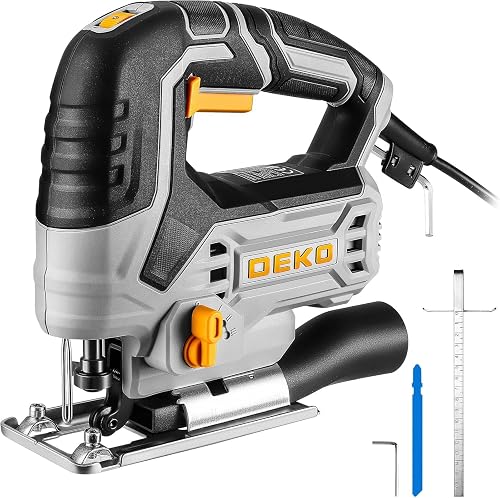 Best for curved and straight cutsDEKOPRO Corded Electric JigsawView on Amazon
- 3
 Best for cordless flat-stock workBrushless 3-1/4" Cordless Wood Planer (Tool Only)View on Amazon
Our Top Picks
Quick Comparison
| Product | Best for | Key feature |
|---|---|---|
| AVID POWER 6.5 Amp 1.25 HP Compact Router | Edge profiling, dadoes and trim work | Fixed base with 6 variable speeds |
| DEKOPRO Corded Electric Jigsaw | Curves, rough cuts and bevel work | ±45° bevel cutting and tool-less blade change |
| Brushless 3-1/4″ Cordless Wood Planer | Trimming doors, edges and stock | Precision depth adjustment, 18V platform |
AVID POWER 6.5 Amp 1.25 HP Compact Router
AVID POWER 6.5 Amp 1.25 HP Compact Router Tools for Woodworking, Fixed Base Wood Router with Trim Router Bits, 6 Variable Speeds, Edge Guide, Roller Guide, Dust Hood (Red, 65mm)
Best for: Edge profiling, dadoes and general trim routing
This is a good fit for a hobbyist building cabinets, shelves, or small furniture who wants one router for edge work and simple joinery. The fixed base suits repeatable passes on a workbench, and the compact body keeps it manageable one-handed.
Key specs
- 6.5 amp motor, 1.25 HP rating
- Six variable speed settings
- Fixed base with edge guide and roller guide
- Included dust hood
- 65mm base size, per the listing
Pros
- Variable speed helps match bit diameter to the material
- Edge guide and roller guide support straight and edge passes
- Compact size works well on a benchtop or in a router table
Cons
- A 1.25 HP motor is modest for large-bit or heavy-stock work
- Owners often recommend upgrading to better collet hardware if chatter appears
Bottom line: A sensible first router for someone who mainly does edge profiling and light joinery. Heavier production work calls for a larger motor.
DEKOPRO Corded Electric Jigsaw
Jig Saw Corded: DEKOPRO Electric Jigsaw Tool Power Jig Saws for Woodworking, Wood Cutter Hand Tool with 6 Variable Speed, 4 Orbital Settings, ±45° Bevel Cutting, Tool-less Blade Quick Release
Best for: Curved cuts, rough cutouts and bevel cuts in sheet stock
This suits a home woodworker who regularly cuts curves in plywood or solid stock, such as shelf brackets, toy parts, or templates. It is less suited to precision joinery, where a bandsaw or table saw is the better tool.
Key specs
- Variable speed control
- Four orbital settings
- ±45° bevel cutting
- Tool-less blade quick release
Pros
- Orbital settings speed up cuts in softwood and plywood
- Bevel capability adds versatility for angled edges
- Tool-less blade changes save time between cut types
Cons
- Jigsaws drift on long straight cuts without a guide
- Blade choice matters a great deal, and cheaper blades may leave rough edges
Bottom line: A useful addition for anyone whose projects involve curves or bevels. Pair it with a quality blade set for cleaner results.
Brushless 3-1/4″ Cordless Wood Planer (Tool Only)
(Tool Only, No Battery), 3-1/4" Brushless Wood Planer, 30000 CPM Power Planer with Precision Depth Adjustment for Woodworking Cordless Hand Planer Compatible with Milwaukee 18V Battery
Best for: Trimming doors, flattening edges and light stock removal on the go
This works well for a builder who already owns an 18V battery platform and needs to take material down on site or in a small shop. It is a finishing and trimming tool rather than a substitute for a thickness planer.
Key specs
- 3-1/4″ cutting width
- Brushless motor
- Precision depth adjustment
- Listed as compatible with Milwaukee 18V batteries (battery not included)
Pros
- Cordless operation makes it practical for trimming installed work
- Depth adjustment supports controlled, repeatable passes
- Brushless motors generally run cooler and last longer under load
Cons
- Battery runtime limits long sessions, so spare batteries help
- Not a replacement for a stationary planer on wide or thick stock
Bottom line: Best for someone already invested in an 18V battery system who needs a portable planer for trimming and finishing rather than bulk material removal.
Buying Guide
Check the motor and electrical condition
For corded machines, inspect the cord and plug for cracks, and check that the switch returns cleanly. Run the tool briefly and listen for grinding or a burning smell. Brushless motors on cordless tools have fewer wear parts, but battery health matters just as much.
Good picks for this: AVID POWER Compact Router, DEKOPRO Corded Jigsaw
Inspect the base, table and sole
Router bases, jigsaw soleplates and planer shoes should sit flat and move smoothly. Check for warping or heavy scoring, since these affect accuracy. A slightly worn sole can often be flattened, but a bent base usually cannot.
Good picks for this: AVID POWER Compact Router, Brushless Cordless Wood Planer
Confirm speed and depth controls work
Variable speed and depth adjustment should change smoothly without slipping. Test each setting if the tool allows it. Worn depth-lock mechanisms are a common reason a used tool becomes frustrating to use.
Good picks for this: AVID POWER Compact Router, Brushless Cordless Wood Planer
Match the tool to your typical work
A router excels at edge and joinery work, a jigsaw handles curves and rough cuts, and a planer trims and flattens. Buying a tool that fits your most common projects matters more than buying the most powerful model.
Good picks for this: DEKOPRO Corded Jigsaw, AVID POWER Compact Router
Consider battery platform and availability
Cordless tools lock you into a battery system. Before buying a used cordless planer, confirm the battery platform and check whether you can source batteries and chargers at a reasonable cost in the future.
Good picks for this: Brushless Cordless Wood Planer
Evaluate blade, bit and accessory condition
Blades and bits wear quickly and often matter more than the tool itself. Look for sharp, chip-free cutting edges, and budget for replacements. Missing guides, dust hoods or base plates can add cost later. If you want more background, see 6 Best Woodworking Tools & Supplies for Home Shops (2026).
Good picks for this: AVID POWER Compact Router, DEKOPRO Corded Jigsaw
Think about safety features and guards
Verify that blade guards, dust ports and switches are intact. Never operate a tool with a missing or disabled guard. If you are unsure about the electrical or mechanical condition of a used machine, have a qualified repair technician inspect it before use.
Good picks for this: DEKOPRO Corded Jigsaw, Brushless Cordless Wood Planer
FAQ
Is it safe to buy used woodworking power tools?
It can be, provided the tool is complete, undamaged and functioning properly. Check cords, guards, switches and bases before buying, and avoid machines with cracked housings or missing safety components.
What should I check first on a used router?
Start with the collet and bit holder for wear or play, then check the base for flatness and the plunge or depth mechanism for smooth movement. Confirm the switch and speed control work correctly.
Are used jigsaw blades worth keeping?
Usually not. Blades dull with use and can be bent or chipped. Most woodworkers replace them with new blades appropriate to the material being cut.
Can a cordless planer replace a stationary planer?
No. A handheld planer is suited to trimming, edge work and light stock removal. A stationary thickness planer is needed for milling wide or thick boards to consistent dimensions. For a deeper look, 7 Best Woodworking Tools for Home Workshop Buyers (2026) covers this in detail.
Do I need a router table for woodworking?
Not always. A handheld router handles many edge and joinery tasks, but a router table gives better control on small pieces and repeatable profiles.
How do I know if a used motor is worn out?
Signs include excessive heat, unusual noise, sparking at the brushes on brushed motors, or a loss of power under load. If you notice these, have a qualified repair service evaluate the motor before use.
What safety gear should I use with power tools?
Wear eye and hearing protection, and use a dust mask or dust collection when cutting or sanding. Keep loose clothing and long hair secured, and follow the manufacturer’s manual for each tool.
Conclusion
For most home shops, the AVID POWER Compact Router is the most versatile starting point for edge work and joinery. The DEKOPRO Corded Jigsaw suits anyone who regularly cuts curves or bevels. The Brushless Cordless Wood Planer is the right choice for someone already invested in an 18V battery platform who needs a portable tool for trimming and finishing. Whichever you choose, inspect the condition carefully before buying used.
Sources
- Workplace guidance on power tool hazards, guarding and electrical safety (osha.gov)
- Consumer product safety information for power tools and recalls (cpsc.gov)
- Electrical and fire safety standards relevant to corded equipment (nfpa.org)
Related reading
- Woodworking Power Tools: What Each Does and Safety Basics
- Woodworking Power Tools for Sale: 3 Best Picks for Beginners (2026)
- Woodworking Power Tools Set: 7 Machines to Build a Starter Shop
- Woodworking Hand Tools Only: A Step-by-Step Guide to Building Without Power
- Woodworking Essential Power Tools: 7 Machines to Build Your Shop (2026)
About Colin Foster
Colin Foster is part of our editorial team and reviews and edits our woodworking guides, checking product details against manufacturer specifications and owner feedback.