 By Audrey Hayes
Updated November 2026
Accurate layout is the difference between joinery that closes up tight and joinery you have to force. The best woodworking layout tools give you a reliable reference edge, a clear scribed line, and a square you can trust. This guide compares six layout tools chosen by specification, brand reputation, and the patterns owners tend to report, so you can match a tool to the work you actually do. Selection criteria included reference-edge stability, scribing features, graduated markings, build material, and how well each tool suits common tasks like mortise layout, cabinet carcass work, and general marking-out.
Our top picks at a glance
- 1
 TOP CHOICEBest overallWoodpeckers Delve Square, 10-in-1 Woodworking Layout Tool, 6 Inch, AluView on Amazon
- 2
 TOP CHOICEBest for large panelsPrecision Woodworking T Square 36inch, Reference Square for Layout & SetupView on Amazon
- 3
 TOP CHOICEBest for mortise and tenon layoutAdjustable Parallel Line Mortise Gauge for Woodworking Layout, MortiseView on Amazon
- 4
 Best for quick angle markingMilescraft 8414 Saddle Square 3D – Carpentry Square Woodworking Layout Tool for JoineryView on Amazon
- 5
 Best budget pickAluminum Alloy Pocket Ruler for Marking & Scribing, Metal T Square RulView on Amazon
- 6
 Best for scribing and angle settingAdjustable Multi-Angle Scale, Precision Layout Tool for Woodworking, CView on Amazon
Our Top Picks
Each pick below is matched to a specific kind of layout work. Start with the Quick Comparison table, then read the product sections that fit your shop.
Quick Comparison
| Product | Best for | Key feature |
|---|---|---|
| Woodpeckers Delve Square, 10-in-1 Woodworking Layout Tool | All-around shop layout | Ten functions in one aluminum square |
| Precision Woodworking T Square 36inch | Long panels and case work | 36-inch reference blade with support lips |
| KAKURI Adjustable Parallel Line Mortise Gauge | Mortise and tenon joinery | Double blade for parallel scribing |
| Milescraft 8414 Saddle Square 3D | Angle marking on rounds and edges | 45 and 90 degree saddle marks on two sides |
| Aluminum Alloy Pocket Metal T Square Set | Small parts and quick checks | Three sizes in inch and metric |
| Saker Adjustable Multi-Angle Scale Layout Tool | Angle setting and scribing | Adjustable multi-angle scale with aluminum alloy body |
Woodpeckers Delve Square, 10-in-1 Woodworking Layout Tool, 6 Inch, Aluminum, Feature Packed Carpenter Square
Woodpeckers Delve Square, 10-in-1 Woodworking Layout Tool, 6 Inch, Aluminum, Feature Packed Carpenter Square
Best for: All-around shop layout
This is a good fit for woodworkers who want one square that covers most marking tasks without carrying a drawer full of separate tools. It suits hobbyists building furniture and cabinets who mark square, miter, and depth lines regularly.
Key specs
- 6-inch size, per the listing name
- Aluminum construction, per the listing name
- Ten layout functions in one tool, per the listing name
Pros
- Consolidates many marking functions into a single square
- Compact enough to keep in a apron or bench drawer
- Aluminum body is commonly reported as resistant to bending
Cons
- A 6-inch size is short for large panel layout
- Some users find the many features take time to learn
Bottom line: Choose this if you want one versatile square for everyday layout and do not need long reference lengths.
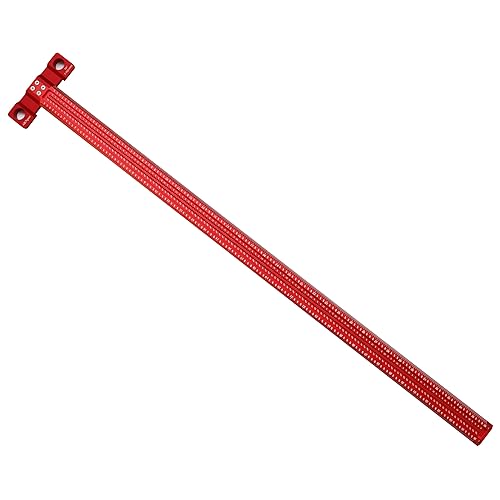
Precision Woodworking T Square 36inch, Reference Square for Layout & Setup
Support Lips prevents tipping, Built in Scribing guide, Precision Layout Tool for Woodworking, Carpentry & DIY Design Precision Woodworking T Square 36inch, Reference Square for Layout & Setup
Best for: Long panels and case work
Woodworkers laying out cabinet sides, shelves, and sheet-goods panels will get the most from a long reference edge. The built-in support lips are meant to keep the head from tipping on the workpiece.
Key specs
- 36-inch length, per the listing name
- Built-in scribing guide and support lips, per the listing name
Pros
- Long blade covers full panel widths in one pass
- Support lips help keep the head seated while marking
- Useful as a setup reference for router and saw fences
Cons
- Too long to store comfortably in small shops
- Long blades can flex if handled roughly
Bottom line: A strong pick for cabinetmakers and anyone who regularly lays out full-width panels.
KAKURI Adjustable Parallel Line Mortise Gauge for Woodworking Layout, Mortise & Tenon Joinery, Dovetails – Made in Japan
Adjustable Parallel Line Mortise Gauge for Woodworking Layout, Mortise & Tenon Joinery, Dovetails – Made in Japan KAKURI Wood Marking Gauge Double Blade 3.5", KEBIKI Japanese Scribe Tool
Best for: Mortise and tenon joinery
Joiners who cut mortise and tenon or dovetail joints need repeatable parallel lines. This gauge is aimed at that kind of precise scribing, and it suits both traditional hand-tool work and machine-assisted joinery.
Key specs
- Adjustable parallel line mortise gauge, per the listing name
- Double blade design, per the listing name
- 3.5-inch size, per the listing name
- Made in Japan, per the listing name
Pros
- Double blade scribes two parallel lines in a single pass
- Adjustable fence supports repeatable joint sizing
- Japanese-made gauges are generally regarded as well finished by hand-tool users
Cons
- Blades need regular sharpening to keep crisp lines
- Learning curve for beginners unfamiliar with marking gauges
Bottom line: Best for joiners who want clean, repeatable parallel lines for mortises, tenons, and dovetails.
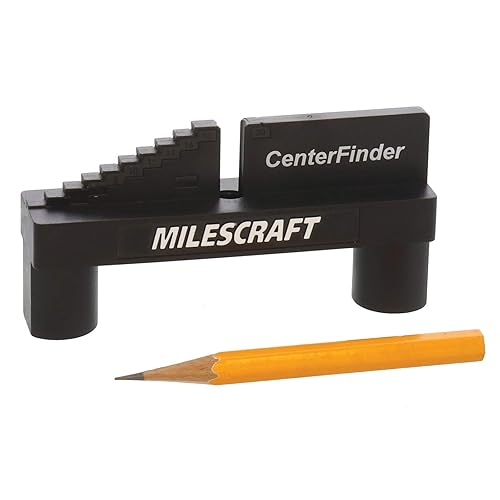
Milescraft 8414 Saddle Square 3D – Carpentry Square Woodworking Layout Tool for Joinery
Milescraft 8414 Saddle Square 3D – Carpentry Square Woodworking Layout Tool for Joinery. 45/90 Degree Saddle Marks Two Sides. 1/32” Spaced Scribing Guides with 2 Horizontal and Vertical Rulers.
Best for: Angle marking on rounds and edges
Anyone marking 45 and 90 degree lines on rounded stock, dowels, or the edges of boards will appreciate the saddle design. The spaced scribing guides help with consistent layout across repeated parts.
Key specs
- 45 and 90 degree saddle marks, per the listing name
- Marks two sides, per the listing name
- 1/32-inch spaced scribing guides, per the listing name
- Two horizontal and two vertical rulers, per the listing name
Pros
- Saddle design sits securely on round or irregular stock
- Marks both sides of the workpiece without repositioning
- Spaced scribing guides aid repeatable marking
Cons
- Limited use for large flat-panel layout
- Scribing guides can wear over time with heavy use
Bottom line: A practical pick for turners, chair makers, and anyone marking angles on round or edge stock.
Aluminum Alloy Pocket Ruler for Marking & Scribing, Metal T Square Rulers, Inch and Metric (6″, 8″, 12″) 3PCS Woodworking Ruler Set
Aluminum Alloy Pocket Ruler for Marking & Scribing, Metal T Square Rulers, Inch and Metric (6", 8", 12") 3PCS Woodworking Ruler Set, Precision Measuring Tool for Layout
Best for: Small parts and quick checks
Hobbyists and beginners who mostly mark small components will find this set handy. Three sizes let you pick the right reference length for each job without carrying a large square.
Key specs
- Three pieces at 6, 8, and 12 inches, per the listing name
- Inch and metric markings, per the listing name
- Aluminum alloy construction, per the listing name
Pros
- Three sizes cover most small-part marking needs
- Dual inch and metric scales suit mixed-plan projects
- Lightweight and easy to keep in a tool pouch
Cons
- Short lengths are not suited to long reference edges
- Thin metal can be easy to nick if dropped
Bottom line: A sensible budget choice for beginners and anyone who mainly marks small pieces.
Saker Adjustable Multi-Angle Scale, Precision Layout Tool for Woodworking, Carpentry & DIY Design, Aluminum Alloy T-Square
Adjustable Multi-Angle Scale, Precision Layout Tool for Woodworking, Carpentry & DIY Design Saker Woodworking Scriber Marking Line Ruler,Aluminum Alloy T-Square
Best for: Angle setting and scribing
Woodworkers who need to transfer or repeat non-standard angles, such as for bevels, tapers, and rake settings, will find an adjustable scale useful. It combines a T-square reference with a scribing function.
Key specs
- Adjustable multi-angle scale, per the listing name
- Aluminum alloy T-square body, per the listing name
- Built-in scriber function, per the listing name
Pros
- Adjustable scale makes it easy to set and repeat custom angles
- Combines square reference and scribing in one tool
- Aluminum body resists everyday shop wear
Cons
- Adjustable parts need checking for lock tightness before critical work
- Less suited to pure 90-degree squaring than a fixed square
Bottom line: Right for makers who regularly set and transfer custom angles on their projects.
Buying Guide
Reference Edge Length and Stability
Match the length of your square or T-square to the widest panel you lay out. Longer blades cover more ground but are easier to bend or knock out of true. Shorter squares are easier to control on small parts. Check that the blade or head is straight and that the body is not warped before relying on it.
Good picks for this: Precision Woodworking T Square 36inch, Aluminum Alloy Pocket Metal T Square Set
Scribing Features
Look for a fine, sharp scribing edge or a scribing guide if you need to mark precise lines on the workpiece. Spaced guides, like those with 1/32-inch increments, help with repeatable spacing. Harder metal edges generally hold a line longer than soft ones.
Good picks for this: Milescraft 8414 Saddle Square 3D, Saker Adjustable Multi-Angle Scale
Angle Accuracy and Marking Range
Decide whether you need fixed 90 and 45 degree marks or a fully adjustable angle. Fixed squares are simpler and tend to stay accurate. Adjustable scales give flexibility but need a firm lock. Check that the graduations are clearly printed and easy to read under shop lighting.
Good picks for this: Woodpeckers Delve Square, Milescraft 8414 Saddle Square 3D
Joinery Specialty Features
If you cut mortises, tenons, or dovetails by hand or with a router, a marking gauge with parallel scribing lines saves time and improves fit. Look for an adjustable fence, a positive lock, and blades that can be sharpened.
Good picks for this: KAKURI Adjustable Parallel Line Mortise Gauge
Size and Portability
Consider how much you carry between tasks. A small pocket set fits a tool pouch, while a 36-inch T-square needs a dedicated place on the bench or wall. Many woodworkers keep a compact square for everyday work and a longer reference for large layouts.
Good picks for this: Aluminum Alloy Pocket Metal T Square Set, Woodpeckers Delve Square
Material and Durability
Aluminum and metal bodies generally resist bending and everyday knocks better than thin plastic. Check whether the edges are machined and whether any moving parts, such as locks or pivots, feel firm. Owners often report that well-finished metal squares keep their accuracy longer, though proper storage still matters.
Good picks for this: Saker Adjustable Multi-Angle Scale, Woodpeckers Delve Square
Care and Maintenance
Keep layout tools clean and dry, and avoid tossing them loose in a drawer where edges can get dinged. Check your square against a known straight edge periodically. Sharpen marking gauge blades as needed to keep lines crisp. Re-check accuracy after any drop.
Good picks for this: KAKURI Adjustable Parallel Line Mortise Gauge, Precision Woodworking T Square 36inch
FAQ
What is the most important feature in a woodworking layout tool?
Accuracy of the reference edge matters most. A square or T-square with a straight, true blade lets every line you scribe start from a reliable baseline. Scribing quality and a secure lock on adjustable parts come next.
Do I need both a T-square and a combination square?
Not always. A T-square handles long panel layout well, while a combination square or multi-function square covers depth, miter, and small-part work. Many shops keep one of each, but a single versatile square can cover a lot of ground for a hobbyist.
How long should a T-square be for woodworking?
Choose a length that spans your typical panel width. Smaller squares around 6 to 12 inches suit parts and joinery, while a 36-inch blade suits cabinet sides and sheet goods. Owners often keep a short and a long square to cover both.
What is a marking gauge used for?
A marking gauge scribes a line parallel to a reference edge at a set distance. It is commonly used for mortise and tenon layout, dovetail baselines, and marking the thickness of stock. Keeping the blade sharp makes the line easier to follow when cutting.
Should I buy metric or inch markings?
That depends on your plans. Many US woodworkers work in inches and fractions, while plans from other regions use metric. Dual-scale tools let you work from either without converting by hand.
How do I check whether my square is accurate?
Draw a line along a straight edge, flip the square, and draw a second line against the same edge. If the two lines do not match, the square is out of true. Checking this periodically keeps your layout reliable.
Are adjustable layout tools as accurate as fixed squares?
Adjustable tools can be very accurate when the lock is firm and the scale is clearly marked. For pure 90-degree squaring, a fixed square is often the simpler choice because there is less to move or loosen.
Conclusion
The best woodworking layout tools depend on the work you do most. For an all-around shop square, the Woodpeckers Delve Square covers many functions in one tool. For long panels and case work, the 36-inch Precision Woodworking T Square gives you a reference edge that fits wide stock. Joiners cutting mortises and tenons will get the most from the KAKURI parallel mortise gauge, while turners and edge-markers will find the Milescraft saddle square useful. The aluminum pocket set suits beginners and small parts, and the Saker adjustable scale helps when you need custom angles. Start with the tasks you repeat most, then build your kit around them.
Sources
- Measurement standards, length references and the principles of accurate dimensional measurement (nist.gov)
- Workplace safety guidance on hand tool use and shop practices (osha.gov)
- Wood properties, dimensional stability and how moisture affects accurate layout on timber (wood.oregonstate.edu)
Related reading
- Woodpeckers Precision Woodworking Tools: 6 Best Picks for Accurate Layout (2026)
- Measuring Tools in Woodworking: 5 Best Picks for Accurate Layouts (2026)
- 7 Best Layout Tools for Woodworking to Mark Accurate Cuts (2026)
- 6 Best Woodworking Shop Layout Tools for Accurate Marking (2026)
- 5 Best Marking Tools in Woodworkings for Accurate Layout (2026)
About Audrey Hayes
Audrey Hayes is part of our editorial team and reviews and edits our woodworking guides, checking product details against manufacturer specifications and owner feedback.